
Safety at the heart of loading bay design
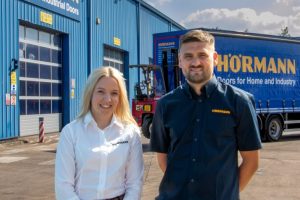
Alan Jenkins, sales director of Hörmann UK explains why designing out risk is essential for the modern loading bay.
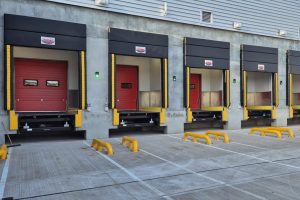
Loading bays are a focal point for activity and bring together a number of elements. Forklifts, warehouse staff, vehicles and drivers as well as the loading bay equipment itself. Safety is a major concern with many risks to be considered including mechanical failure, non-compliance with procedures and simple human error.
Consequently, health and safety planning is now at the forefront of design, especially as new technologies bring with them different risk implications. Fast action doors and additional partitions are now a common feature of many warehouses, as businesses look to reduce thermal losses and better control temperatures in both standard and refrigerated buildings. Additional and potentially fast-moving parts do, however, pose new risks that must be addressed.
With warehouses now receiving a wider range of vehicles, including double deck and aerodynamic trailers, the connection between the building and the trailer can vary, and gaps can be created. In addition to energy loss, these gaps can also lead to rainwater running into the building, creating a slip hazard. One option is deeper dock shelters with inflatable heads to create a more efficient seal at the rear of the trailer, keeping rainwater out in adverse weather conditions.
In addition to simple slip hazards, there are a number of other, more complex risk issues to be addressed. Limited space often means that loading bays need to be adaptable and operate with a variety of vehicle sizes. To ensure a safe link between a range of vehicles and the loading area, flexible dock levellers are required. Larger dock levellers with longer telescopic lips are the optimum choice, as they enable precise positioning for a greater range of vehicles, improving both ease of use and safety.
Integrated control systems should also be part of loading bay design. Moving doors and forklifts, as well as ill-positioned vehicles and dock levellers can all lead to serious accidents. Where operational procedures are already in place, technology can be installed to support and reinforce them. In new warehouses, or buildings where procedures may require a refresh, technology can also be used to develop effective and safe practices.
{EMBED(461827)}
An ideal solution would be an integrated control mechanism that prevents access to the vehicle until all necessary equipment is correctly positioned. This should also be set to operate in a set sequence so that each element only operates once a previous action has been completed.
For example, Hörmann has worked with Asda to develop a dock control system that links together traffic lights, vehicle wheel restraints, the dock leveller and loading bay door. A driver’s button allows the driver to confirm that their vehicle is positioned correctly, which in turn releases the interlock on the door and dock leveller control panel. An internal signal alerts the operators that the loading bay equipment is now live and that the bay can be used.
Dock control systems can be adapted to incorporate a number of pieces of additional equipment. For instance proximity sensors and LED light guides can be installed to help drivers position their vehicles correctly on the loading bay. Once there, the truck is secured in place by a wheel chock with an additional sensor. This passes a message to the loading bay control system to enable operation of the door and dock leveller.
An additional fork lift barrier can also be integrated into a dock leveller platform. The barrier comprises of solid bolts that rise from the dock leveller platform when it is in the parked position. Only when the leveller is activated do the hydraulically-operated bolts recess. This barrier not only stops lift trucks from driving through an open door, before a vehicle is in position and the leveller properly engaged, but also prevents accidental collision damage to the closed door.
Technical advances are enhancing warehouse safety procedures and helping to prevent a range of accidents. To maximise the benefits of these new developments, servicing and preventative maintenance programmes have become a key element of good operational practice.
Hörmann has seen a distinct increase in requests for service contracts, as more businesses realise their value financially, operationally and in terms of safety. Accidents can easily be prevented with well-maintained and inspected equipment. Professional servicing can also have the advantage of ensuring optimum performance, as well as the benefit of an increased product warranty – something now offered with many service contracts.
Industrial door and loading bay technology continues to advance in line with industry requirements and safety measures are all part of this ongoing development. Whilst operational and energy efficiency are always key considerations of warehouse design, it is crucial that developing a safe working environment remains the primary consideration.