


 article
More flexibility in the warehouse: from automation toward autonomy
How can warehouse and fulfilment solutions be planned to suit requirements, operated more flexibly and maintained more effectively?
articleHow can warehouse and fulfilment solutions be planned to suit requirements, operated more flexibly and maintained more effectively?
 article
Before investing in robots, conveyors or shuttles, warehouse operators should ask whether a process deserves to be automated at all, argues Chris Lawrence.
 article
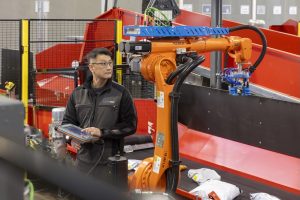
BEUMER Group, examines how advances in robotics, vision and intelligent controls are helping CEP operators close the automation gap and bring greater consistency to complex parcel flows.
 news
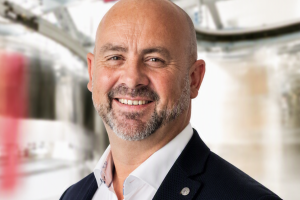
KNAPP UK has appointed Tyrone Driscoll as managing director with effect from 1 November 2026, as part of a planned leadership succession.
 news
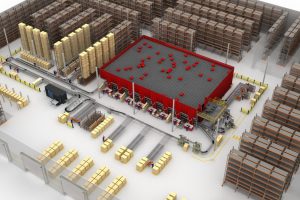
Würth Australia is investing in automated order fulfilment from Dematic at its facilities in Yatala, Queensland, and Keysborough, Victoria, to strengthen service across its national distribution network and provide a scalable platform for growth.
 article
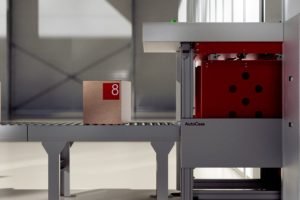
Nordic logistics company Nowaste Logistics is said to be the first in the world to install AutoStore’s AutoCase, supplied by Swisslog, allowing it to store inbound cartons directly within its AutoStore system.
 news
Walmart has expanded its commercial agreement with Symbotic to bring further automation to 25 of its US regional distribution centres, with an initial commitment of approximately $6 billion in spend over several years.
 news
Vineta Bajaj, group chief financial officer at Holland & Barrett, will deliver the keynote address at the inaugural Tomorrow’s Warehouse Dublin, revealing how supply chain investment is supporting the health and wellness retailer’s growth in Ireland.
 news
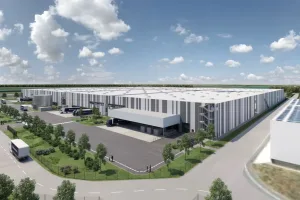
Footwear brand Skechers has selected KNAPP to automate a new 230,000m² European distribution centre in Liège, Belgium, which will have more than 3.3 million storage locations and handle up to 10 million pairs of shoes a month.
 product
S.OLIVER GROUP is introducing AI-powered robotic automation to automate shoebox induction at its logistics site in Dettelbach, Germany.
 news
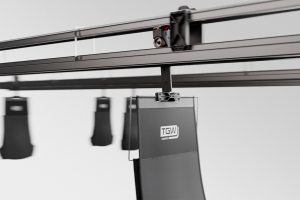
Warehouse automation specialist TGW Logistics has reported record revenue of €1.37bn for its 2025/26 financial year, up 29%, with order intake also at an all-time high of €1.75bn.
 product
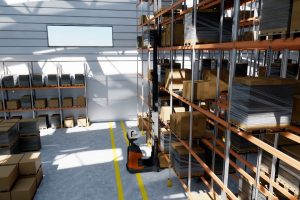
Toyota Material Handling Europe says simulation and digital twin technology, developed with NVIDIA and SoftServe, can cut the time needed to commission autonomous forklift solutions by up to 50%, reducing disruption for customers at go-live.
 article
How can warehouse and fulfilment solutions be planned to suit requirements, operated more flexibly and maintained more effectively? With new and AI-assisted capabilities, AutoStore presents practical approaches and solutions to better evaluate investment scenarios and business cases, and to automate more processes.
 news
Warehouse robotics company Symbotic has acquired German automation firm cellumation, creator of the celluveyor, a software-driven sortation platform that replaces conventional conveyors.
 article
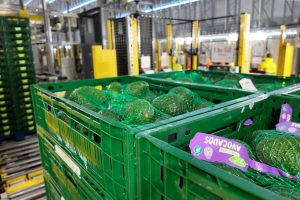
Aldi has begun handling fruit and vegetables at its Bardon Distribution Centre in Leicestershire, as the UK’s largest automated warehouse moves into its next phase of operation.
 news
AutoStore has announced new and enhanced products and capabilities across its hardware and software portfolio that remove practical barriers to more autonomous operations.
 news
The successful Tomorrow’s Warehouse Event, established for five years in Coventry in Manchester, will launch in Dublin in 2027.
 news
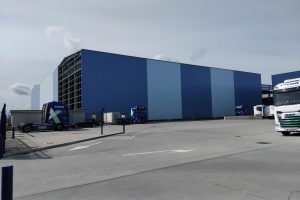
Maersk is now managing three highly automated PUMA distribution centres across the US, helping the brand get products to wholesale customers, PUMA stores and online shoppers more quickly and efficiently.
 article
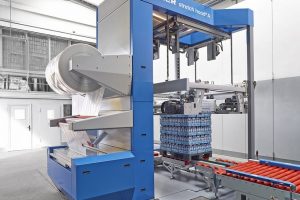
Damaged products, unstable loads, production bottlenecks and rising operating costs can significantly affect packaging and logistics performance. Maintaining load stability during transport, protecting products during storage and handling, and keeping throughput high are ongoing challenges for many operations.
 article
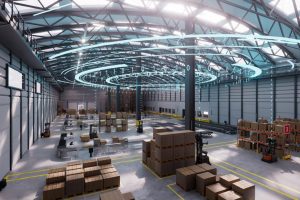
As warehouses become increasingly automated, connected and data-driven, conversations about the future of intralogistics often focus on technology. From autonomous mobile robots and AI-powered warehouse management systems to connected forklift trucks and predictive analytics, innovation is transforming how goods move through the supply chain.

Western Business Media,
Dorset House, 64 High Street,
East Grinstead, RH19 3DE
01342 314 300
[email protected]
© Western Business Media, 2026. All rights reserved.