

Getting started with automation
While most organisations understand the need to transform their warehouse into a highly efficient powerhouse, there is often apprehension of what steps to take and when. Rhyce Dawson discusses some of the common mistakes and how to avoid them.
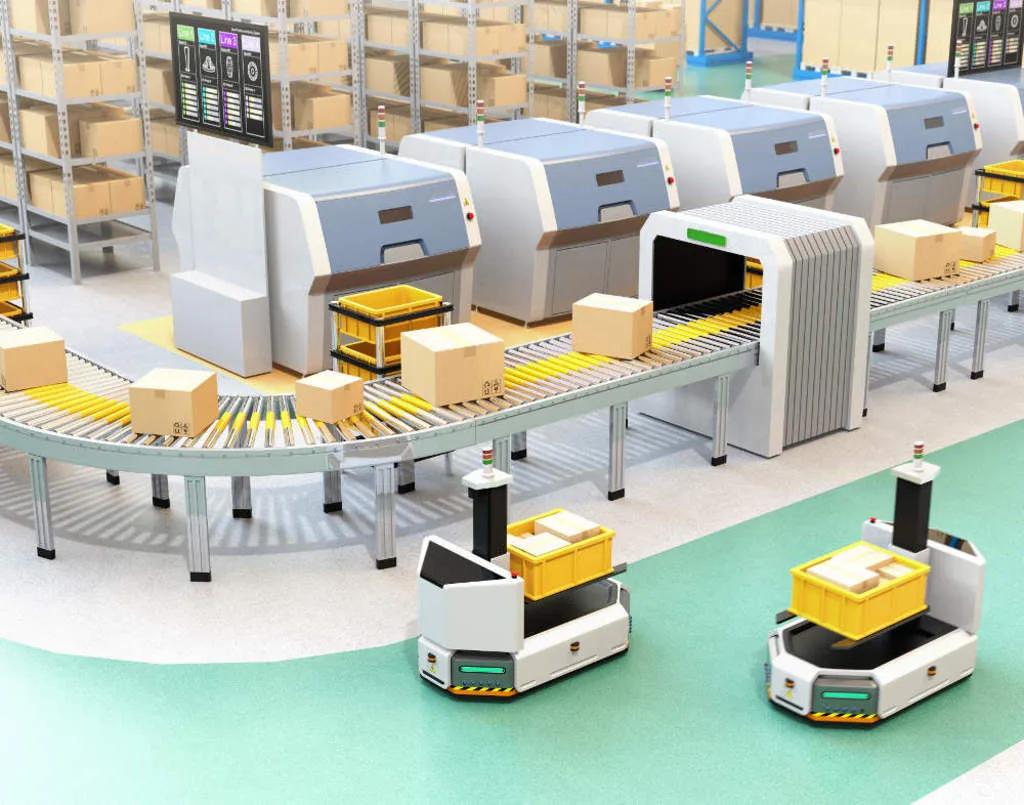
WHEN AN organisation embarks on a digital transformation or automation journey, there is a common struggle to know where to start. Typically, the business has not experienced significant change, or there is a substantial reliance on the people who have been previously involved in change projects.
The business is thrown into the necessity to change; however, often without the people, processes, or ability to de-risk the significant capital investments and transformations.
Frequently, there is a distinct lack of project formality, or skillsets inhouse to truly make sense of the reams of information moving through an organisation’s supply chain operation every day. You’re lost and with no map or compass – it’s extremely hard to establish the first steps to take in optimising a network through automation and digital transformation.
However, identifying some key guiding principles upfront can help make it a less daunting undertaking.
Mistake 1 – Going it alone
Establish a cross-functional team and be inclusive.
Many organisations overlook the diversity of the team required to manage, maintain, and provide valuable insights into the project. Naturally, many projects are led with a traditional procurement department with a black and white mentality. Critical opinions are locked out, and layers of bureaucracy are installed preventing critical challenges, progression, and momentum from being created within the project.
A cross-functional team is critical to success in any transformation project, and this team needs to prioritise the automation and transformation project highly over their day jobs in order to succeed.
Secondly, where skillsets such as engineering departments are non-existent, or in some cases they exist but large-scale automation projects are often unfamiliar ground – it’s important to engage specialists.
If design and implementation go wrong, they do so with spectacular cost. Therefore, it’s essential to protect yourself and de-risk your projects by engaging external parties or upskilling your employees.
In the same vein, at Gartner’s recent Supply Chain Symposium, Caroline Chumakov, Director Analyst of Gartner’s Supply Chain Practice spoke of the need for CSCOs to unlock more skills and flexibility by breaking down projects into component tasks and seeking skills needed for those tasks across the entire organisation.
Mistake 2 – Not knowing your starting position and assuming you need to invest big
Don’t overlook the here and now.
Without pointing out the obvious – what, how and when to automate largely depends on where you are now and where you want to be in the future. Businesses need to ask themselves: “How do l get from A to B?”
When organisations first embark on their automation journey, there is the assumption that it’s all about long lead times and multi-million-pound investments. However, if due diligence is carried out correctly and thoroughly – opportunities for more tactical initiatives open up.
Take the process of selecting an automation vendor or solution. How can an organisation assess the options without knowing where they are, where they need to be and then assessing the costs, challenges and risks associated with any decision making? However, time and time again automation emerges as the go-to answer without knowing the question.
Doing a thorough investigation of where an operation is right now, can sometimes lead to a conclusion that is wildly different to any preconceptions about the course of action that needs to be taken.
Sometimes incremental change in a current warehouse will result in the outcome required to optimise an operation, as opposed to large-scale transformation.
If an organisation ploughs ahead blindly with its transformation plans and engages directly with automation vendors – they can very quickly find themselves committing to a solution that may not drive the best outcome – and at a significant cost.
Instead assess all the investment options – both tactical and strategic.
An initial investment in an operational diagnostic can potentially save hundreds of thousands in operational costs through tactical operational improvements, and millions in preventative capital investments. Remember, automation is not always the answer.
Mistake 3 – Hesitating because “what if”
Pull the trigger with a high degree of certainty, not absolute certainty.
Every operation changes gradually over time, and unintentionally it can become extremely inefficient, unpredictable, and long term may challenge the suitability of automation.
Using data to analyse where this might happen, could lead to minor or major adjustments in the direction; however, far too often the “what if” moments will paralyse a project.
As many will appreciate, the operation will always be fluid regardless of if the site is manual, or automated. Throughout the process of designing, vendors will test the sensitivity of the design and what we can say with certainty is that this will never be correct. The operation will change, and far too often project teams aim for perfection or increase contingency plans that kill the business case.
We appreciate that systems can be a wonderful mechanical maze of conveyors; however, they are not spaceships – they can be modified, manipulated, and adapted in the future.
Use the data to inform directionally which is the best solution for the organisation, and making sure that the due diligence is carried out independently, objectively and accurately –then execute in that direction.
Rhyce Dawson, senior consultant, TMX Global
For more information, visit www.tmx.global
{EMBED(1260825)}