

Should I buy second hand racking?
A question we’re frequently asked at SEMA is whether it’s okay to buy second-hand racking. After all, there are plenty of suppliers in the market offering the benefits of their ‘reliable’ second-hand racking, so surely it’s safe.
IT’S EASY to see why many businesses view this as an appealing option with second-hand racking typically, although not always, costing less compared to new. However, for SEMA, the issue lies in the story your racking can’t tell you. Where and how was it previously used? Was it properly maintained and repaired? How was it handled and stored once dismantled?
Without verifiable answers to these questions, you risk buying an unsafe structure. While your racking might look ‘fine’ on the surface you can’t be sure what is sitting beneath. Any racking damage can quickly turn into a section of the racking failing with tonnes of stock falling to the ground.
Let’s break down each of these problem areas and explain how it impacts your perceived cost-savings.
Who designed and supplied the second-hand racking?
When the racking was originally designed, was the specification accurate and appropriate for its intended use?
In the UK, industrial racking should meet the requirements set out in either SEMA Design Codes or European Code EN 15512. The racking design will ensure it meets critical parameters set out within the design. These check the structure is suitable for the weight and type of stock you are loading on the structure. While Design Codes are required for new storage systems, it is not mandatory to redesign second-hand racking to these standards.
This creates two problems. First, if the original company didn’t meet the requirements of the Design Codes it could have caused unnecessary wear and tear that has weakened your second-hand structure. You also have no assurances the company supplying your second-hand racking is designing to the highest levels of quality and safety.
One final consideration is the Load Notice. Correctly loading a racking system is essential to prevent workplace accidents and reduce the risk of collapse. When purchasing new racking, your supplier should fix a Load Notice to the structure, clearly stating the maximum load and any required load configurations. Is your second-hand racking supplier providing you with this essential safety sign and, more importantly, is the information on the Load Notice correct?
How has the racking been installed?
The installation of your storage equipment might not seem significant, but it plays a vital role in upholding the long-term safety and performance of the structure.
One problem within the racking installation industry is that not all suppliers check the credentials of their installers. This is a significant problem when you consider that a lot of installers still learn ‘on the job’. Over time it is very easy for them to pick up bad habits or, even worse, not know the correct methods in the first place.
If the original installer hasn’t followed the racking designer’s specification or missed crucial elements during installation it could have resulted in unnecessary stress on the structure.
Was the racking correctly maintained?
At SEMA we always advise following a rigorous approach to racking safety. The process starts by appointing a member of your team to take on the role of Person Responsible for Racking Safety (PRRS). It’s their role to check that inspections and maintenance records are completed, analyse damage data, identify regular issues and implement remedial actions.
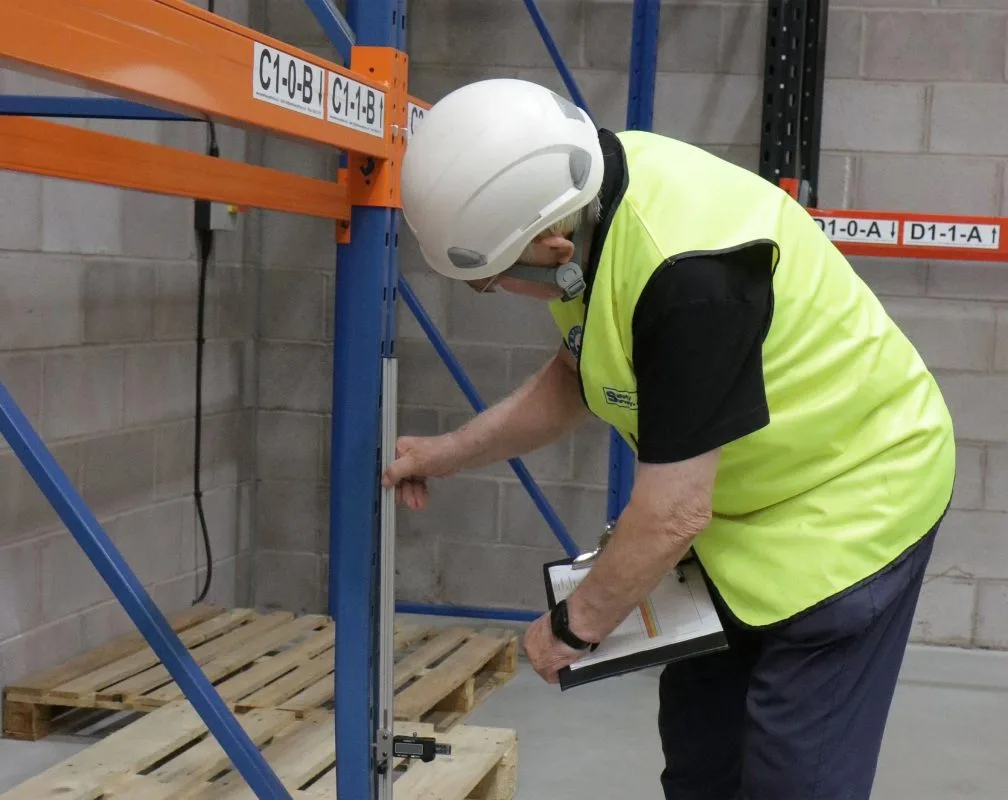
You then need to adopt a three-step approach to racking inspections. Every day, employees working in areas with racking should identify and report any damage they find. A trained member of your team will undertake your visual inspection which looks at damage on the racking and checks that correct loading is followed. Finally, at least once a year, a qualified inspector such as a SEMA Approved Racking Inspector (SARI) must conduct the Expert Inspection.
While you have traceability of your inspections if you buy the racking new, it’s not always possible on second-hand structures. You will need to check the following:
- Were inspections carried out according to HSE and SEMA recommendations?
- Did the PRRS follow the correct steps?
- Did the employee undertaking the in-house inspections perform them according to the risk assessment and had they been trained for the role?
- Do inspection reports cover the lifetime of the equipment?
- What were the qualifications of the inspector undertaking the Expert Inspection?
- Was the Expert Inspection a ‘Damage-only’ report, which only shows the damage and its possible location, or an inspection by a SARI showing detailed information and a timescale for repairs?
You could easily be purchasing second-hand racking that is over 10 years old – that’s a lot of inspection records to check!
Racking repairs
Inspections are only worth the paper they’re written on if correct repair actions are followed. But, with second-hand structures, you will have limited knowledge of whether the work has been approved by the manufacturer and met industry standards. For example, SEMA Technical Bulletin No. 09 warns against cutting down and rewelding beams on racking, yet this is a common practice.
If you can’t confirm whether repairs were made correctly, you’re buying an element of risk.
Corrosion!
This leads us to the structural integrity of your structure. The metal in your racking should last a lifetime but some factors can weaken the structure. If it’s been under a warehouse roof, it will have been protected from the elements and there is less of a risk that internal rust will have occurred. But you can’t be certain.
You should also consider what happened once the racking was dismantled. Not all racking is manufactured for outside use and it’s not uncommon for companies to store racking outside until it’s sold on. That extended exposure to external elements will cause damage and corrosion that weakens the steel.
A Cost-Effective Solution?
Damaged racking is unsafe and if protecting your employees isn’t enough of an incentive to not buy second-hand, you might want to consider the true cost-effectiveness of your purchase. Upfront costs are undoubtedly cheaper, but ongoing costs could very quickly outweigh the initial savings.
With second-hand systems, you have little idea of the age of the structure, how it has been maintained and the amount of wear and tear it has suffered. This can quickly lead to more frequent repairs, which will very quickly reduce its cost-effectiveness.
Then there’s the issue of which manufacturer supplied the racking. If a part needs replacing, you must only use approved products yet if the range is discontinued will you know where to find replacements? Reputable manufacturers will provide ongoing support with compatible second-hand parts but there are no guarantees with other suppliers. Suddenly, your ‘cheap’ second-hand racking is a wasted investment, and you’ll need to replace the whole structure.
Why SEMA doesn’t think second-hand racking is worth the risk
At SEMA, we understand the pressures on warehouse owners to cut costs but at what price? While second-hand racking might deliver an upfront bargain, the lack of traceability, the cost of ongoing repairs and a reduced lifespan can quickly outweigh the short-term cost savings.