

A more enduring bottleneck?
Beyond the noise of tariffs and trade disruption Ocean Network Express (ONE) director of product & network Stanley Smulders points to a lack of container terminal capacity in Europe as the key concern.
LOGISTICS MATTERS editor Simon Duddy caught up with Stanley Smulders at the recent MultiModal event just as Donald Trump was imposing and pausing tariffs in a determined game of brinkmanship that shook up global trade.
Stanley says: “The overall market for container shipping is growing as the global population grows but we are also very much driven by geopolitical events, such as wars in Ukraine and Gaza, as well as a US administration that has slightly different ideas about how international trade should work.”
This has led to volatility in global trade, with volumes of cargo from Asia dropping very rapidly as tariffs were announced. When these were abruptly eased, cargo volumes came back very rapidly and the spot market rates went up again.
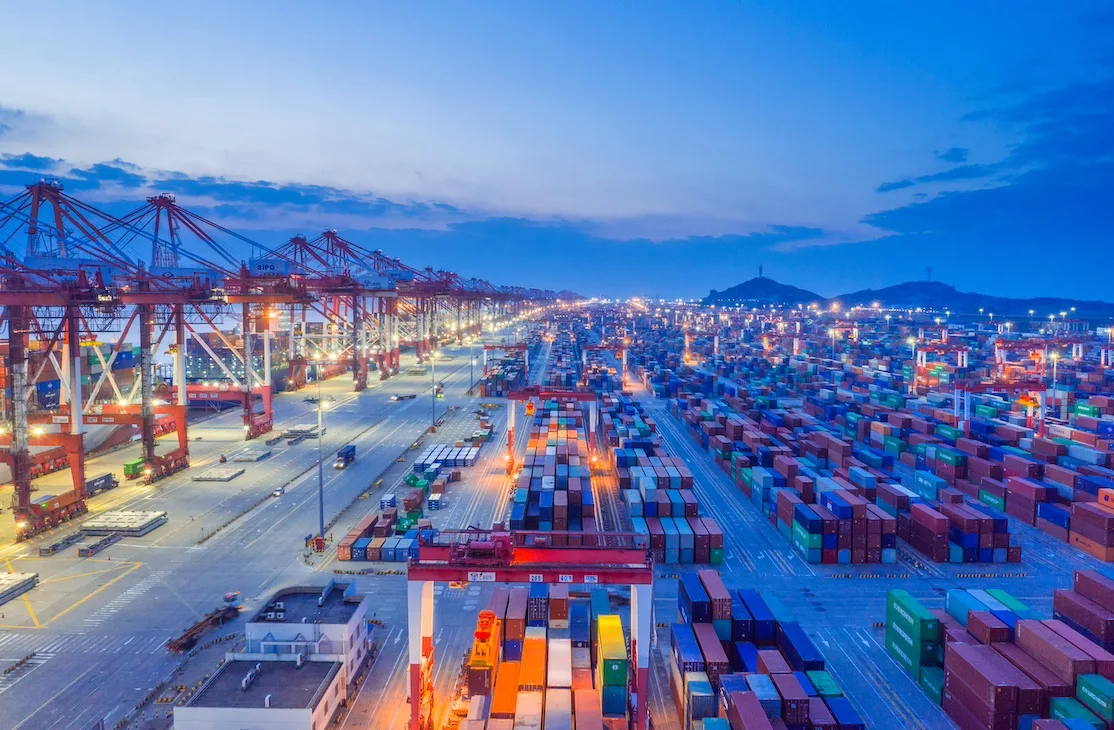
“The real challenge is the bottleneck of container terminal capacity,” says Stanley.
“European container port capacity is full and other than developments in Rotterdam and Gdansk, over the next few years, there appears to be no other planned expansions to increase capacity.
“This means that in a future world with growing consumer demand and the ideal of minimal trade disruption, it will become increasingly difficult to unload cargo in European ports due to terminal capacities.
“Traditionally, smaller container ports such as Zeebrugge and Wilhelmshaven have had capacity, but now they are also full. It is reaching its limit, and when shipping lines replace their vessels, they will almost certainly be bigger.
“The solution is more container terminal capacity, but that takes a long time. All shipping lines are running bigger and bigger ships, which need draught in the water, and air draught for the cranes. There are many ports in Europe, but only a few can handle the big ships.”
Stanley suggests there could be a role for port authorities to help make sure facilities are ready to support big ships, with dredging, new quay walls, etc.
The shipping company is one of three that have combined to form Premier Alliance, from February this year.
ONE, HMM and Yang Ming Marine Transportation are cooperating to offer mainline services across the major East – West tradelines: Asia – North America West Coast, Asia – North America East Coast, Asia – Mediterranean, Asia – North Europe, and Asia – Middle East.
Recently, the Port of Felixstowe welcomed the first call by The Premier Alliance’s FE4 service between Asia and North Europe. A 24,000 TEU ship arrived at the UK’s largest container port on 20 July 2025 from Singapore via the Cape of Good Hope.
ONE offers independent services as well as via the Premier Alliance. It operates a fleet of over 240 vessels with a capacity exceeding 1.9 million TEUs, providing container shipping services to over 120 countries.
For more information, visit www.one-line.com