

Defence spending to increase warehouse take-up
Nearly 400 million ft2 of warehouse space across the UK and Europe will be needed for direct and indirect logistics related to the defence industry according to an upcoming report by Savills, on rising defence spending as part of the UK’s Strategic Defence Review (SDR) and new NATO commitments.
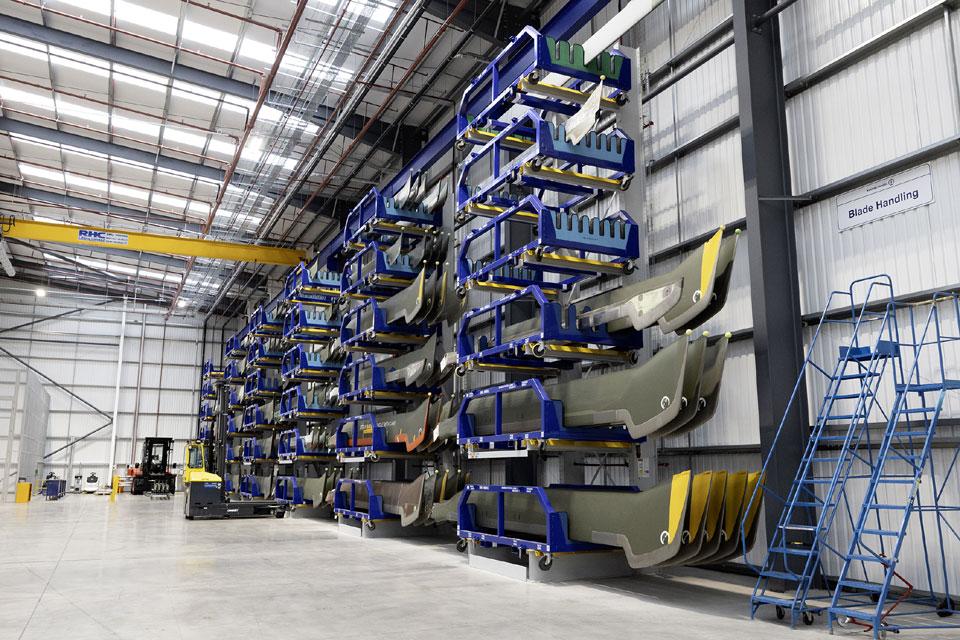
By Liza Helps, Property Editor, Logistics Matters
USING THE new target of 3.5% of GDP being spent on core military capabilities set out by NATO at the June 2025 summit, Savills notes that this would stimulate enough demand for industrial & logistics take-up across Europe to rise by 17% when compared to take-up levels of 30 million m2 (323 million ft2 in 2024).
Already employing close to 1 million people across Europe, Savills analysis shows that existing defence spending supports approximately 35-40 million m2 (377 million ft2 to 430.5 million ft2) of logistics and manufacturing space. However, if countries converge towards the 3.5% target over the next seven years, this could see an additional 34 million m2 (366 million ft2) of demand. A significant proportion of this growth is expected to concentrate in the UK, France, Germany, Italy and Spain.
Savills director in the EMEA industrial & logistics occupational markets team Sam Quellyn-Roberts, said: “The defence sector, like many manufacturing industries benefits significantly from agglomeration economies. Defence firms and their suppliers tend to cluster together across Europe, benefitting from shared skilled labour pools, specialised sub-contractors, and established supply chains.
“These clusters not only concentrate employment, but also drive up demand for industrial & logistics space in those areas. However, it is important to note that the defence sector has very specialised real estate requirements, which means that servicing this expected demand may not be as straight forward as more traditional retail or logistics occupiers.”
Looking specifically at the UK, in order to keep pace with defence spending as a percentage of GDP, there would need to be an increase of employment in the order of 16,970 new logistcs jobs and 45,160 manufacturing jobs.
Savills has modelled job creation numbers based on the increase in defence spending, before relating this to space requirements using standard usage densities. The firm has calculated that this could lead to additional demand of up to three million m2 (32.3 million ft2) in warehouse space in the UK alone over seven years, equating to annual average take-up of 423,000 m2 (4.5 million ft2).
To put this into context, manufacturing related take-up in the UK currently averages 657,000 sq m (7.07 million ft2) per year, the additional demand from defence related industries could see this rise by 64% to 1.08 million m2 (11.625 million ft2) annually.
When considering the UK industrial & logistics sector as a whole, 423,000 sq m (4.5 million ft2) is broadly in line with the amount of warehouse space that high street retailers take in any given year. Overall, though, defence related demand would account for 13% of total UK take-up, assuming take-up levels remained constant.
Savills, associate director in the industrial & logistics research team Andrew Blennerhassett, adds: “The defence sector’s need for specialised industrial & logistics facilities presents a complex real estate challenge. Unlike commercial occupiers, defence organisations must navigate stringent security protocols, geopolitical sensitivities and bespoke infrastructure requirements, all while competing with booming e-commerce and manufacturing sectors for limited suitable space.
“Ultimately, if there is a lesson to be learned from the pandemic, it is that well-functioning, diversified and robust national logistics ecosystems are vital to a functioning manufacturing industry and defence is no exception. International, national and local policymakers will need to recognise this and take a proactive stance in ensuring land availability aligns with anticipated industrial & logistics expansion.”