

A question of confidence
For those that can there are deals to be had in the Midlands, reports Liza Helps.
TAKE UP for the first half of the year in warehouse units over 50,000 ft2 reached 4.6 million ft2 – a considerable drop from the 8.6 million ft2 recorded in the first half of 2024 according to Knight Frank’s latest Midlands LOGIC report.
While the East Midlands was more popular in terms of square footage with take up levels for units over 100,000 ft2 only falling 27% according to Savills Big Shed Briefing, compared to the staggering 46% drop in the West Midlands, both regions did record higher deal numbers than those recorded in the first half of 2024.
“There were in fact 31 transactions in the first half of the year in units over 50,000 ft2,” says Box4 Real Estate founding partner James Clements. Up from 29 deals recorded for the first half of the year in 2024.
Deal sizes says Savills director and head of industrial Midlands, Ranjit Gill, have got smaller. Talking about the West Midlands in particular he notes: “In the first half of 2024, the average unit size was 259,103 ft2. In the first half of 2025, it decreased to 191,797 ft2.”
Clements says that 40% of transactions across the Midlands were for units between 100-200,000 ft2.
Taking a closer look at the take-up statistics and Newmark UK’s head of National Industrial & Logistics Agency team Charles Spicer says: “This is a story of two halves with a strong start for the first quarter followed by a slowing in the second.”
Cushman & Wakefield’s International Partner Logistics & Industrial Agency David Binks agrees: “Everything was going well then Trump’s tariffs came in and confidence to commit dried up.”
Everyone agrees that occupier decisions are taking a lot longer. Property analytics firm CoStar’s head of research Grant Lonsdale, says: “As soon as you get delayed decision making deal numbers slow down.”
So pernicious is this issue that in mid August Barclays downgraded listed investor developer SEGRO following the company’s half year results which confirmed risks of lower annual capital spending caused by ‘slower warehouse take-up and tenant decision-making delays’.
Spicer says: “There is more inertia in the market, and it is taking occupiers longer to sign off.” He cites three examples of buildings where multiple heads of terms are waiting to be finalised.
The proof of this longer decision making can be seen in the number of properties that are under offer – a number of which may still be under offer come September. Clements says: “We are tracking 4.68 million in 16 buildings as under offer as at the end of June.” That is almost as much under offer as was taken up in the whole of the first half of the year.
Contracting out
However, GLP UK’s development director James Atkinson says: “While economic headwinds have introduced caution across parts of the market, we continue to see active demand from 3PLs and manufacturers particularly servicing retail and ecommerce networks.”
“It seems that while macroeconomic headwinds persist,” says Avison Young managing director, industrial, David Willmer, “the fundamentals of the logistics market remain strong. We’re seeing sustained demand from 3PLs for modern, well-located space, particularly in the Midlands, which continues to lead the way.”
Tritax Big Box Developments development director Joseph Skinner agrees: “The market is being driven by the 3PLs chasing contracts – demand is there, we have seen an increased number of genuine viewings with contracts to the tune of 1.4 million ft2 of interest in Symmetry Park Rugby alone in the last three weeks.”
Indeed, Avison Young’s research reports that take-up in the Midlands industrial and logistics market during the first half of 2025 was dominated by third-party logistics (3PL) providers and distribution occupiers, together accounting for over two-thirds of total activity. 3PLs led the way with 49% of transacted space.
This has been particularly the case in the second quarter where according to research by Cushman & Wakefield the 3PL sector saw 10 deals being recorded, contributing a volume of 2.9 million ft2.
Savills’ Gill says: “In part this could be as a result of the Trump tariff situation whereby occupiers are not sure whether they should commit to that 500,000 ft2 building tying up capital in the region of £50-100 million right now or give it to a 3PL for three to five years to see what will happen.”
In effect occupiers are kicking the decision making down the road and 3PLs are benefitting – at least in the short term.
Document storage specialist and 3PL operator Iron Mountain has secured a number of contracts for its campus at Tritax Big Box’s 111-acre Symmetry Park Rugby scheme, recently adding Unit 5 a 391,077 ft2 warehouse, to its portfolio of four other units at the park totalling 966,603 ft2 of space which it acquired in 2022, to service a contract with Sainsbury’s.
It has taken a 15 year lease with open market rent reviews every five years at a rent of around £9.95 per ft2 – a new high for the development.
The facility boasts 368,845 ft2 of warehousing space with an FM2 floor with 50kn/m2 loading. It has 17m eaves, as well as 36 dock (including four Euro dock) and four level access doors served by a 50m yard with parking for 64 HGVs. It also has a two-storey 3,987 ft2 hub office as well as separate gatehouse.
Other contracts being served from Iron Mountain’s Rugby campus include one for Rolls Royce and one for retailer B&M following the closure of its circa. 468,000 ft2 distribution centre in Middlewich in the Northwest when landlord Brookfield Asset Management declined to renew its lease in August 2026, having secured a new occupier for the space.
Clements notes: “The 3PLs and direct distribution users are most active in the 100,000–200,000 ft2 bracket together accounting for close to 1.35 million ft2 of take-up in this range.”
This suggests that many are being taken to service single user contracts. It is interesting to see that many of these deals are for second hand units. According to Cushman & Wakefield research: “While demand for speculatively developed space remains elevated, in recent months a number of Grade A deals have taken place within second hand units, accounting for 3.6 million ft2 of the total space signed during Q2.”
CBRE’s senior director Midlands Industrial & Logistics Peter Monks, says: “For single user contract many 3PLs are reluctant to commit to more than three-five years so second hand space where leases can be more flexible are very popular.”
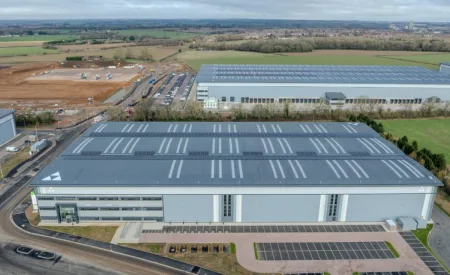
In addition, many second hand warehouses also come with a level of fit out often including racking that drastically reduces capex and means that occupiers can be operational that much quicker.
“To be frank,” adds Monks, “for a single user contract many 3PLs are not prepared to pay the high rents asked for the speculative space currently on the market either.”
Recent deals have seen 3PL Wonderpack Eco which specialises in ecommerce fulfilment snap up a sub-let on a 79,379 ft2 warehouse at Blenheim Park in Nottingham.
The space at Unit 10 had originally been leased to Hunts Food Group which was relocating. The property had racking already in situ. M1 Agency surveyor and letting agent on the unit Toby Wilson says: “Unsurprisingly, [it] generated significant levels of early interest and resulted in a relatively quick conclusion of the sub-letting.”
The property was available via sub lease or assignment with a lease expiring November 2023 with a break clause at year five.
The new Silk Road
In addition to that 3PL demand drive says Tritax’s Skinner: “We are equally seeing a lot of Chinese rivals to Amazon – a lot more of those coming to the market.”
And there have been a lot of deals done which include 3PL Cirro Fulfillment trading as Super Smart Service taking two warehouses, Aver the NFU and Ergo joint venture’s 354,000 ft2 warehouse at Fradley Park, Lichfield and Panattoni’s 345,284 ft2 warehouse at Panattoni Park J28 Central M1 in the Midlands.
Chinese ecommerce and logistics giant JD.com which is aiming to offer an alternative to Amazon, has also taken space in the Midlands with its logistics arm Jingdong Logistics securing a 10 year lease on Apollo 7 on Ansty Park owned by its property arm Jingdong Property in Coventry totalling some 117,000 ft2.
Colliers Industrial & Logistics director in Birmingham Simon Norton says: “The Chinese are coming in strong, and we are still getting requests via the international network for companies we have never heard of but have a footprint across the globe – now looking to establish in the UK and the Midlands in particular.”
New entrants from China include 3PL Top Cloud, which is believed to provide ecommerce fulfilment to Chinese ecommerce giant Alibaba, and which made short work of securing a 15-year lease for DC6, a 164,103 ft2 newly built facility at Prologis’ 65-acre Prologis Park Midpoint in Birmingham, West Midlands.
In addition, Daals, a Chinese owned furniture manufacturer and online retailer new to the UK, has taken a long lease on Apollo 5 on Jingdong Property’s Apollo scheme totalling 301,591 ft2.
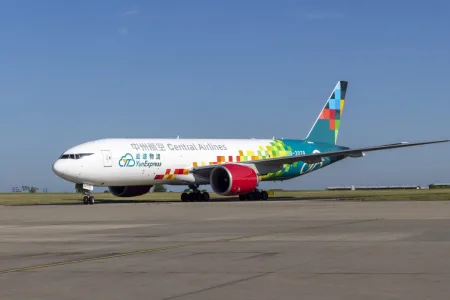
And in May East Midlands Airport landed a major deal with Chinese logistics firm YunExpress to operate its own Boeing 777F freighter flights in partnership with Central Airlines – its first to any UK airport.
Initially new flights will operate in and out of China initially twice a week, with plans to increase frequency to five times. Three other new operators running routes between China and the UK have also landed at East Midlands Airport this year boosting the amount of belly hold cargo volumes handled.
Between May and July this year East Midlands Airport handled more than 103,000 tonnes of cargo, up 17.4% on the same period in 2024.
To respond to extra cargo activity and facilitate further growth in the medium term, the airport has recently reconfigured its cargo aprons – the area where aircraft are parked, unloaded or loaded, refuelled, boarded, or maintained – so that out of 27 cargo stands, 12 can now take wide-bodied aircraft, up from seven previously.
And is also making available four runway-side plots available for redeveloped for future operations. That will include 1.3 million ft2 of warehouse space, new taxiways and stands for up to 18 more aircraft. The plans anticipate a 54% growth in express freight cargo volumes over the next 20 years and could support more than 20,000 new jobs and an uplift of almost £4bn for the economy.
Clements notes: “While take-up is led by 3PLs and e-commerce, the real story lies in what occupiers are prioritising: speed of access, scale-ready infrastructure, and future operational resilience.
“Many are rebalancing networks to reduce delivery lead times and mitigate supply chain shocks, favouring buildings with strong transport connectivity, modern ESG credentials, and readily available power.
“The shift towards automation and potential electric vehicle fleets is also influencing decision-making, as occupiers seek sites that can adapt to evolving operational and regulatory requirements. Specification and location are no longer nice to have… they’re non-negotiable.”
Atkinson agrees: “We’re also seeing demand become increasingly strategic. Many of the requirements coming through the market this year are being shaped by long-term planning, whether those site searches are active or just in their early stages. Some of this is about future-proofing operations and pursuing energy efficiency in supply chains; some is about reducing dependence on overstretched infrastructure in other regions.
“The Midlands’ ability to offer both capacity and resilience means it continues to be at the centre of many of these location decisions. Across our own sites at Magna Park Lutterworth and Magna Park Corby, we’re seeing a mix of new entrants to the region and existing occupiers reconfiguring their distribution networks around a more centralised footprint.”
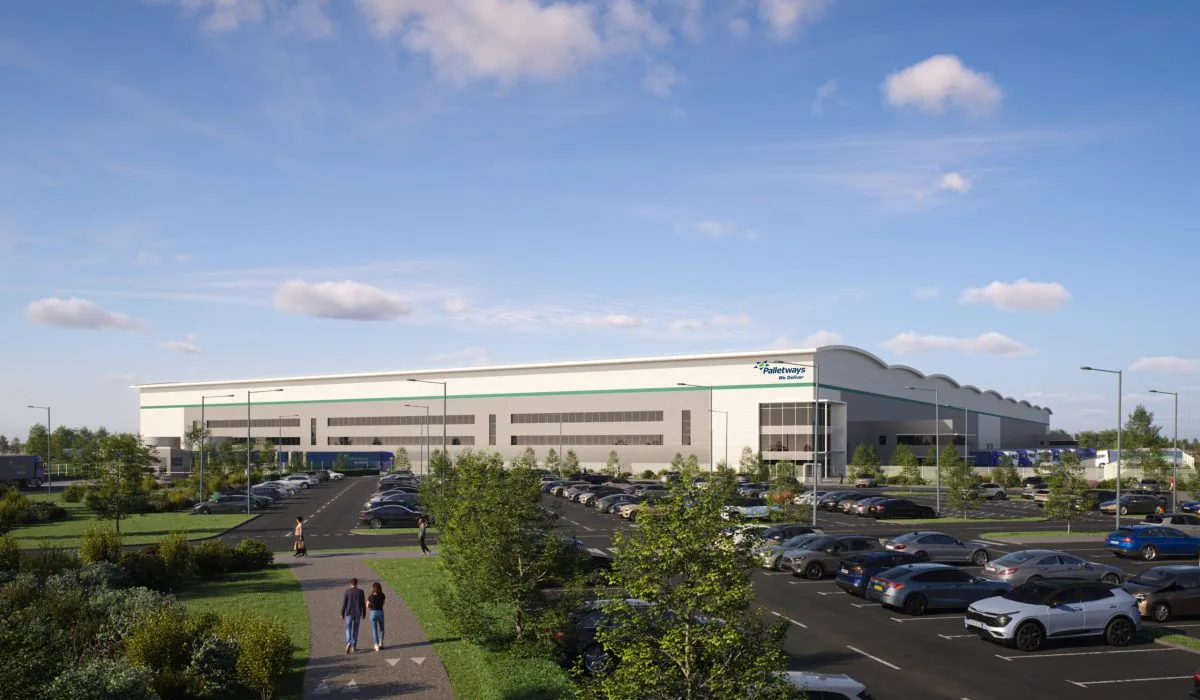
This can be definitely said of two build-to-suit deals with pallet network operator Pall-Ex entering an agreement with developer Barberry for a £80 million 408,000 ft2 Group HQ and flagship hub on a 35-acre site in Leicestershire built to achieve BREEAM Excellent and an EPC A+ rating, and Palletised freight operator Palletways UK, partnering with developer Prologis to purpose build a 640,000 ft2 new national HQ and operations hub at Fradley Park, Lichfield.
Pall-Ex Group Chief Executive Officer Kevin Buchanan said: “[This] isn’t just about expansion and growth – it’s about redefining the industry through technology, quality, and state-of-the-art infrastructure.”
The Palletways deal is of a similar view and will also see the consolidation from seven sites to just one.
Hitting peak supply
According to Cushman and Wakefield’s David Binks: “Despite improving levels of demand availability in the Midlands supply hit 26.3 million ft2 [in units over 100,000 ft2] with availability in the West Midlands alone breaching 10 million ft2 for the first time since 2020.”
Costar’s Lonsdale says: “Our research reveals that there are 140 available warehouses, 125 are standing stock while the other 15 are under construction or refurbishment. Of all those buildings 67 are Grade A totalling 17.3 million ft2.
“There is a lot of space sitting in the region now an increase of some 32% from three years ago and this is entirely due to a mix of new construction and space coming back to the market in the past year.”
Knight Frank research notes that the vacancy rate for warehouses of 50,000 ft2 plus rose for the sixth consecutive quarter to 7.3% from 5.8% a year ago and 4.1% in late 2023.
Luckily grey space – units ostensibly leased but surplus to requirements and available on sublet or assignment is finally reducing falling in the second quarter from 7.6 million ft2 to 5.9 million ft2 across all sizes and type. (Although this has gone up by half again since, due to Sainsbury’s vacating its 673,270 ft2 facility Rugby 673 and seeking a sublet.)
A reduction in grey space which is frequently brand new BREEAM Excellent space and therefore preferred by many occupiers, is often a precursor to a decrease in the supply of new space as occupiers turn to the broader market to meet demand.
For this reason and for the fact that there is very little speculative space being started, CBRE’s Monks feels that the Midlands ‘has hit peak supply’. “There is a lot of space under offer,” he says, “and while there is a lot available this will not be the case in nine months time.”
Knight Frank partner Charles Binks is of the same opinion. “Vacancy rates have ticked up a bit but there is less new building coming through and steady demand, so hopefully we are still of the opinion that vacancy rates will top out before the end of the year.”
Newmark’s Spicer believes that now could be the time for occupiers to make their move. “Where an occupier can be footloose and flexible on space they will be able to get good deals.”
Colliers head of industrial research Andrea Ferranti notes: “While there is unlikely to be much movement on headline rents, in markets with increased availability and more active competition, developers have shown greater flexibility to secure occupancy.”
Knight Frank’s Binks agrees: “Landlords are probably willing to move on lease terms and incentives but will protect headline rents. Increasingly we see incentive packages with rent free periods on a 10 year lease anywhere between 15-18 month and if lucky up to 24 months but if the tenant is looking for the flexibility of a shorter lease of five years or less they won’t get rent free.”
“Of course,” says Savills’ Gill, ‘it all depends on how much competition there is regarding how long a rent-free period will be but that also goes for lease breaks. The majority of landlords will look at five year breaks and a few will take a view on a three year break for the right covenant.
“Void periods have moved out from 6-9 months (minus three months at the height of the pandemic) to around 10-12 months and even as long as 18 months so giving an extra 2-3 months rent free to secure a deal seems sensible right now – once a few more buildings get taken up the market will revert – right now there is a short term window of opportunity for occupiers.”
Rent protection
Despite the current abundance of supply across the Midlands headline rents levels have not fallen. In fact, prime rents have remained unchanged and in some areas have actually increased.
Box4 Real Estate founding partner James Clements says: “Prime rents have remained robust, with multiple deals achieving in excess of £10 per ft2, particularly across Birmingham and Coventry.”
He notes that the Daals’ 300,000 ft2 deal at Ansty Park set a new headline rent for Coventry on large buildings at £10.25 per ft2. The Jingdong Logistics deal for the smaller 117,000 ft2 Apollo 7 unit around the same time at £10.75 per ft2 was also headline grabbing.
For Newmark UK’s head of National Industrial & Logistics Agency team Charles Spicer this is a considerable rental jump: “Probably 18 months ago that would have been circa £9.50 per ft2.”
At this level he adds occupiers looking for build to suits are getting quotes on proposals at £11 to 12 per ft2. “Building costs have gone up and in order to make build-to-suits commercially viable rents need to push on.”
CBRE’s senior director Midlands Industrial & Logistics Peter Monks, says: “Rental growth is still happening in the Midlands, so far this year we have had 50-75p rental growth. Those occupiers concerned rents could be £11-12 next year should lock in a deal now.”
There is good news for occupiers though, according to Cushman & Wakefield rental growth fell to 3.5% year-on-year during Q2 2025, down from 3.7% during the previous quarter.
Savills Director, Head of Industrial Midlands Ranjit Gill adds: “With supply and demand dynamics realigning, Savills has updated its rental growth forecasts and predicts at its base line scenario that there will be a rental increase of 3.2% annually over the next five years, rising to 3.8% annually in the optimistic scenario – considerably down from the 5% plus that had been seen in previous years.”