

Cut down on carbon emissions
Wincanton, a leading supply chain partner for British businesses, talks to Logistics Matters about how it can assist companies with the decarbonisation of their fleets, via optimisation technology and the use of alternative fuels for HGVs.
THE SECTOR faces a long journey ahead, and diesel-driven HGVs will be in play for some time, as alternative fuels take time to ramp up. However, in the meantime there is much that can be done to help cut carbon emissions and lay the foundations for the radical change that could come.
Wincanton’s flagship EyeQ platform is one such tool – a fully managed service provided by Wincanton that optimises customers’ transport operations and manages their fleet. Wincanton product director of EyeQ Helen Flanagan, explains: “There is still a reliance on diesel, but there is a lot we can do in the meantime to cut down on carbon emissions. EyeQ can help, it’s about optimising everything we do.”
“For example, there is typically 30% empty running with lorries in the UK and EyeQ can help fleet managers drive productivity and remove unnecessary miles on the road.”
Wincanton fleet director Sean Clifton agrees: “You want operations to be as lean as possible before you move into alternative fuels at scale. So, alternative fuels and EyeQ are very much linked in the Net Zero journey.
“We are also seeing customers use EyeQ as an enabler, taking the money saved from using the platform and investing that in alternative fuels to push their sustainability agendas further.”
Alternative fuels can require more expensive kit, whether it is the trucks themselves or charging and refueling stations. Therefore, if you have successfully right-sized your fleet, using EyeQ, for example, it will bring significant savings.

Sean adds: “In terms of alternative fuels, there are a number of proven options. For instance, while using Hydrotreated Vegetable Oil (HVO) is an investment, it is relatively straightforward. We use this to fuel the majority of our logistics vehicle fleet serving Screwfix. There is also Compressed Natural Gas (CNG) and Liquified Natural Gas (LNG) that have lower carbon emissions than diesel. They are nice transitions, but they are not Net Zero and you need specific infrastructure to use them.
“Thankfully the Government recognises the cost conundrum and is supporting operators like us in exploring what electric vehicles can do.”
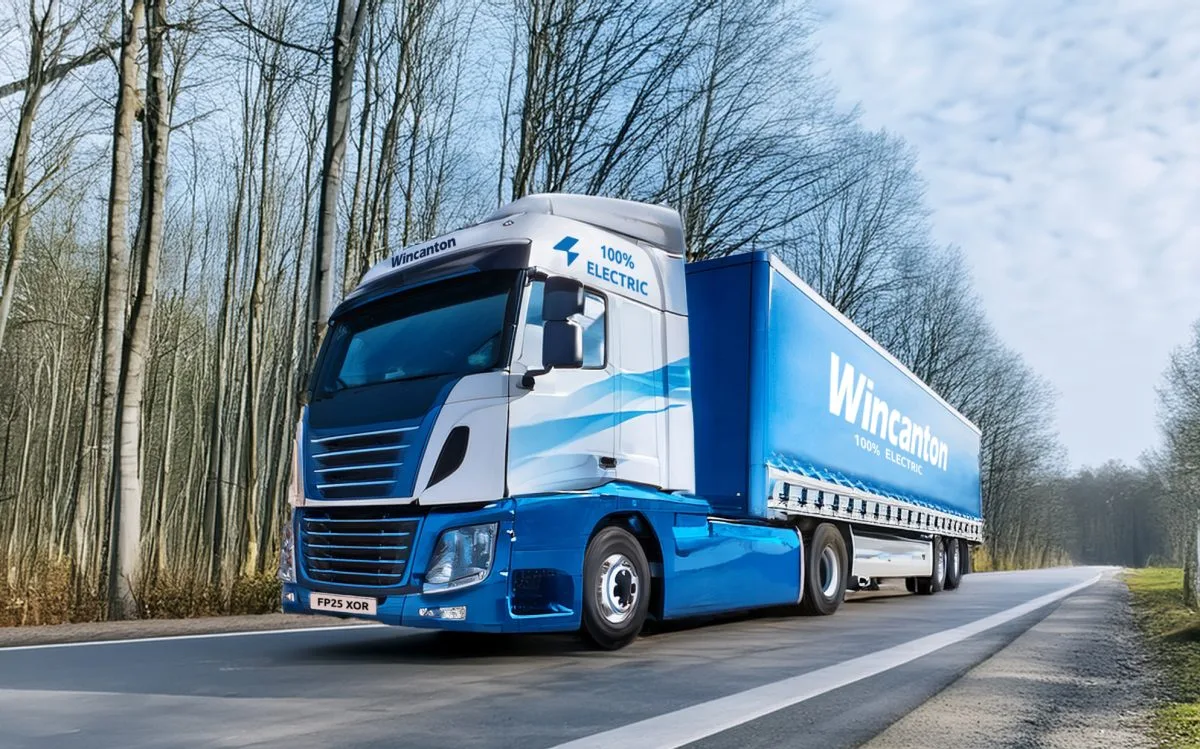
Indeed, Wincanton recently announced that 24 new electric-powered trucks will join its logistics fleet this year. The vehicles, supplied by DAF Trucks, Volvo Trucks and Renault Trucks, which will be able to operate at more than 40 tonnes, are expected to reduce Wincanton’s CO2 emissions by approximately 2,400 tonnes per year.
To support the new trucks, Wincanton is rolling out depot-based charging infrastructure across key sites, including Greenford in West London, Portbury, its Scotland Gateway Hub near Glasgow, and The WEB in Northamptonshire. This infrastructure is being designed and built in partnership with Voltempo and Gridserve. Wincanton is also working with one business to establish up to five additional eHGV charging sites, further supporting its growing EV fleet.
This partnership approach emphasises another key element of the EyeQ product and perhaps the key to successful decarbonisation sector-side – collaboration.
If we’re really going to bridge the net-zero challenge, and optimise costs, then the answer is for like-minded organisations to share resources, using class-leading technology to enable collaboration.
Helen continues: “EyeQ is a data driven platform that can help our customers collaborate. Our insights show where there are inefficiencies and can match that with other customers’ volume to reduce empty running. We’re able to share insights with our customers and recommend ways we can refine their operations further.
“The industry is getting better at collaboration, and it is great see so many customers being receptive on the Net Zero piece.”