


Time is money
A new AutoStore approach to flooring is cutting installation time and saving money for customers. Ellen Brune, VP of product management, AutoStore talks to Logistics Matters editor Simon Duddy.
IN MARCH at LogiMAT, AutoStore said it was targeting further brownfield expansion and looking to remove obstacles to implementations, such as tackling the time-consuming requirement for very flat floors.
Fast forward to the autumn and AutoStore has released a raft of new products and innovations, among them a new approach to flooring. While this may not be the most glamorous of its recent announcements, it could well be the one that warehouse occupiers are most interested in, given the time and money savings that could be achieved.
I was delighted to catch up with Ellen Brune, VP of product management, AutoStore in the wake of the new product releases to talk about this step forward.
Ellen says: “The key benefits are time to market and cost. We tested it with one of our big customers in the United States, a healthcare company with 22 sites. They used the new approach on their 23rd site, saving 85% of their originally budgeted amount for floor remediation and they achieved the implementation more than 50% faster as well.”
So, how is this achieved? Essentially its about changing the approach to measurement and remediation.
Ellen explains: “Historically, the way the measurements had to be done was a complicated process.
“With modern laser scanners, it is a simpler and faster way to map the floor, and quickly tell us where those ‘hills and valleys’ are.”
AutoStore has also updated its floor standard specification to match these new tools in the industry, making sure the data coming off the laser scanner matches its formats and specifications.
Ellen continues: “It’s a huge benefit in terms of speed but it doesn’t actually fix the issue. The traditional solution is to grind the floor down. This involves mapping the floor, marking ‘hills’, then grinding to shave millimetres off of the concrete, and then remeasuring. That process would sometimes take a few passes.
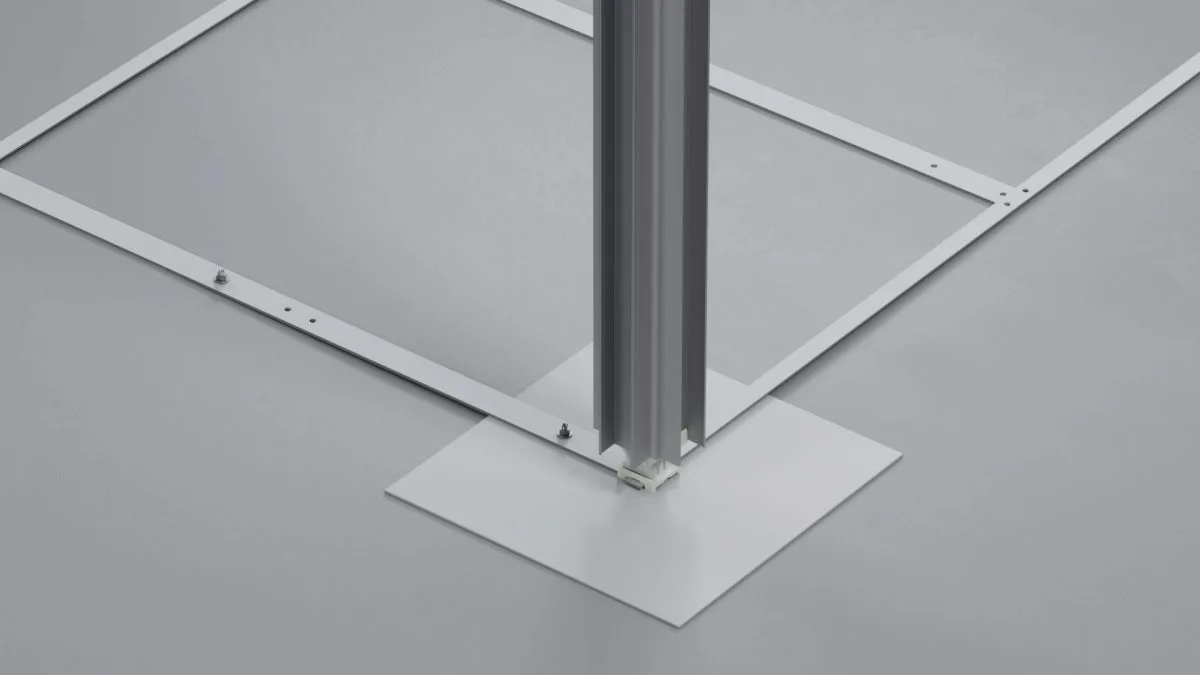
“What we do now is measure the low spots in the floor, and we now have a new shimming system that allows you to basically shim up the low spaces to create flatness.
“What matters is if the top of the rack is flat. You don’t want waves in the rack as that’s what causes issues with the robots.
“A key difference is you can shim the floor while the grid is in place, whereas the floor grinding must be completed before the grid is erected, so you must be sure the floor is as flat as needed before erecting the grid.
“With shimming the process allows you to go back and forth and adjust.
“That being said, we still grind the floor if the floor if the damage warrants it.”
The move is, in part, a response to AMR-based AS/RS where there is less need for a flat floor.
Ellen concludes: “There is some pressure from the AMR side, but it’s also about increasing our competitive advantage. Our lead times are very competitive, about 16 weeks coming out of our supply chain. So when a customer looks at time to value, then this new approach to flooring can compress that even further, saving more time and money.”