

How IPAF training helps logistics and warehousing firms prevent working-at-height accidents
Working at height remains one of the most persistent risks within the logistics and warehousing sector.
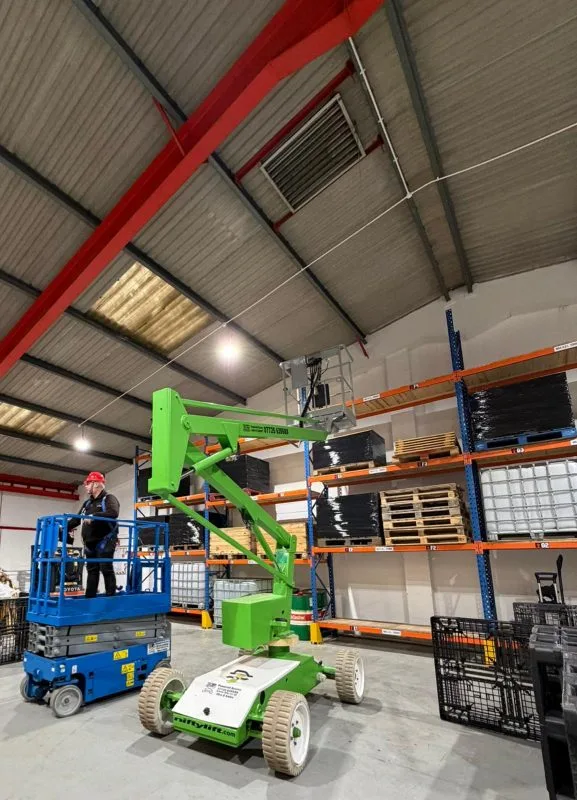
From stock-picking at elevated levels to maintenance tasks carried out above ground, Mobile Elevating Work Platforms (MEWPs) are relied upon daily to reach areas safely and efficiently. Yet, despite improvements across the industry, avoidable MEWP incidents continue to occur, often due to operator error, poor planning or inadequate supervision.
Recent analysis shared by Logistics Matters shows promising progress, with MEWP fatality rates decreasing in the latest reporting period. However, organisations still face significant pressures to maintain high standards of safety, particularly as warehouse automation grows, storage heights increase and operational demands intensify.
Against this backdrop, IPAF (International Powered Access Federation) training has become more vital than ever for firms that rely on powered access equipment. IPAF’s global safety initiatives, including their recent international campaign highlighted by Logistics Matters, reinforce the need for well-structured training and competent operator development.
Why logistics and warehousing need IPAF-certified operators
The operational environment within a warehouse or distribution centre is unique. Tight aisles, narrow pick paths, busy loading bays and increased seasonal pressures create conditions where mistakes can easily escalate into accidents. The majority of MEWP-related incidents in logistics environments stem from predictable issues such as:
- Poorly planned lifts
- Inadequate risk assessments
- Choosing the wrong MEWP category for the job
- Entrapment and crushing hazards
- Lack of familiarisation with machine controls
- Insufficient rescue planning
IPAF training directly addresses each of these issues. Through structured theory modules and hands-on practical assessments, operators learn safe machine operation, hazard identification, platform stability, emergency descent procedures and the importance of correct machine selection.
IPAF’s recognised categories, such as 3a (Mobile Vertical), 3b (Mobile Boom) and 1b (Static Boom), also ensure that operators are trained on the specific types of MEWPs used in logistics, rather than generic access equipment.
Reducing the most common risks in warehousing
One of the biggest advantages of IPAF training is its focus on the real-world challenges MEWP operators face inside modern warehouses. For example:
1. Improving Machine Selection
Wrong machine selection is one of the most common causes of MEWP accidents. An operator trained only on vertical lifts may attempt a task requiring horizontal outreach, increasing the risk of overreaching or tipping.
2. Strengthening Pre-Use Checks
Daily inspections, when performed correctly, prevent the majority of failure-related incidents. IPAF emphasises the importance of identifying leaks, loose components, tyre issues and emergency-stop faults before a machine enters service.
3. Better Spatial Awareness in Confined Areas
Warehouses often present limited turning radiuses and unpredictable pedestrian movement. IPAF training helps operators navigate confined areas safely and anticipate entrapment risks.
4. Establishing Effective Rescue Plans
Emergency descent is one of the least understood aspects of MEWP safety. IPAF certification ensures operators and supervisors know how to respond if the platform becomes stuck or an operator becomes incapacitated at height.
Insights from industry: how HOV Training supports safer MEWP use
To understand the challenges MEWP operators face in the logistics sector, we spoke directly with the team at HOV Training – an IPAF-approved centre with instructors who have spent years working on live construction, warehousing and industrial sites. Their perspective was clear: most incidents aren’t caused by rare mechanical failures, but by familiar patterns that repeat themselves across the UK.
“We see the same issues come up time and time again,” one of their senior instructors explained. “Operators often underestimate how quickly a small misjudgement can escalate, especially in tight warehouse environments.”
According to HOV Training, one of the most frequent problems is improper machine selection. Many operators default to the machine they’re most familiar with, rather than the machine most suitable for the job. “A vertical lift is great for straight-up access, but we still find people trying to stretch or overreach when they really needed a boom. That’s where risk starts creeping in.”
Another recurring challenge they highlighted is spatial awareness in confined areas. Instructors regularly observe delegates struggling to judge platform swing, tail-swing clearance and the movement of pedestrians or forklifts around them. “Warehouses are busy. You’ve often got picking, loading and maintenance going on at the same time. Operators need to read the environment, not just the controls.”
HOV Training also emphasised the importance of rescue planning, something they say is still widely misunderstood. “People assume someone on the ground knows what to do if the platform fails or an operator becomes unwell, but in reality, ground staff often haven’t been shown the controls. That delay can be dangerous.”
Their new training centre has been purposely designed to tackle these issues head-on. With narrow aisles, realistic racking layouts and a variety of MEWPs used across the logistics sector, they deliver hands-on scenarios that mirror the pressures operators face in real facilities. Delegates are taught practical judgement, not just textbook answers.
As HOV put it: “The goal isn’t just passing a test, it’s making sure operators walk back into their workplace more aware, more confident and much safer.”
This makes their IPAF powered access courses at their new training centre a valuable resource for logistics firms looking to strengthen their working-at-height safety.
Supporting a safer future for warehouse access
The logistics and warehousing sector continues to evolve at pace, with greater demand placed on speed, accuracy and efficiency. As warehouses grow taller and more complex, MEWPs play a critical role in maintenance, stock-picking, facility repairs and equipment installation.
IPAF’s ongoing global safety campaign (featured by Logistics Matters) reinforces a simple message: competence saves lives. By investing in structured and accredited operator development, firms reduce accident rates, strengthen their safety culture and maintain compliance with UK legislation.
Whether used for routine stock access or specialist maintenance tasks, MEWPs require respect and proper training is the starting point for safe operation.