

BUDGET 2025: Business rates surcharge for higher valued properties not going to level playing field
The Chancellor has adopted a lower higher rate business rates multiplier for properties valued above £500,000 than originally feared but occupiers and owners of distribution warehouses will still pay an additional £270 million over the period 2026-27 to 2028-29 and the level playing field between the high street and online retailers will not materialise next year.
By Liza Helps, Property Editor, Logistics Matters
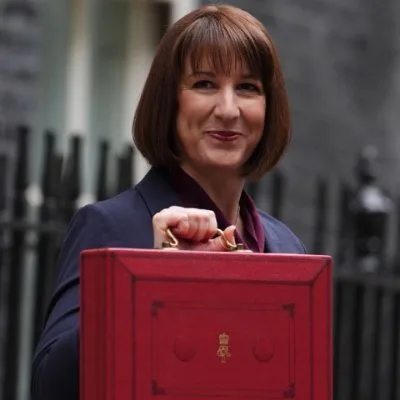
THE CHANCELLOR announced that the newly introduced higher rate multiplier for properties with a rateable value over £500,000 would be just 2.8p above the standard business rates multiplier far lower than feared after legislation allowed the Government to impose a supplement of up to 10p on those properties in England.
It is thought lobbying from the big supermarkets warning the Chancellor that they would have to put up prices to cover increases in business rates for their larger format properties potentially fuelling food inflation was part of the decision behind the lower than expected higher rate surcharge.
As it is with this lower surcharge many retailers operating large format stores will now see a business rates tax cut, not an increase.
According to analysis by global tax firm Ryan, there are 2,040 hypermarkets and superstores over 27,000 ft2 across England and because the total rateable value for these properties only rose marginally under the 2026 Revaluation (that sets the rateable values which form the legal basis for every business rates bill across the next three financial years: 2026/27, 2027/28 and 2028/29) and that combined with the lower than feared higher rate multiplier (which is lower than the 55p standard rate multiplier used last year) means that business rates liabilities will actually fall.
In 2025/26 business rates liabilities for these stores were £1.25 billion and will drop to £1.21 billion next year in 2026/27 – a £42.87 million reduction. Had the full 10p surcharge been used then the business rates liability from these properties would have been in the region of £1.38 billion – an increase of £130.4 million.
Would that occupiers operating distribution warehouses have the same clout, according to tax firm Ryan there are 2,600 distribution warehouses in England which will see their rateable value under the 2026 Revaluation rise from £3.08 billion to £3.59 billion – up £513.9 million or 16.7% (compared to 5.3% marginal increase across larger format supermarkets).
This will see a business rates liability of circa £1.82 billion up from £1.69 billion – an increase of £126 million.
The fall for the larger format supermarkets is driven by the substantial cut in multipliers required to keep the revaluation revenue neutral.
Ryan Europe & Asia-Pacific Property Tax Practice Leader, Alex Probyn explained: “The standard multiplier is 55.5p in 2025/26, but the new high-value multiplier falls to 50.8p next year. Revaluations are revenue neutral, so with total rateable values rising from £68.36 billion to £81.61 billion, a 19% uplift, the multipliers must be reduced, after making allowance for inflation and appeals, to avoid raising more money overall. Higher rateable values overall therefore feed directly into lower tax rates.”
Savills head of business rates David Parker notes: “The reduction in the multiplier is marginally higher than most experts had predicted, although this is not necessarily a reason to celebrate as it indicates that the sum of all rateable values in the new 2026 rating list is higher than expected. However, the small print of the Budget reveals that the announced multiplier will potentially be 1p higher in 2026/27 to help to fund transitional relief, which makes the calculation of future liabilities even more complex. While the reduction could be presented as good news, the annual multiplier remains high and most businesses will still end up paying more in rates due to rising rateable values and new supplements added to the bills of larger properties.”
The reasoning behind the higher rate multiplier in the first place as explained by the Chancellor was to fulfil a manifesto pledge to level the playing field between high street and online retailers such as Amazon who typically operate from the larger distribution warehouses. But what she has done falls far short of actually helping Retail, Hospitality and Leisure (RHL) businesses on the high street.
Avison Young’s head of rating David Jones explains: “Big business dodged a massive bullet, with the announcements saving around £1bn, versus the predictions.
“However, the government has not reduced the retail, hospitality and leisure sectors multipliers as far as expected, offering only £800m of help, rather than the £1.8bn of RHL relief provided in the current 2025/26 rate year.”
The removal of the 40% business rates relief for high street retailers totally removes any benefit of the introduction of the lower, permanent small business RHL business rates multiplier – which means in effect that high street retailers leisure and hospitality businesses face a 40%–65% Business Rates Rise next year.
Had the Chancellor pushed for a higher increase in the top rate multiplier on properties with a rateable value of £500,000 then she could have mitigated this business rates hike for RLH businesses but then the supermarkets would have passed on the increase to the consumers and fuelled food inflation.
So the higher rate multiplier which was put into effect to level the playing field for the high street is not in fact doing that at all despite the Chancellors comment in her budget speech that ‘warehouses of online giants’ would be paying more to level the playing field when quite clearly the playing field has not been levelled at all.
A press release from th UKWA said: “Normally we’d be pleased to hear the Chancellor of the Exchequer talking about warehouses in the House of Commons. Unfortunately, in her Budget Speech today, Rachel Reeves used the “warehouses of online giants” as a justification for imposing a business rates surcharge on properties valued above £500,000.”
UKWA CEO Clare Bottle, described the comment as a ‘cheap shot’ adding that “it was disappointing because the growth of online shopping has been driven by consumer demand, which the warehousing sector has responded to with agility. It was also disappointing because this tax increase hits all warehouses above the threshold, irrespective of sector.
“As the Chancellor surely knows, warehouses handle everything from medicines to components for the defence industry, as well as the goods sold in high street shops that are being given a cut in business rates. It’s short-sighted of the Government not to realise that increased costs for warehouses will flow into increased costs of goods.
“The Treasury is expecting to raise a staggering £270million from 1,900 warehouses between 2026-29 through this change. As a result, for many UKWA members, this will be seen as another cost-increasing budget.”
The UKWA has been talking to the Treasury about this issue for months, arguing for transitional relief for businesses facing a steep increase in rates, and for further measures to make the business rates system less punishing for companies upgrading their premises.
The Budget does include £3.2bn of transitional relief, although it’s unclear how much of this will be accessible to warehouses. Separately, a new consultation has also been launched on business rates and investment, which the UKWA will be responding to.
Developer investor SEGRO UK Managing Director James Craddock, added that his company was also concerned about the changes to the Business Rates system. “This will levy an additional tax burden on businesses in large industrial buildings across the country, including our customers in retail, manufacturing, data centres, life sciences and other key Industrial Strategy sectors, and will impact on inward investment and growth. It will add to the operational cost pressure employers are already feeling as a result of last year’s National Insurance increase as well as high energy costs.”
The Treasury will receive £34bn from business rates in 2026,
.