

Why real-time parcel tracking is becoming the silent force behind UK logistics efficiency
If you ask any UK logistics manager what keeps them up at night, the answer usually isn’t fuel prices or fleet maintenance. Those are predictable. Manageable. Budgeted.
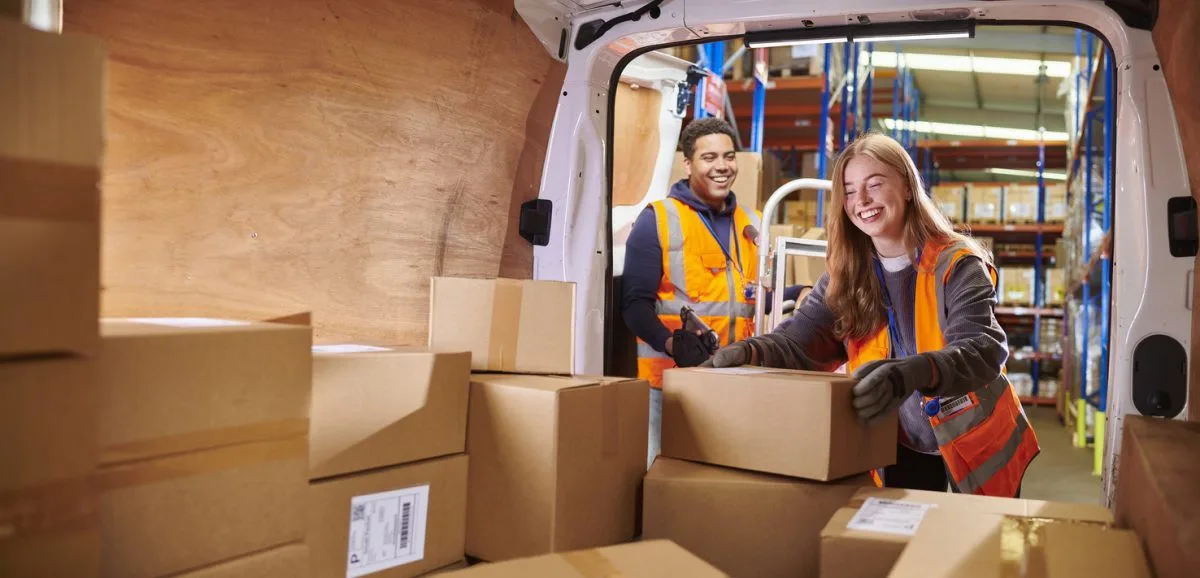
What really causes the shoulder tension is the not knowing — the gap between dispatch and delivery where information gets fuzzy, systems go quiet, and the entire chain runs on assumptions.
For years, the logistics sector accepted this blind spot as part of doing business. Parcels went into the network and came out when they came out. Customers waited. Operators guessed. Drivers fielded calls that shouldn’t have been theirs in the first place.
But the industry is now in the middle of a fundamental shift — a quiet modernization where visibility isn’t just a feature; it’s becoming the operational backbone. And front and centre of this transformation is real-time parcel tracking, a technology that’s quietly turning into the silent force powering UK logistics efficiency.
The Turning Point: Why Visibility Became Non-Negotiable
Here’s the truth most insiders already recognize:
Modern logistics doesn’t break down because people fail. It breaks down because information arrives too late.
A delayed scan.
A mis-sorted parcel.
A driver stuck behind an unreported road incident.
A depot handling ten times its normal volume.
Individually, these issues are small. But without real-time visibility, they compound — and by the time anyone notices, the delivery commitment is already compromised.
The UK’s delivery ecosystem has become faster, more fragmented, and increasingly customer-driven. Home delivery is no longer a convenience; it’s an expectation. With that shift, traditional once-or-twice-daily scanning systems simply can’t keep up.
The sector needed something more dynamic, more immediate, more predictive.
That’s why visibility technologies have forced their way into the centre of operational strategy.
The Efficiency Ripple Effect No One Talks About
When a parcel becomes visible at every stage of its movement, something fascinating happens operationally: pressure points stop being invisible.
Managers suddenly see:
- which routes consistently fall behind
- which depots are chronically overloaded
- where driver idle time spikes
- how weather patterns affect delivery timing
- which packages are at risk before delays occur
This isn’t “nice to have” insight. This is the kind of information that changes planning cycles, labour allocation, and even cost structures.
The result?
A ripple effect of efficiency that spreads through the entire chain.
In fact, many UK operators who integrated deeper tracking systems report improvements in:
- first-attempt delivery rates
- fleet utilisation
- customer service load reduction
- more accurate delivery windows
- operational cost control
The surprising part? Customers weren’t the main beneficiaries. Operators were.
This is the part of visibility the public doesn’t see — the operational optimisation that happens behind the scenes.
Why UK Logistics Needs Real-Time Tracking More Than Ever
The UK has unique challenges compared to other markets:
1. High population density – urban deliveries require fast rerouting.
2. Complex last-mile networks – couriers, carriers, local depots, micro-hubs.
3. Volume volatility – seasonal surges now resemble tidal waves.
4. Tight labour capacity – every inefficiency hits harder.
5. Consumer expectation inflation – “next day” now feels like “normal day.”
Real-time tracking bridges these pressure points. It’s the glue that keeps velocity and accuracy from drifting apart.
This is why so many logistics operators, retailers, and e-commerce platforms have begun shifting their infrastructure to depend directly on real-time parcel tracking — because clarity isn’t a luxury; it’s an operational necessity.
The Impact on Business Customers: Why They Now Expect Transparency
It used to be enough to tell business clients:
“Your shipment is on the way.”
Not anymore.
Procurement teams expect timestamped movements.
Warehouse managers expect ETAs tied to traffic conditions.
Retailers expect proactive notifications, not reactive apologies.
Consumers expect real-time doorstep precision.
Transparency has moved from “informational” to “contractual.”
Many B2B contracts even include visibility clauses now.
Operators who provide this level of clarity are quickly separating themselves from those who don’t.
Inside the Technology: The Engine Behind the Scenes
Real-time visibility has matured rapidly, thanks to a convergence of:
- IoT scanning devices
- GPS-enabled courier hardware
- API-based carrier integrations
- Dynamic routing algorithms
- AI-driven prediction models
- Unified tracking dashboards
- Standardised data layers across carriers
In short, tracking is no longer a single “scan event.” It’s a living data stream.
This is the silent force at work — technology that’s rarely seen by the end user but fundamentally changes what operators can anticipate, plan, and prevent.
The Growing Demand for Embedded Visibility Tools
A trend worth noting: businesses increasingly want tracking embedded into their environment, not sitting on a separate page.
Retailers want tracking windows inside their order confirmation emails.
E-commerce sellers want a branded tracking page.
3PLs want integrated dashboards their clients can access.
Warehouses want tools that feed into their existing systems.
This is where tools like advanced parcel visibility tools come into play — not only improving the customer-facing experience but also giving internal teams a deeper layer of operational intelligence.
Embedding visibility is no longer a novelty; it’s becoming the default expectation in 2025 and beyond.
The Real Bottom Line: Visibility Isn’t Just About Tracking — It’s About Control
When logistics teams finally see everything happening as it unfolds, they gain something far more valuable than data: control.
Control over delays before they escalate.
Control over routes before inefficiencies harden.
Control over customer expectations before they sour.
Control over staffing before bottlenecks form.
Control over performance before reviews go public.
Real-time tracking doesn’t just fix problems — it prevents them.
This forward-looking posture is what separates resilient operators from reactive ones.
What’s Next for UK Logistics Efficiency?
The next evolution won’t just be faster deliveries.
It will be smarter deliveries.
Expect to see:
- predictive ETAs using multi-source data
- congestion-aware last-mile routing
- parcel-level digital twins
- AI-driven exception reporting
- end-to-end visibility across carriers
- more automated customer communication flows
And all of these advancements sit on one foundational requirement: real-time visibility.
In other words, the UK’s logistics efficiency revolution isn’t being powered by faster vans or bigger networks — it’s being powered by information that finally moves as fast as the parcels themselves.
Final Thought
Real-time parcel tracking has quietly shifted from a customer convenience to a structural pillar of UK logistics. Operators who adopt it aren’t just modernising; they’re stabilising. They’re removing guesswork. They’re giving their teams the tools to operate with clarity instead of stress.
It’s not loud. It’s not flashy.
But make no mistake — visibility is the silent force keeping UK logistics efficient, reliable, and ready for what comes next.
Author: Emmanuel Fornillos