

Ramp up resilience and efficiency in 2026
This time of year is a period of reflection as well as forward planning. Industry experts are predicting not only more economic and geopolitical instability for 2026 but also increased cybersecurity threats, continued labour and skills shortages, and new regulatory burdens.
It’s challenging to know where to prioritise budget and focus, especially while consumers are demanding faster, greener deliveries and returns. Four in ten (40%) freight forwarders and 3PLs are said to be committing a quarter of their budget in 2026 to technology, with the lion’s share (44%) going on forecasting and visibility.
Modern retail fulfilment is defined by speed, precision, and customer expectations. It is distribution centres (DCs) that determine how quickly and accurately inventory flows across an entire retail network. As fulfilment complexity grows, there’s no room for bottlenecks, blind spots, or outdated systems.
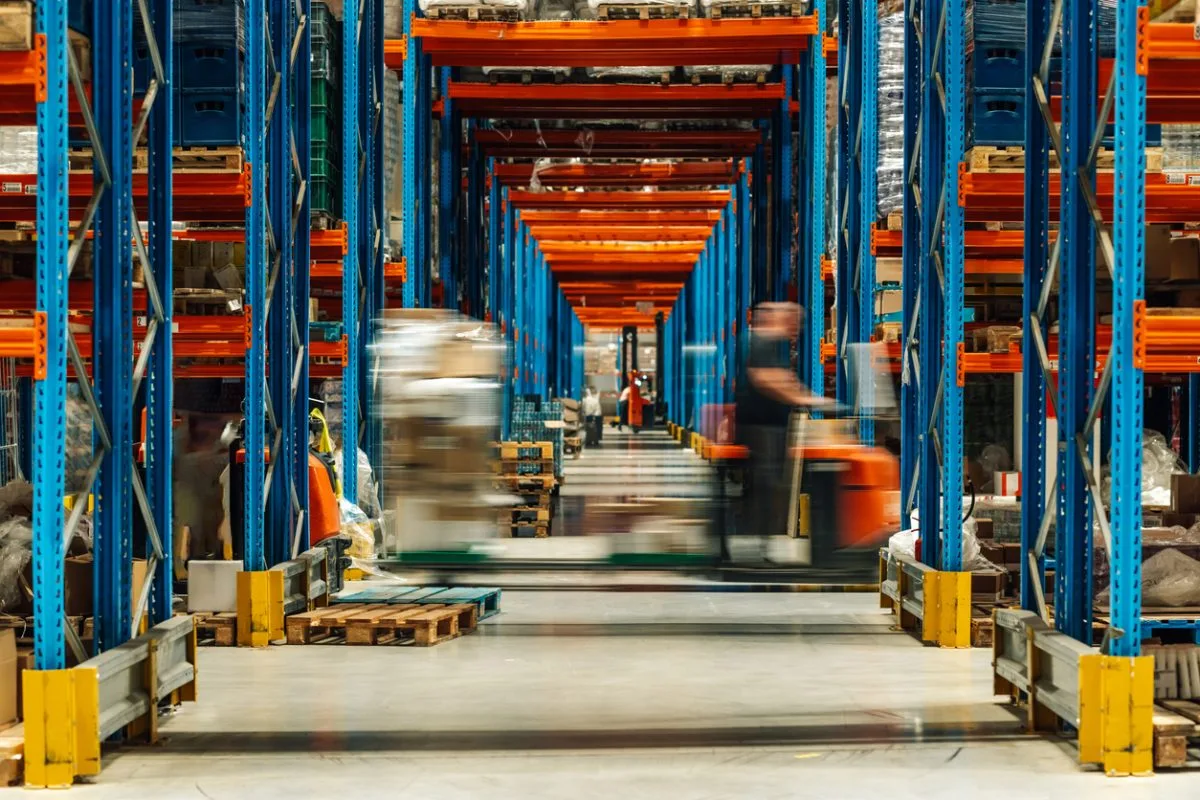
Today’s DCs are under immense pressure, what with shifting order volumes, tighter SLAs, labour shortages and fragmented systems. They’re expected to do more than shift goods, they need to be dynamic hubs that can respond instantly to constant change. But many still rely on manual, disconnected workflows: over half (52%) say their order fulfilment processes remain largely, or entirely, manual. Such inefficiencies continue to hinder real-time responsiveness and limit the ability of DCs to scale operations during demand surges.
Think AIDC as well as AI
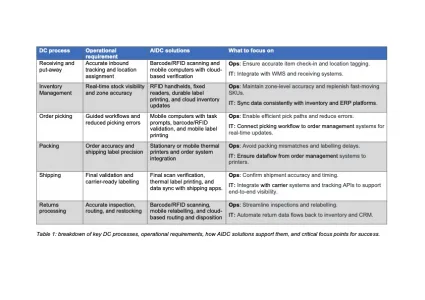
It’s time to rethink distribution execution and, while many in the supply chain are moving from AI experimentation to more widespread adoption, they should also consider the role of automatic identification and data capture (AIDC) technologies in improving efficiencies (see Table 1). AIDC technologies include barcode scanning, RFID, mobile computing, and thermal printing.
This tech helps digitise workflows and enables real-time visibility across all DC processes, enabling retailers to automatically capture accurate, real-time data at every step. It gives them real-time visibility, triggers automation processes, and enables more connected operations to turn their DCs into intelligent, high-performance fulfilment engines.
The right tools for the job
But DCs are tough environments and devices to improve inventory accuracy and visibility need to be rugged enough to withstand them. A handheld RFID reader like the RFR901 paired with the S50 enterprise mobile computer works well for cycle counts or, for greater automation, fixed RFID readers such as the FR900 can be placed at key checkpoints to track inventory movement automatically. And if RFID tags go missing or become unreadable, the Alpha-40L RFID mobile printer allows staff to relabel on the spot. Solutions and recommendations for other DC operations can be found in TSC Auto ID’s Retail Solutions Guide.
Modern DCs shouldn’t just be more efficient, they should also be smarter, more integrated, and ready to scale with tomorrow’s retail demands. The right AIDC solutions help drive efficiency and visibility in DCs and building resilience in the supply chain will depend on leveraging the sort of high-quality data this technology provides. If you want faster decision-making, better resource allocation, scalable operations from receiving to returns then contact TSC Auto ID.