

Five physical security tools every warehouse manager should consider
Maintaining safe and secure warehousing environments can be uniquely challenging, with complex threats spanning theft, vandalism and occupational safety commonly impacting operations.
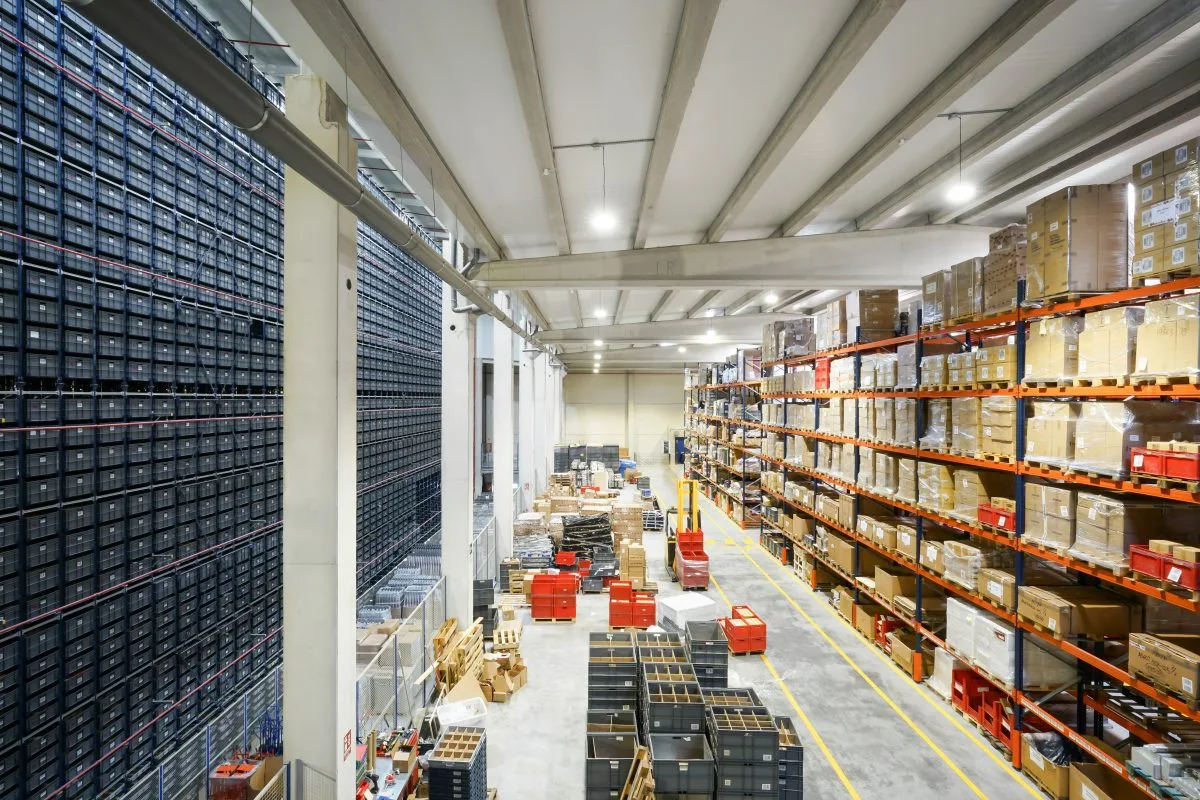
[image credit: alberto-rodriguez–aCrA9FmT8Y-unsplash]
IN 2023 alone, cargo theft cost employers an estimated £68 million in stolen goods, with wider threats such as targeted arson attacks rising by almost 65% in recent years.
Custom security systems can help facility operators continuously observe important areas, assets and operations, enabling them to initiate swift and effective incident responses. To help modern business owners and security leaders create impactful security systems, this guide explores five physical security tools every warehouse manager should consider.
1. Mobile-enabled access control systems
Access control is the first line of defence for logistics facilities, helping site managers to ensure only authorised persons can access secure areas. To ensure efficient and safe warehousing operations, an ideal balance between convenience and security must be achieved, with tools and policies leveraged to support swift staff access while reliably preventing intrusion events.
Mobile-enabled access control systems, developed specifically for warehousing facilities, help site managers view, assess and respond to security issues in real time. A solution, such as Avigilon’s smart access control system, can be used to grant touchless access to employees and verified guests, while allowing operators to lock and unlock doors remotely at any time.
On-site credential readers are connected to a responsive, intuitive cloud management portal that managers can access via any secure smart device. From a remote position, leaders can receive instant alerts, review access requests and adjust active credentials to address safety concerns in real time with options to pursue integrations with wider physical security devices.
2. AI-informed security cameras
Providing managers and security teams with consistent visibility into emerging risks is a key component of effective warehouse security operations. Cameras positioned to cover critical areas, such as picking, packing and storage locations, must be designed with continuous visibility in mind, with operational software and management platforms accessible remotely.
Smart security cameras with built-in AI video analytics empower operators to not only observe high-risk areas at all times, but also remain reliably informed of potential threats. Leading providers like Pelco produce devices specifically optimised for warehouses that leverage AI threat detection capabilities designed to detect and warn operators of common security risks.
AI-informed cameras installed around the site can leverage object, behaviour and occupancy detection capabilities to automatically detect suspicious and dangerous events. Via a unified cloud management portal, operators can be informed of concerns remotely and in real time, with options to enable site-specific incident responses such as automated lockdowns and alarms.
3. Smart environmental sensor systems
Internet-of-Things (IoT)-enabled smart sensors can serve dual purposes as security and efficiency-boosting technologies in warehousing environments. By leveraging a unique array of sound, motion, occupancy and temperature sensors installed throughout modern facilities, operators can gain deeper insights into daily operations and improve event response times.
Leading smart security sensor providers, such as ADT and Halo, produce combination sensors designed to reliably identify and initiate responses to industry-specific risks. Smart sensors installed around a facility can be configured to independently identify sound, motion and environmental stimuli outside of a set threshold, enabling automated incident responses.
Sensors can be used to track occupancy levels, inform safe HVAC operations and inform swift security responses. Leaders can integrate sensors into broader security and facility management systems to drive efficient and intelligent workflows, utilising site-specific thresholds for automated responses to common threats, such as break-ins and intrusion events.
4. Real-time inventory tracking solutions
Internal theft is a major and growing problem for managers of logistics facilities, with a 2023 report suggesting warehouse, distribution centre and in-store employees are responsible for around 40% of retail theft losses. In combination with wider physical security tools, the use of real-time inventory tracking solutions can help leaders address shrinkage and loss events.
RFID and AI video analytics-informed inventory tracking solutions empower facility operators to generate detailed audit trails of important assets as they travel through complex facilities. Security and management teams can set site-specific parameters to trigger automated alerts if items are moved without required authorisation, helping to prevent and deter internal theft.
Service providers like GJBS and Matrix IQ produce RFID tag and barcode scanning tracking solutions optimised for logistics facilities, enabling operators to reliably follow goods and equipment in real time. Via wider integrations, automated responses may be programmed to lock entry points and flag CCTV footage in response to suspicious activity.
5. Cloud security management platforms
Cloud-based security management platforms can enhance the capabilities of wider physical security tools by integrating their operation within a centralised system. By prioritising open platform, ONVIF-conformant access control, video security and sensor hardware, managers can freely develop custom security installations that can be accessed and adjusted remotely.
Manufacturers of comprehensive physical security ecosystems, such as Avigilon, provide both hardware and software components designed to support practical integrations. Smart access readers, CCTV cameras and intrusion detection devices can be managed in unison within an intuitive cloud-based platform that can be accessed remotely from any secure smart device.
By combining the management of warehouse security devices within such a system, leaders can implement impactful, site-specific automations. For example, rules can be configured to initiate lockdowns in response to suspicious motion, IoT sound sensors may be turned into keyword-activated alarms and cameras may automatically flag footage of suspicious events.
Final thoughts
The fast-paced and complex nature of warehousing can make it difficult to address common security threats, placing significant strains on security and management teams. By choosing to leverage smart security tools, modern facility managers can gain a more holistic view of key areas, assets and operations, as well as develop autonomous security responses.
Through a combination of well-implemented access control, video security, sensor and asset tracking solutions, managers can reliably identify potential threats. By opting to combine the management of such tools within a cloud-based system, management and security staff can remain informed of emerging risks 24/7 and improve security operations.