

Inside Arvato’s warehouse transformation
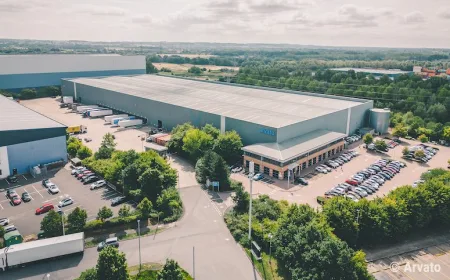
Logistics Matters editor Simon Duddy visits leading tech-led 3PL Arvato in Hams Hall, Birmingham, to see how a modern consumer products warehouse works.
By Simon Duddy, Editor, Logistics Matters
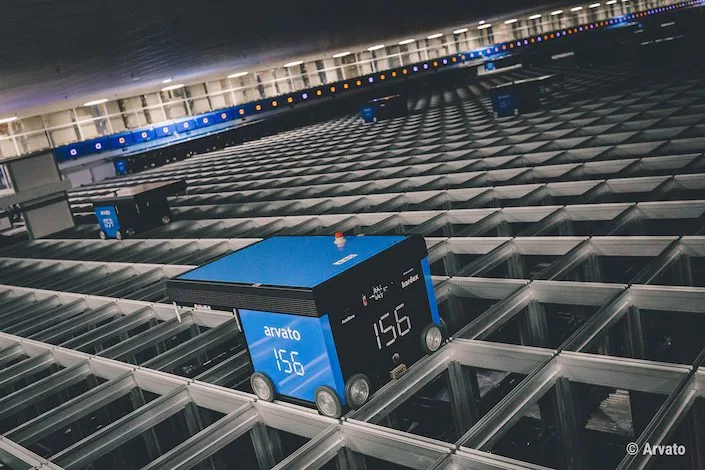
ARVATO RECENTLY expanded its automated storage system in partnership with AutoStore at the site, just in time for last year’s Peak. The expansion, implemented in cooperation with system integrator Kardex, increased capacity by more than 30% and enabled faster, more flexible fulfillment for a growing international client base.
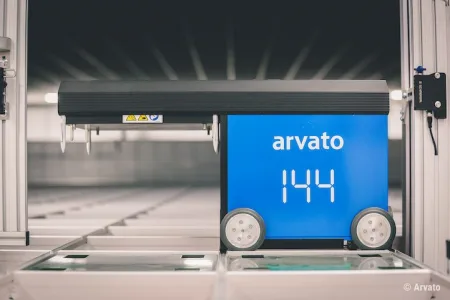
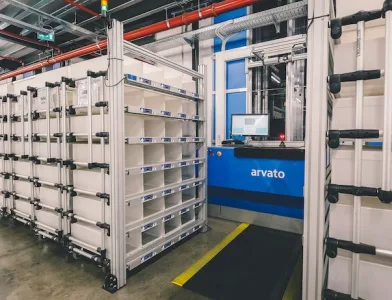
The extension was completed in just over three months, following the original AutoStore system implementation in 2023. The upgraded system now operates with 165 R5 robots managing 87,600 bins, up from 65,000 previously, and supports nearly 1.2 million stored units. During peak periods, picking performance reaches more than 26,000 orders per day – a 53% increase compared to manual picking solutions.
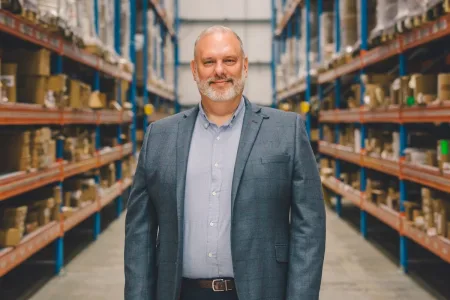
One of the clearest lessons from Arvato’s journey is that successful automation starts well before any robots arrive on site. David Bailey, director of consumer products in the UK, frames it simply: “One of the key things in terms of any automation implementation is basically understanding what your customer requirements are and making sure you’re matching that with the right solution.”

That mindset matters. Instead of forcing a preferred solution onto every customer, Arvato works through options collaboratively. As Steven Pitt, head of operations for consumer products at Arvato in the UK, puts it: “There’ll be options with varying pros and cons, in key metrics such as scalability and cost. We’ll partner with our suppliers to make the right decision for our customers.” For warehouse managers, this is a crucial reminder. Automation is not about chasing the newest kit. It is about fit, flexibility, and future-proofing.
AutoStore standing out
In many cases, that evaluation process leads Arvato toward AutoStore. Bailey explains why. “It provides a flexible tool that we can effectively use in a variety of different ways,” he says. From accuracy to speed of picking, cycle counting, and rapid replanning, the system supports multiple operational needs without locking the business into a rigid design.
Scalability is another decisive factor. Pitt describes it bluntly: “Once the infrastructure’s in place, adding ports, adding robots… the scalability is easier.” That matters in a market where growth rarely follows a neat curve. At Hams Hall, Arvato built an AutoStore system from scratch in around three months. When customers arrive with ambitious growth plans, the operation can respond at speed.
Bailey contrasts this with more traditional automation. Large, fixed systems certainly have their place, but do exactly what they were designed to do and little else. “The problem is, particularly in consumer products, the demand is changing constantly,” he says. Flexible systems allow Arvato to change how automation behaves as volumes, product profiles, and service expectations evolve.
Morgan McNee, head of projects, Kardex adds: “A key point is not just what the AutoStore does, but how quickly we’ve gone live with this extension. A lot of that comes down to our team in the UK, backed up with a strong core team based in Switzerland. It’s a great combination of experience and local knowledge.”
Software: the not-so-secret sauce
If the robots are the visible face of automation, software is the real engine underneath. Bailey is unequivocal on this point. “One of the biggest things that can create a challenge in terms of doing something like an AutoStore implementation is software,” he says.
Arvato’s decision to run its own Warehouse Control System gives it a critical edge. “If there is a different customer requirement, if there is something that we want to do particularly differently because we want flexibility, then having our own WCS and being able to develop it just makes that far easier,” Bailey explains. For customers, that translates into faster change, tailored processes, and a system that adapts rather than resists.
For warehouse managers considering automation, this is a vital takeaway. Hardware choices matter, but software determines how responsive, resilient, and future-ready an operation truly is.
Arvato did not build its UK automation capability in isolation. Pitt describes how lessons from German sites shaped the first UK go-live. “We took people from the operation to the German sites,” he says. Operators were immersed in how the system worked, how to overcome obstacles, and how daily life in an automated warehouse really feels.
That human focus paid off. “The operators who are doing the roles need to understand what they’re working with,” Pitt notes. When challenges inevitably appeared during go-live, teams leaned on each other across borders. “If there was a problem, there was always someone there to help.”
This emphasis on shared knowledge and collaboration is a recurring theme. Bailey describes how Arvato works with partners as a network. “It is a community rather than anything else,” he says. That sense of connection helps the business move quickly and confidently when deploying new technology.
Shielding the customer from complexity
Modern supply chains are intricate webs of clients, integrators, OEMs, and internal teams. Yet customers should never feel that complexity. “The customer will never really see that,” Bailey explains. Arvato presents a single, knowledgeable face, managing partners and technology behind the scenes.
This approach proved its worth during major go-lives. Reflecting on a recent eCommerce launch, Bailey notes that the client had “never seen an eComm go live go as smoothly.” Why? Because the people running the operation understood the automation deeply, communication stayed simple, and expertise was on site when it mattered.
For warehouse leaders, the message is clear. Automation success is not just technical. It is about ownership, confidence, and shielding customers from unnecessary noise.
If there is one word that defines modern consumer logistics, it is unpredictability. Promotions shift. Weather can change buying behaviour overnight. Peaks no longer obey the calendar. Bailey sums it up neatly: “Consumer Products is the most erratic, because it is absolutely about consumer demand and how that’s driving, shaping and changing.”
Arvato responds by combining customer forecasts with its own data and intelligence. Instead of relying solely on what clients predict, Arvato analyses historical patterns and real-time signals. During peak events, the operation can change how AutoStore behaves. “We call it Black Friday mode,” Pitt explains, allowing the system to prioritise full totes and maximum throughput.
Bailey describes this philosophy as building levers into the operation. “You’ve got to have a plan for a plan for a plan,” he says. Automation provides options that can be switched on when pressure spikes. That flexibility helps protect service levels even when volumes surge far beyond forecast.
Those surges are not theoretical. During recent peaks, Arvato experienced days running at 400% of forecast. Rather than breaking the operation, those moments tested and validated the automation strategy. “We get to see how far we can push the AutoStore,” Pitt says.
The results are striking. On one December peak day, the system delivered tens of thousands of bin presentations with near-perfect uptime. Bailey points out what that means in practical terms. “Think about that in comparison to what a manual warehouse would look like and how much footfall that would generate,” he says. Automation compresses work, space, and effort into something far more efficient.
The UK market adds its own twist. Bailey notes that UK consumers are particularly demanding. “If you’re in the UK, you’re pretty much expecting it tomorrow,” he says, with same-day increasingly becoming the benchmark in major cities.
Automation enables Arvato to meet those expectations. Pitt gives a concrete example: “They can place an order up until midnight and we’ll ship it at 3:00AM so that it’s in the store for when the customer goes to pick it up in the morning.” Running 24/7, these tightly timed processes would be almost impossible without reliable, flexible automation at their core.
Looking ahead
So where does warehouse automation go next? Bailey does not expect dramatic leaps in hardware. Instead, he sees progress coming from refinement. “I think we’ll keep pressing at software,” he says. Better algorithms, smarter routing, and improved machine learning will help systems sweat harder without massive physical change.
Jake Fisher, enterprise account manager, AutoStore, adds: “To echo David’s point, it’s about the software. The software routing of the robots has been our biggest increase in efficiency over the past three years. It’s a massive shift. Some customers have got more efficient overnight. That said, from both a hardware and software perspective, we’ve got a roadmap to release new products every six months, so it’s about continuous improvement on both fronts.”
Automation will also continue to reshape work rather than replace it wholesale. “It’s not about replacing people,” Bailey explains, “but where we haven’t got as good access to people, it’s how can we take some of those more menial tasks away.” Robots move goods. People focus on quality, problem-solving, and customer value.
Large, static automation, by contrast, may slowly lose ground. Flexible systems that can adapt to changing products and service models are better suited to a volatile consumer landscape. “You’ve got to have a flexible solution,” Bailey emphasises.
For operations managers watching all this with interest, Arvato’s experience offers a practical blueprint. Start with customer needs. Design for flexibility. Invest in software as much as hardware. Train people deeply. Build collaboration into the DNA of the operation. And accept that unpredictability is not an exception but the norm.
As Pitt reflects near the end of the conversation, success does not mean standing still. “As soon as Peak’s over, we start planning for the next one,” he says. Automation is not a destination. It is an ongoing capability, one that keeps evolving as fast as the market demands.
David Bailey, director of consumer products in the UK at Arvato will share his expertise face-to-face at the Tomorrow’s Warehouse Coventry event on May 14 at the CBS Arena. Register free here to network and learn.