

The do’s and don’ts of racking repairs
Your warehouse is a busy environment. Forklifts moving around, employees working hard to meet tight deadlines and amongst all this, pallet racking holding stock. It only takes a split-second impact from heavy loads or mechanical equipment, and your efficient warehouse potentially faces costly damage, safety risks and operational disruption.
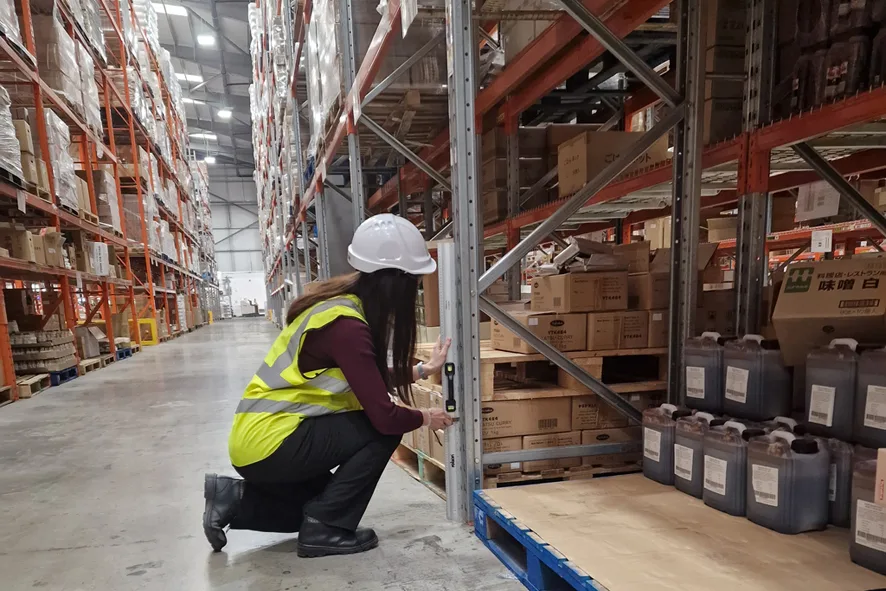
Pallet racking systems are particularly vulnerable to this kind of damage. How warehouse owners and managers act on racking damage can be the difference between a simple repair and a dangerous structure.
As the leading voice on racking safety, here is SEMA’s simple list of dos and don’ts when it comes to racking damage and repairs.
1) Do follow racking regulations
You may not realise it, but racking is classed as ‘work equipment’. Under the Provision and Use of Work Equipment Regulations (PUWER), warehouse managers and owners are legally responsible for ensuring the racking is maintained, repaired in a timely manner and kept in good working order.
While health and safety legislation, such as PUWER and LOLER, addresses general workplace risks, more specific guidance aimed at storage equipment is found in two key guidance pieces. HSG76 Warehousing and Storage covers racking-related issues, including manual handling, working at height and site transport. Whereas SEMA Codes of Practice go further by providing detailed guidance on the design, installation, use and ongoing maintenance of racking systems.
2) Don’t ignore damage
It can be easy to ignore or fail to recognise racking damage. While a severely bent upright is easy to spot, something like a small dent, loosened connections, or a dislodged beam might be harder to identify – yet they can all be dangerous.
Racking is a precisely engineered structure designed to meet tolerances that support heavy loads. Even minor damage can significantly compromise its structural integrity – never assume that the racking is still holding stock, so it must be safe.
Once damage is identified, repairs should not be put off. Businesses may delay racking repairs to save costs in the short term, but if an accident did occur as a result of neglected work, the fines issued by the HSE will quickly outweigh the money you initially saved.
3) Do train your staff
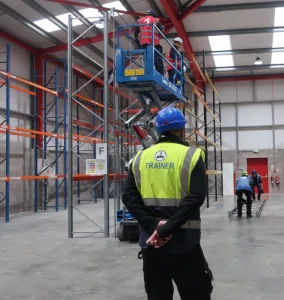
An informed workforce is the first line of defence, which is why you need training. Your warehouse operatives and supervisors play a key role in protecting your racking, yet without training, they are unable to recognise different levels of damage and how to report problems.
A course, such as SEMA’s Rack Safety Awareness training, will instruct your team on the different types of damage you find on racking, how to comply with the law, how to conduct risk assessment and how to record an inspection. The course will also instruct your Person Responsible for Racking Safety (PRRS) and nominated employees on how often to conduct in-house inspections in accordance with SEMA safety guidelines.
4) Do your racking inspections
Your equipment is only as good as its last inspection. Implementing a continuous, layered process will ensure damage is picked up quickly and you meet required racking regulations.
- Every day, employees must report if they find issues with the racking.
- Your PRRS will ensure inspections are conducted, analyse why damage occurs, recommend improvements to minimise problems and action repairs.
- At regular intervals, you need to conduct in-house inspections conducted by trained members of your team.
- At least once a year, you need an Expert Inspection by a qualified professional, such as a SEMA Approved Rack Inspector (SARI). Their inspection is a detailed examination of the racking to identify any structural damage that is present.
5) Do use authorised contractors
If your inspection does identify damage, don’t choose a contractor to undertake the repair work based on cost alone.
Some manufacturers protect the integrity of their equipment by only allowing certain companies to conduct repair work. For example, some SEMA Approved Manufacturers approve SEMA Approved Members to undertake work on their behalf. If you work with a contractor who is not approved, it could invalidate your warranty.
You should also check what parts the contractor is using. Substituting components which haven’t been authorised by the manufacturers could create weaknesses in the structure.
6) Don’t approve unauthorised work
Be aware that not all repairs are deemed safe by SEMA. Welding structural components on site, altering components without the manufacturer’s approval, fitting non-approved replacement parts, or mixing systems from different manufacturers without proper checks can all compromise safety and potentially invalidate warranties.
The same goes for unsafe repairs. Some practices may look acceptable, but they have an impact on the stability of the racking. For example, welding structural components on site or straightening damaged uprights with hydraulic rams. Any repairs that do not follow SEMA advice or the original manufacturer’s guidance should not be signed off. Check SEMA’s Technical Bulletins on the website to check if the repair is correct or not.
Seeing It All Through
Your racking might not attract attention when everything is running smoothly, but it commands your attention when it all comes crashing down. Don’t leave your warehouse open to risk – make sure you’re inspecting, reporting and repairing your racking.
For more information, visit www.sema.org.uk