
Vaillant turns £26,000 worth of invisible assets into measurable operational savings
The boiler manufacturer has taken a new approach to inventory counting and tracking, leading to greater efficiencies.
VAILLANT IS one of Europe’s most established manufacturers of boilers and heat pump systems, producing approximately 166,000 units per year across a 48,000 m² production facility. Supporting that output is an internal logistics operation built around a fleet of 1,500 to 1,600 trolleys and logistics trains, mobilised continuously through sheet metal fabrication, painting, assembly, and line delivery. Until recently, none of those assets carried any form of electronic tracking.
Fleet management depended on manual inventory counts, typically recorded in Excel spreadsheets. During planned site closures, multiple sequential counts were sometimes required before a reliable baseline could be established. As production volumes grew, locating specific equipment quickly, identifying assets that were in active use, and anticipating shortfalls before they disrupted operations had become increasingly difficult. The business was averaging approximately three unplanned logistics disruptions per month as a direct consequence.
“The industrial process may seem straightforward, but it remains complex to manage day to day. Data allowed us to objectify our flows and move from a very manual approach to decisions based on factual evidence,” comments Adrien Guihery, digital transformation project manager, Vaillant.
Tender, pilot and deployment
In 2024, Vaillant ran a competitive tender across three suppliers with a clearly defined brief: deliver actionable data quickly, at a justifiable cost, and without requiring additional infrastructure on the shop floor. Sensolus was selected and an initial pilot was scoped deliberately to limit commitment: approximately 40 Bluetooth IoT trackers deployed on a working subset of trolleys and logistics trains, sufficient to validate the technology against real flow conditions.
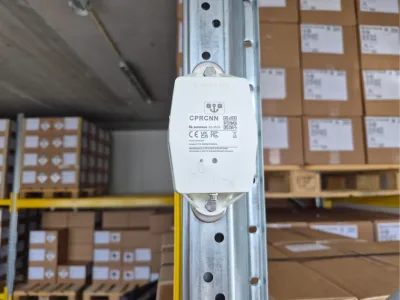
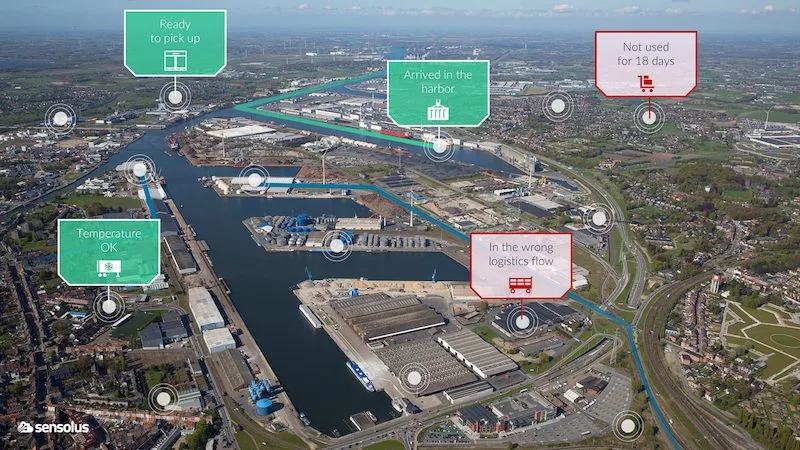
The Sensolus solution operates without fixed reader infrastructure, using Bluetooth Low Energy technology to provide reliable zone-level location data across the facility. The platform is accessible directly to site teams via an intuitive dashboard, requiring no integration with existing ERP or WMS systems. Within less than a month of the pilot going live, the data was already providing factual insight into asset movement and actual equipment utilisation, sufficient for Vaillant to commit to full deployment.
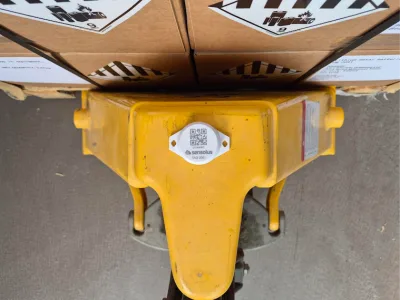
By 2025, the entire fleet had been equipped, with the rollout completed over a short, controlled period. The tracking data was integrated directly into daily operations and used to structure Value Stream Mapping (VSM) analysis, enabling the logistics team to base operational decisions on measured data rather than estimation.
“We were looking for a solution that was immediately operational, simple to deploy, and economically sustainable. The quality of our exchanges with the Sensolus team also counted, particularly when it came to supporting targeted optimisations where needed,” adds Adrien Guihery.
Results
The most immediate financial benefit arose from asset rationalisation. Tracking data quickly identified a significant number of trolleys that were rarely or never in use. A portion of those dormant assets was redirected to an external storage provider, allowing Vaillant to draw on the reallocated stock when a subsequent project created demand for additional equipment, rather than procuring new assets. The saving on that single project was approximately £26,000 in avoided capital expenditure.
Operationally, the platform’s shortage alerting capability addressed the recurring disruption problem directly. Zones approaching a shortfall are now identified in advance, enabling proactive reallocation of assets rather than reactive response to a line stoppage. This has delivered both productivity gains and, as Vaillant notes explicitly, a significant reduction in the day-to-day burden on the logistics team. Within the first few months of full deployment, trolley utilisation had improved by approximately 5%. Return on investment across the programme was reached in approximately 1.2 years.
“The solution is simple to deploy and, after just a few months, we have already seen around a 5% increase in the utilisation of our logistics trolleys,” Adrien Guihery explains.
Ongoing development
With one year of historical data now accumulated, Vaillant is extending the platform’s application beyond location and shortage management. The Sensolus system is now being used to structure both corrective and preventive maintenance: identifying assets requiring repair, directing them to dedicated maintenance zones, and scheduling interventions from data rather than reactive response. Tasks previously managed manually have been automated and made more reliable as a result.
The collaboration has also involved a degree of co-development. Working with the Sensolus team, Vaillant has refined Bluetooth signal quality and improved zone discrimination across the production facility – a technical challenge specific to dense manufacturing environments where zones sit in close proximity. Hardware reliability across the deployment has been strong, with a single defective tracker identified and replaced promptly.
“We haven’t yet tapped 100% of the potential, but we know the data is there. It will give us the keys to sustainably optimise our logistics system,” says Adrien Guihery.
Cyril Jouanlanne, key account manager, Sensolus, also adds: “Industrial companies are looking for solutions that are simple to deploy and produce reliable, actionable data. IoT tracking allows asset usage to be objectified, time losses reduced, and continuous improvement grounded in measurement rather than estimation.”
The deployment was carried out at Vaillant’s production facility in Nantes, France, which manufactures boilers and heat pumps for European markets.