

Winds of change: how new planning reforms could insulate UK warehousing sector from energy volatility
The UK logistics landscape is at the threshold of a major energy evolution says Ennovus Solutions.
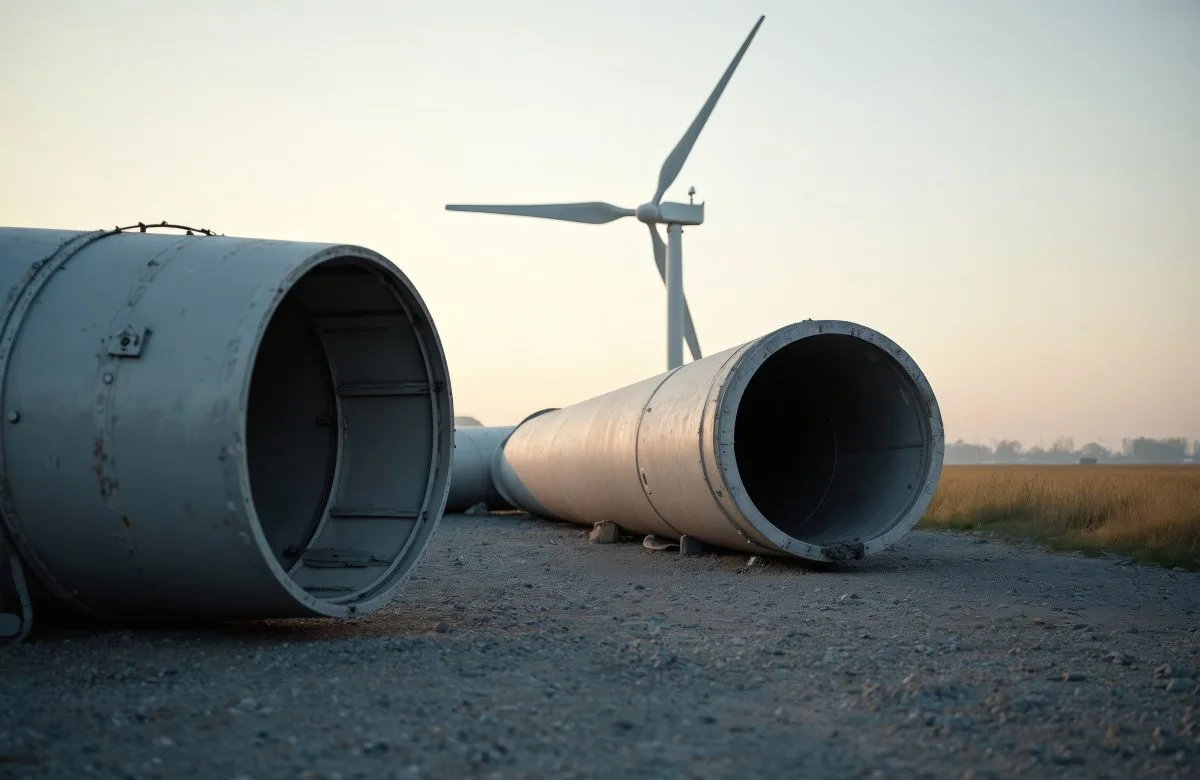
Proposed planning reforms aimed at deregulating the installation of single, small-scale wind turbines could soon allow warehouses and distribution hubs to bypass the traditional, often exhausting, full planning consent process.
According to David Woon, head of net zero engineering and operations at Ennovus Solutions, as well as being a win for sustainability, this is a strategic move for industrial survival.

The recent announcements from the Department for Energy Security and Net Zero (DESNZ) signal a major pivot from decades of regulatory red tape. While the wind industry has long been a pillar of the UK’s net zero ambitions, the reality for the average warehouse manager or commercial landlord has been a maze of bureaucracy.
Up until now, the permitted development (PD) route for wind has been largely confined to micro-scale turbines. At roughly 5kW, these are little more than domestic novelties – wholly insufficient for the heavy energy lifting required by modern logistics hubs, 24/7 cold storage facilities or automated sortation centres.
However, this government proposal acknowledges that decentralised energy is a matter of national economic resilience, not simply a green luxury.
The scale of opportunity
If approved, the changes to PD would allow for turbines capable of generating five times more annual electricity than the current scope. For commercially available turbines that sit within the new PD criteria, we are looking at a potential generation of around 100,000 kWh per year.
Unlike solar, which is still a vital but intermittent contributor, wind provides a more constant generation source for warehousing needs. When small-scale wind is combined with roof-mounted PV and battery storage, warehouses gain a strong triad of resilience. This allows logistics firms to decouple their operational costs from the turbulent global energy market and take ownership of their carbon footprint.
Where does your warehouse stand?
While the reform is largely positive, it isn’t a one-size-fits-all solution. The proposed changes to permitted development rights come with strict spatial stipulations:
- Boundary buffers – turbines must be located at a distance from the land boundary no less than the tip height plus 10%
- Protected buildings – they must be separated from any ‘protected building’ (homes, schools, etc) by ten times its rotor diameter
Example – a turbine with a 15m rotor diameter would require a 150m buffer from a neighbouring home.
Because of these rules, warehousing sites on densely packed industrial estates may struggle to utilise PDR. However, large-scale distribution hubs, rural logistics parks and port-side facilities are perfectly positioned to benefit. These sites typically have the dead space and constant electricity demand that make wind a viable business strategy.
Looking beyond the grid
For these reforms to operate effectively, businesses must look beyond planning. High generation levels are not guaranteed; factors such as wind resource (ensuring no tall obstructions within 15m of the tip height), foundation suitability and shadow flicker proximity to highways must be analysed thoroughly.
Despite these technical hurdles, the direction of travel is clear. By removing expensive upfront surveys and planning hurdles for qualifying sites, the government is providing a shortcut to grid independence.
A turning point for logistics
The energy crisis has been a wake-up call. For the first time, generating on-site power through wind is a competitive advantage as well as an environment goal. At Ennovus, we see this as a turning point. These reforms are the first step in building a more resilient, independent and green future for the UK’s warehousing and industrial sectors.
For more information and support on wind turbine projects, visit: https://ennovus.co.uk/