

Amazon expands use of robotics
The new Proteus and additional robotics expansions in Europe are designed to support employees by taking on physically strenuous tasks.
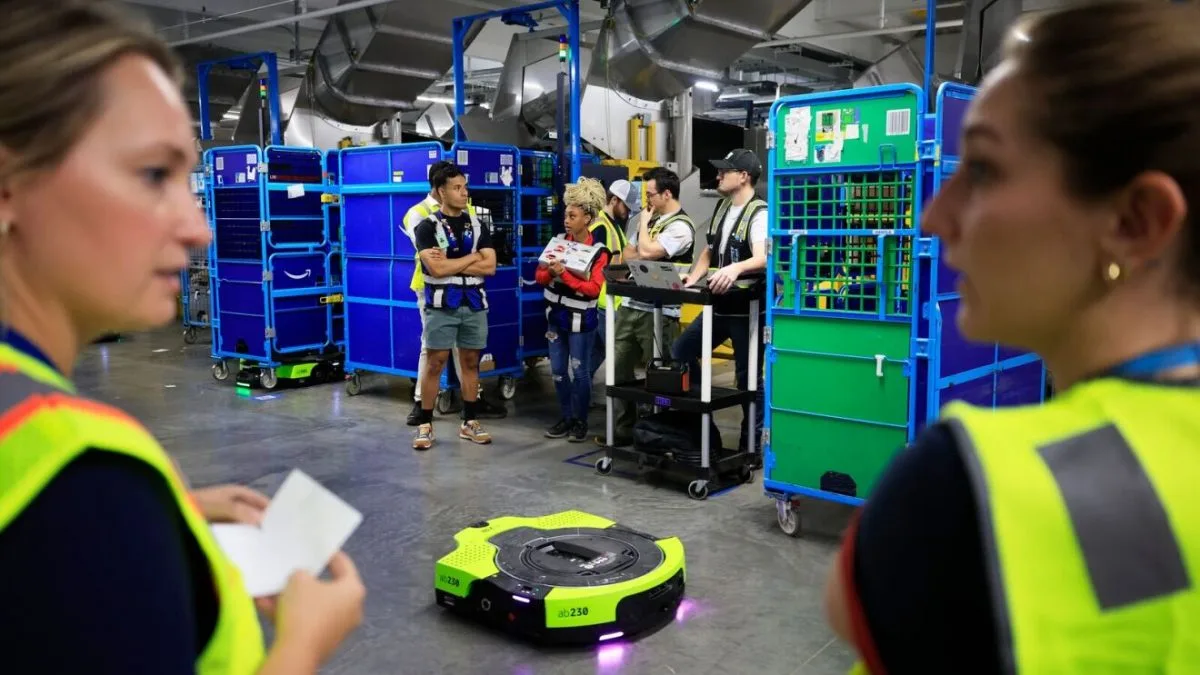
AMAZON INTRODUCED the next-generation Proteus at its Delivering the Future event in London last week. The new technology builds on the original autonomous robot and expands what’s possible in scope, capability, and how it can assist employees with their daily tasks.
Employees will now be able to direct Proteus in the same way they’d communicate with a colleague—using plain, conversational language, with no technical commands and no programming interface.
Like its predecessor, this Proteus is designed to take on physically demanding tasks—moving heavy carts and covering long distances—so employees can focus on higher-skilled work like managing inventory flow and ensuring quality control.
These new technologies are part of Amazon’s plans to invest over €10 billion over the next few years to expand and modernise its fulfillment operations in Europe. This also includes the expansion of Vulcan, Amazon’s first robot with a sense of touch.
As part of this investment, Amazon plans to grow its European fulfillment center workforce by 25,000 in the coming years, creating new jobs across the region.
The original Proteus operates in dock areas within fulfillment centers, navigating safely around people and transporting heavy carts that can weigh close to 400 kilograms—work that requires employees to push carts, lift heavy items, and cover long distances during a shift. It’s currently deployed at 25 fulfillment centres in the United States.
The next generation of Proteus is designed to go much further. Rather than operating only in dock areas, the new system can work anywhere items need to be moved. This includes transporting containers as they arrive at a site, transferring them between workstations, and assisting employees across Amazon’s fulfillment centres and delivery sites.
There is also a major shift in how employees interact with it. Using advances in AI, the next generation of Proteus is designed to understand natural language. That means employees can assign it tasks the way they’d communicate with a colleague.
The next-generation Proteus robot can now operate anywhere across Amazon fulfillment sites, taking direction from employees through conversational prompts.
“You tell it what needs to be done. It figures out the priority, the route, the timing,” said Scott Dresser, vice president of Amazon Robotics. “It becomes your assistant for material movement.”
The system is designed to handle the heavy lifting and help support site safety. It’s currently being piloted in Amazon’s labs, with deployment in Europe planned for the first half of 2027.
What else is Amazon building in robotics?
The expansion of Proteus is one piece of a broader robotics roadmap. Alongside advancements in mobile robots, Amazon is also developing new collaborative technology and robotic manipulation—the ability to handle individual objects with precision.
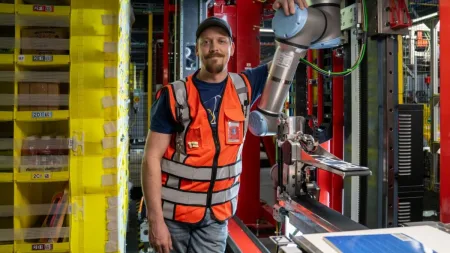
This includes STARK, a new collaborative robotic tote-handling system. Born from an operations employee’s idea to improve a process and support site safety,
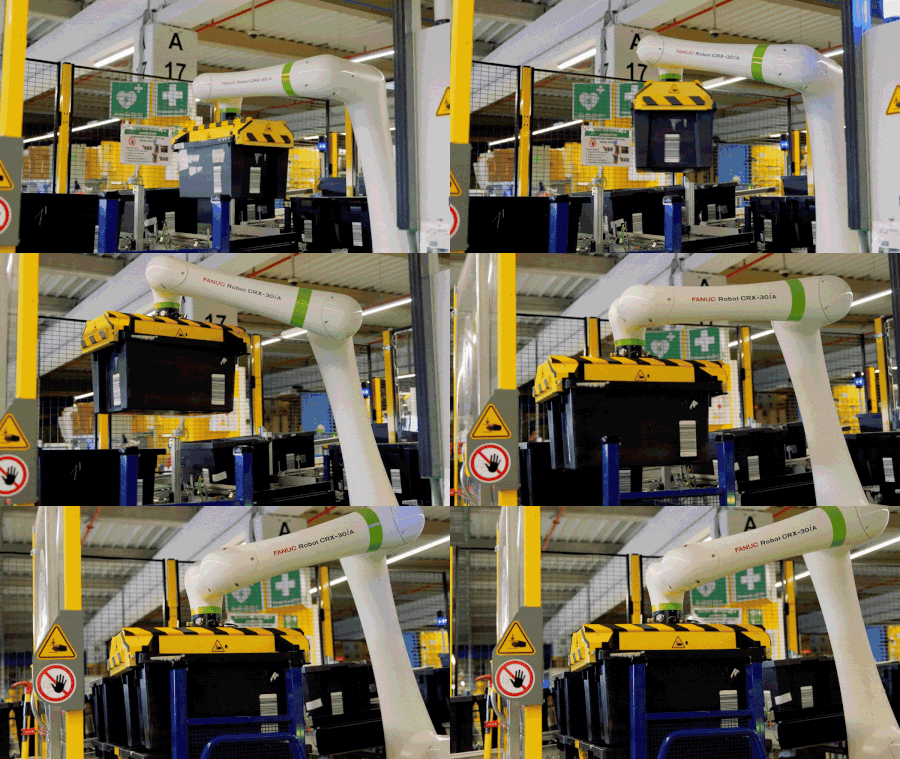
STARK works side by side with employees, picking full totes from conveyors and placing them on carts—work that otherwise requires repetitive heavy lifting. First piloted in Barcelona, Spain, STARK is planned to expand to 15 sites across Europe by 2027.
Vulcan is another key innovation that will support a growing number of sites. As Amazon’s first robotic system with a sense of touch, Vulcan can see and feel objects simultaneously to navigate densely packed environments. Originally developed for a facility in Spokane, Washington, Vulcan has expanded to handle more complex picking tasks at Amazon’s Hamburg facility in Germany.
“This transformation is designed to deliver a step-change in how we support our employees and serve our customers,” said Armin Cossmann, vice president of operations for Europe. “Customer expectations aren’t slowing down—and neither are we.”