

The role of lifting equipment in scalable eCommerce warehousing
The rapid growth of e-commerce has placed unprecedented pressure on warehousing and fulfilment operations, with businesses expected to process higher order volumes faster and more accurately than ever before. As demand continues to surge, scalability has become a critical requirement rather than a competitive advantage.
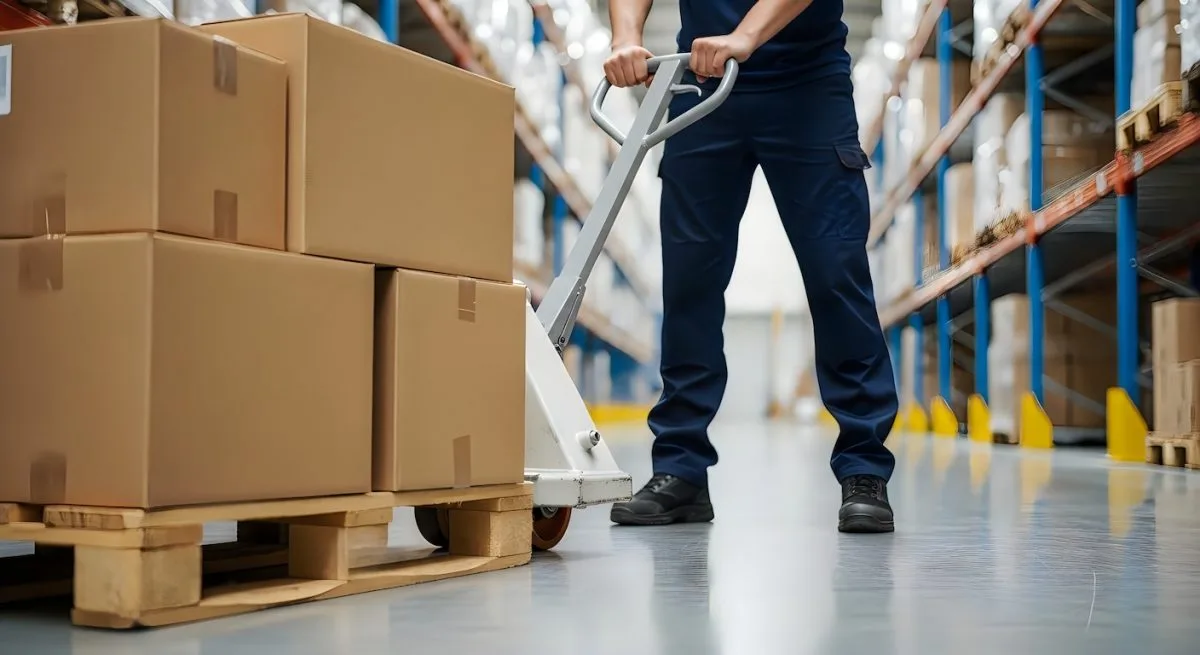
LIFTING EQUIPMENT plays a central role in enabling this scalability as it allows operations to grow safely and efficiently alongside demand. The right infrastructure ensures not only faster fulfilment but also consistent performance, helping businesses maintain accuracy, safety and reliability.
Challenges of scaling E-commerce warehousing
There are many challenges within the growing industry of e-commerce and its associated warehousing. This industry has fluctuating demand and order volume requirements which means that full and fluid scalability is required.
With the very nature of e-commerce sites relying on high-volume operations, there is a distinct pressure on speed, accuracy and turnaround times that can be further exacerbated by space constraints, labour shortages and more.
This means that maximising all usable storage space including vertical storage, as well as simplifying and making the movement of goods faster, easier and better is crucial to ensuring total scalability in e-commerce warehousing.
Why lifting equipment is essential for modern warehouses
In any warehousing context, not just e-commerce, lifting equipment refers to the wide range of tools and machinery that have been specifically designed to raise, lower, transfer, position and move goods both safely and efficiently. This includes hoists, pallet lifters, stackers, lift tables and other handling solutions that reduce the need for manual effort when dealing with heavy or awkward loads. These lifting systems are fundamental to modern operations where speed, accuracy and safety are critical.
By supporting the smooth movement of goods across different stages of fulfilment, lifting equipment helps minimise delays and bottlenecks. It significantly reduces the risks associated with manual handling, including strains and other related injuries, creating a safer working environment for staff. At the same time, the right lifting equipment enables more consistent workflows and allows teams to operate with greater precision and efficiency.
Improving efficiency and productivity
Different lifting equipment will have a direct impact on warehouse efficiency by accelerating various key tasks, including loading, unloading and order picking. Equipment like pallet lifters, hoists and stackers enables workers to move heavy or bulky items quickly and with minimal effort, reducing the time and energy spent on each task. This leads to faster operational times across the entire fulfilment process, from inbound deliveries to outbound shipments.
Lifting equipment reduces both fatigue and workplace injuries thanks to how it minimises manual handling and streamlines typically repetitive movements. These systems, when selected correctly, support better organisation in stock movement and workplace coordination.
A common example of this is when bulk stock can be transferred from delivery vehicles to storage areas in far fewer steps, while heavier pallets can be positioned accurately for picking, packing and dispatch.
Enabling vertical storage and space optimisation
Lifting equipment is one of the key elements to unlocking the true, full potential of a warehouse’s vertical space, which is often overlooked in conventional layouts. Equipment like stackers, hoists and lift tables will allow goods to be raised and stored at height, reducing reliance on floor space and making better use of the building’s overall capacity.
This capability supports the use of mezzanine levels, tall racking systems and multi-tier storage configurations, enabling warehouses to increase storage density without compromising accessibility. Staff can move items safely between levels, ensuring operations remain efficient even in more compact, high-density environments.
By maximising their total vertical storage spaces, businesses can unlock easy operational scalability that is pre-existing within their facility, avoiding the disruption and cost of relocating or structural expansion. This not only improves operational efficiency but also delivers long-term savings by delaying or eliminating the need for warehouse expansion.
Supporting workforce safety and productivity
By handling the heavy, bulky or repetitive loads that are typically associated within the world of warehouse work, so lifting equipment can be employed to reduce this physical burden and limit the need for manual lifting, awkward movements and more. This is essential for the prevention of common workplace injuries like back strain and other musculoskeletal issues that typically arise from repetitive manual tasks.
Creating a safer working environment has a direct impact on employee well-being. When workers are less exposed to physical stress, they can perform their duties, and more comfortably and consistently. This often results in improved productivity, as teams can maintain steady output without interruptions caused by fatigue or injury.
Another benefit of safer working conditions is in staff retention. By making the manual aspects of your workplace easier and injuries are fewer, businesses will have a far better chance of retaining members of the workforce who can see that their physical health is being supported. Correct lifting equipment and procedures also contribute to better legal compliance with various health and safety regulations.
Flexibility and adaptability in operations
Warehousing environments are one of the fastest evolving industries out there with lifting equipment being needed more and more to keep pace with the various changes in operational demands. This equipment can be configured and adjusted to handle a variety of tasks ranging from moving large boxes of lightweight items to smaller, heavier stock and vice versa and everything in between.
Options like mobile lifting units and modular systems offer added flexibility, allowing equipment to be repositioned or expanded without major disruption. This is particularly useful during seasonal peaks, when order volumes rise sharply and workflows need to be adjusted quickly to maintain efficiency.
Having adaptable lifting solutions in place helps warehouses stay responsive and resilient. Rather than investing in entirely new systems each time demand changes, businesses can scale and modify their existing setup, ensuring long-term efficiency and a strong foundation for readiness for future growth.
Choosing the right lifting equipment for growth
Choosing which lifting equipment to outfit your team and workplace with is an important choice that requires careful consideration. Things to consider are current space, possible scalability, maximum load weight, storage nature and available space. It is also vital to ensure compatibility with existing processes. Seeking advice from experienced suppliers or specialists will help businesses invest in the best solutions for supporting ongoing growth in busy warehouse environments.