

Planning Inspector turns down 1.29 million ft2 logistics scheme in Essex
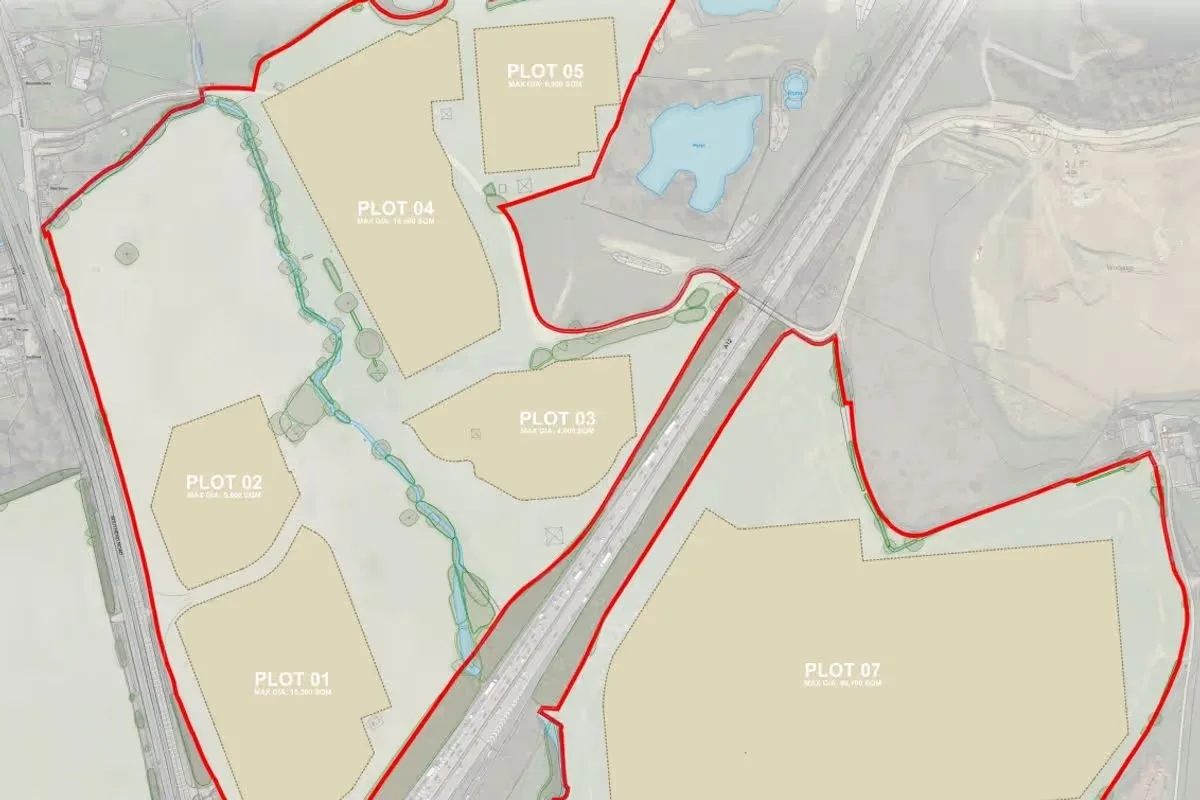
The Planning Inspectorate has turned down proposals for a 1.29 million ft2 logistics scheme on land at Junction 17 of the A12 near Chelmsford in Essex despite a developer waiting in the wings had planning been secured.
By Liza Helps, Property Editor, Logistics Matters
THE PROPOSED scheme, which totals 115-acres, was put forward by developer and planning firm Greystoke CB, which specialises in securing planning permission for nationally significant developments in the UK.
According to the Planning Inspectorate’s report it was noted that ‘there is strong and immediate interest in logistics proposals from major developers, including for the appeal site’. Indeed, a well-known international and established logistics developer was waiting in the wings to bring the scheme forward if granted permission. The developer said the report ‘would have speculatively build the scheme with the intention of renting the buildings out on long term leases’.
The scheme had envisaged up to nine warehouses on two plots of land ranging from midbox warehouses of 44,530 ft2 to 151,000 ft2 as well as three larger units up to 495,000 ft2 with eaves heights of 14 – 22m on green field Grade 3 agricultural land near Great Baddow. It was expected to provide up to 1,600 jobs, significantly boost the local economy and provide much needed logistics space in the region.
The Planning Inspectorate dismissed the appeal on the grounds that ‘although there were some benefits to the scheme, these were outweighed by the adverse effects to the local landscape, heritage sites and highways’.
The site was not adopted in the Chelmsford Local Plan (CLP) but the proposers had argued that the adopted CLP ‘does not adequately address the current needs of the logistics sector in Chelmsford’.
The Planning Inspectorate did agree that ‘the employment provisions of the adopted Local Plan do not meet current needs… nor make specific provision for logistics’ and that logistics need cannot be achieved with the confines of settlement boundaries.’
In addition the Planning Inspector even noted that ‘aspects of these policies are out of date’.
It upheld that there ‘appears to be strong evidence that the limited existing logistics stock is generally dated and there is a lack of modern, high quality large scale units in Chelmsford and the A12 corridor. Low vacancy rates together with strong rental growth appear to indicate an undersupply. This is confirmed by the findings of the Savills Report submitted in support of Pigeon’s Junction 18 planning application, but it is also relevant here. It is also the case that demand for logistics floorspace is rapidly increasing because of the growth of E- commerce, namely buying and selling goods and services using the internet.
It noted: ‘In terms of benefits, the scheme would secure a logistics development for which there is an unmet need. The fact that a precise figure cannot be put on need does not mean it does not exist. Nor should any figure necessarily represent a cap on logistics development. The scheme would generate clear economic benefits, both short term during the construction phase, and during the lifetime of the development. It would create investment in the locality, as well as training and employment opportunities. The Framework advises that significant weight should be placed on the need to support economic growth and productivity. Such clear benefits should not be downplayed, and in accordance with the Framework, they attract significant weight in favour of the proposals.
In addition ‘the scheme has other advantages, including that the site is accessible to HGVs and vehicles being adjacent to the A12, part of the Strategic Road Network. It would minimise commercial traffic on less sustainable local routes. The proposed provision of a bus service would make the site more sustainable and attracts positive weight. The scheme would also deliver certain environmental benefits, including green infrastructure and biodiversity net gains, around 22%, exceeding the 10% target. It would incorporate landscaping, native tree and hedgerow planting. The scheme includes new ponds and SUDS basins creating new habitats. The scheme would also utilise sustainable construction methods and incorporate energy efficiency measures. All these benefits attract moderate weight.
Despite all the benefits outlined and the fact that there was a developer waiting in th wings to bring the scheme forward, the appeal decision also says the benefits ‘do not clearly outweigh any harms arising, including in terms of landscape, heritage and highway matters’.
The Inspector wrote: “Therefore, I find the adverse effects of the development would significantly and demonstrably outweigh the benefits, when assessed against the policies in the Framework taken as a whole. The scheme would also conflict with the development plan as a whole, notwithstanding its out of date employment provisions and policies.”
Earlier this year Logistics Matters reported that Pigeon Developments had secured outline planning for a 500,000 ft2 plus logistics scheme just off Junction 18 of the A12 near Chelmsford in Essex on appeal as Chelmsford Council failed to determine the proposal within allotted timescales.
The approved development, known as Columba Park, is expected to create approximately 1,350 jobs once operational, generating an estimated £46.7 million in gross value added (GVA) annually for the regional economy.