

Building on a strong base
Best known as a Japan logistics specialist, NX has been making strides well beyond this remit, as Steve Williams, managing director UK & Ireland at NX explained to Logistics Matters editor Simon Duddy at Multimodal.
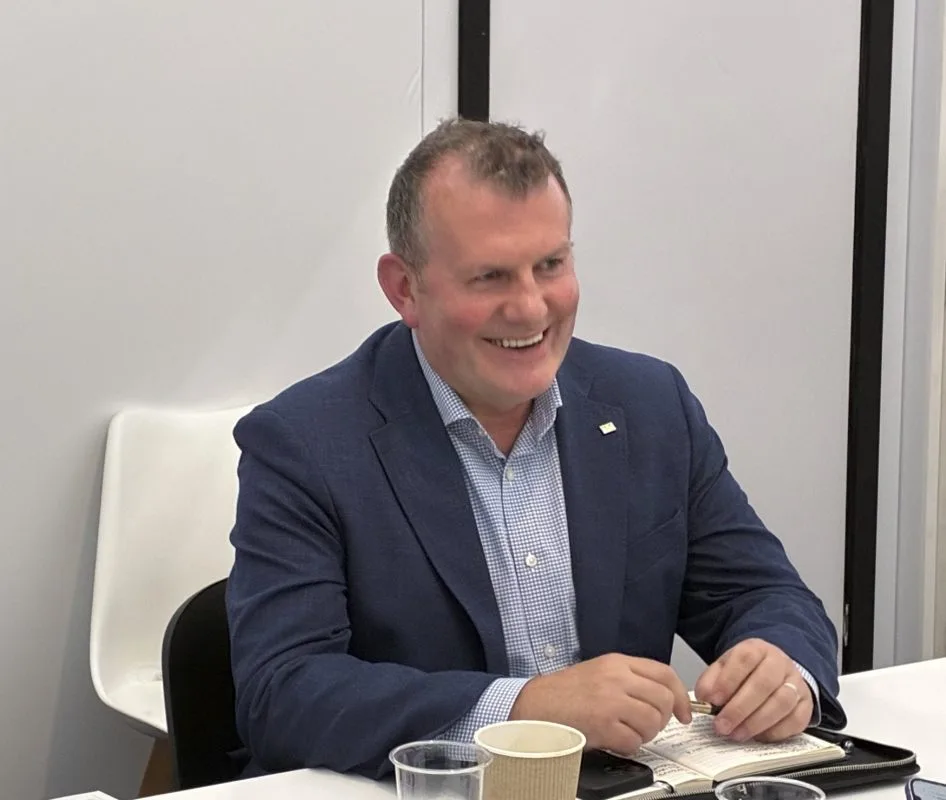
A KEY indicator of the ambitions of logistics giant NX is its recent agreement to acquire Canada’ Metro Supply Chain. As we spoke the acquisition was still processing with closure of the deal expected for the end of the year, yet Steve Williams could already see benefits for the UK.
“We have a strong logistics footprint in the UK, but this gives us greater depth and exposes us to different types of customers as there is good synergy without a heavy overlap,” Steve explains.
While Steve’s focus is on the UK, NX is a huge player globally, comfortably in the Top 5 of freight forwarders by revenue and volume, and as such is a voice of authority on global trade.
We spoke in early July at a time when tensions in the Middle East had disrupted trade flows in much of the world, for much of the year.
Steve sees adaptability as the industry’s defining strength, “whether it’s volcanic ash clouds or Covid or world conflict”. NX has responded to disruption with short charter flights, alternative ports and by deploying combinations of land, ocean and rail transport. When we spoke, NX had begun to push freight back through the Red Sea, “saving probably another 10 to 12 days of transit time for freight that goes to Japan”, and it has flown product that would not normally travel by air into the US to plug a production gap. “Needs must,” Steve says.
He also warns that disruption echoes long after the headline event. Orders pushed through early while a fragile ceasefire held may explain why peak activity arrived sooner than shipping lines predicted, he suggests; and stock landing early becomes a storage problem, then a road haulage and last-mile problem when it is drawn down at once. “Our job is to pre-empt that where possible and be ready to even out some of these peaks,” Steve adds.
He explains further: “We’ve got to try to provide certainty and capacity on the rate, which is very difficult because the rate is very fluid right now. There is going be risk in the supply chain, so identifying that early and having solutions is a real opportunity as well.”
A further challenge is that this disruption is playing out against a background of decarbonisation. Steve says this issue surfaces in most customer dialogues, RFQs and tenders. NX Group’s near-term CO2 reduction targets were approved by the Science Based Targets initiative (SBTi) in June 2025: an absolute cut in Scope 1 and 2 greenhouse gas emissions of 42% by 2030 against 2020, and a 25% reduction in Scope 3 emissions from upstream transportation and distribution by 2030 against 2022. The group is studying electrifying a West London delivery operation, though he concedes “we’ve not got to the point where you can get a decent mileage of an electric truck yet”. That said, he feels this will come.
NX has been in the UK for 45 years, but Williams says it has been “very much pigeonholed as being a Japanese trade lane”. The penny may be about to drop that NX is much more than that.
NX operates warehouses and logistics hubs in Uxbridge, East Midlands, Newcastle, Glasgow, Swindon, Lutterworth, and Dublin. These are supported by strategic transport and administrative offices at Heathrow (UK HQ) and Manchester. This is even before Metro Supply Chain’s facilities are taken into consideration.
Steve concludes: “We are transforming our business. While we remain immensely proud of our heritage, we are building on that to serve a broader range of customers, trade lanes and industries through strategic integrations and a commitment to innovation.”