

Peak: No secret sauce, just hard work and communication
As retailers and 3PLs begin to ramp up preparations for Peak 2026, Simon Duddy, editor, Logistics Matters, took the chance to pick the brains of Adie Taylor, head of solution design and logistics engineering at contract logistics provider Arvato UK.
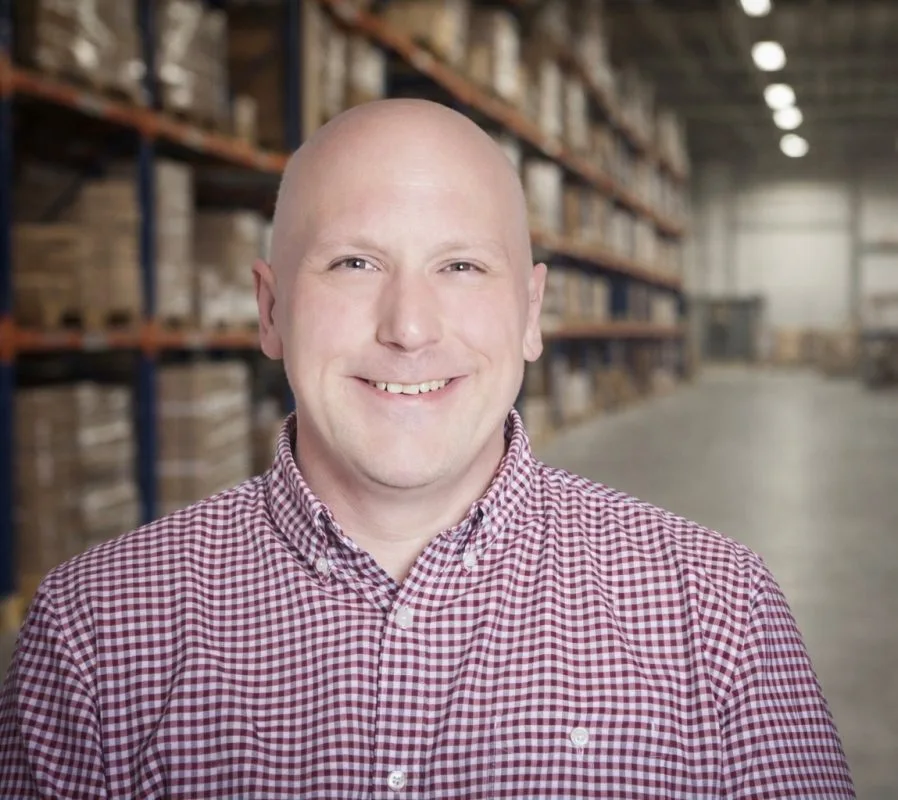
ADIE WAS quick to dispel the notion that there is any secret sauce to Peak preparations. His capacity planning is deliberately unglamorous: establish an average staffing baseline, plot the peaks and troughs over it, and see when extra resource is needed. Even Black Friday is treated less as an annual emergency than a habit to be normalised. Adie tries “to make all of the things that you do for Black Friday normal”, from monitoring how volume builds through the day to pulling in more robots against an agreed daily minimum of orders. Pressed for the secret, he refused the premise: “There’s not one killer answer, one bottle of secret sauce. It’s a combination of lots of things.”
Much of it comes back to communication.
Adie explains: “I can’t emphasise enough how important open channels of communication are, not just for when things go wrong, but also to provide updates when things are going well, for example, when we’ve exceeded targeted volume in a given day.”
Peak planning scenarios need to be flexible because forecasts are often wrong. The multi-user warehouse model operated by Arvato brings advantages in this respect, “potentially if one user’s volume ramps, another user’s might not,” says Adie, with the workforce flexed to wherever the work sits in the shared shed.
Preparation is also key. Arvato designs for the error rather than the estimate. A peak-day scenario is built into tender propositions and existing operations alike, then tested for bottlenecks before go-live. Taylor rests the approach on three pillars: automation, to establish continuous product flow with “understandable and predictable productivities”; cross-training, so people can cover more than one job; and aligned systems and processes. None of it eliminates bad days. “You might still have days where you don’t get everything completed, but the path to recovery is that much quicker,” he says.
If disruption is the weather, automation is the umbrella most operators are reaching for. Arvato is on its third AutoStore in the UK, with 15 AutoStores in total globally. Arvato is the second largest 3PL operator of AutoStores worldwide.
The AutoStore at its Hams Hall multi-user site delivered a 53% productivity improvement over the manual process it replaced. That site is adding a two-tier mezzanine, an extended grid and an auto-bagging RFID-enabled packing line.
Automation is increasingly aimed at the least productive minutes of the day. Arvato is preparing to introduce AMRs at its Corby operation to remove the long “last walk” from pick areas to packing and consolidation, time in which a person is “just delivering product from A to B”, as a way to cut reliance on variable labour.
Tying it together, Arvato has invested in Armada, its own warehouse control system, to help knit discrete automation systems together into a cohesive whole.
Reigniting Corby
Two of Adie’s colleagues will present at Tomorrow’s Warehouse Manchester on 30 September, asking How do you bring a brownfield site back to life — and make it carry a 3PL’s growth strategy?
Arvato’s Stuart Hands (head of project management) and Maria Rowbotham (head of procurement and corporate services) walk through the Corby project from vision to execution: the innovations being implemented, and the practical approaches other operations can borrow.
The site plays a central role in arvato’s 2030 strategy — and the company’s rapid warehouse automation upgrades were a highlight of this year’s Coventry edition. Manchester goes deeper into how strategic investment and operational excellence come together.
Free to attend. Register here: https://registration.tomorrowswarehouse.live/register