

Operators take the stage in Manchester
Forget theory, Tomorrow’s Warehouse Manchester puts the people actually running the sharp end of UK logistics front and centre. Hear how Ocado sites and designs facilities, how DHL Supply Chain implements WMS, how arvato revamps brownfield sites and how Utopia Brands scaled from 300 to over 20,000 shipments a day.
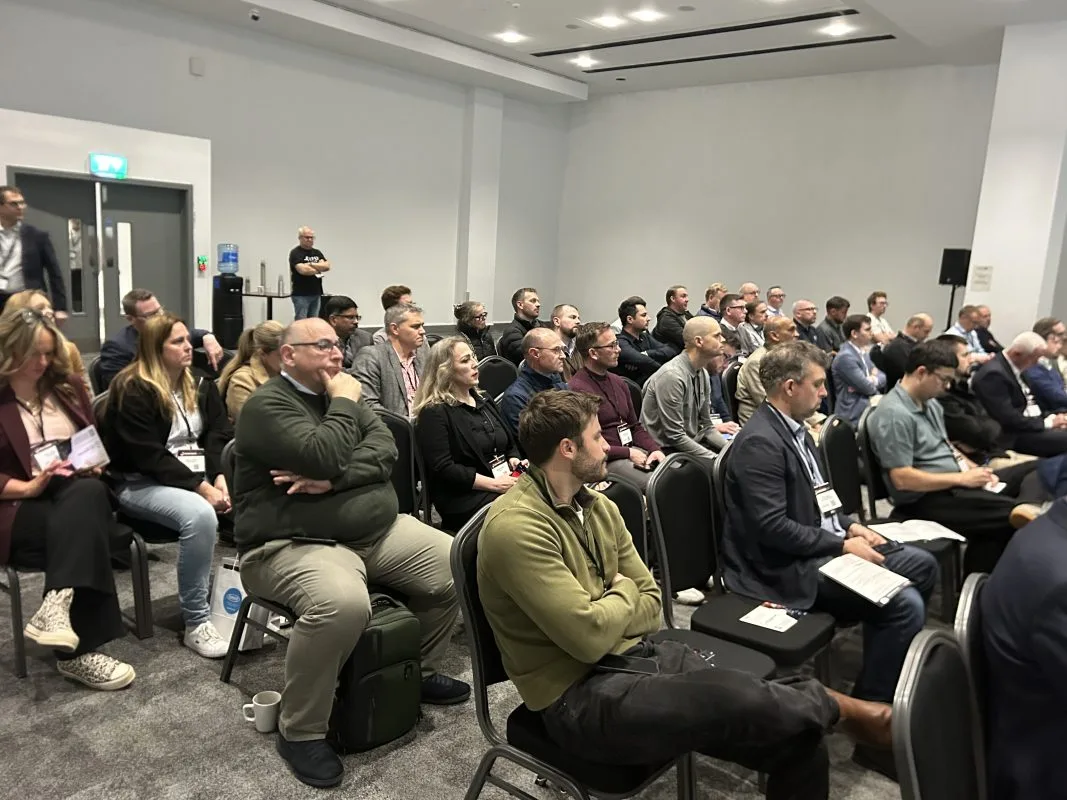
JOIN US at Emirates Old Trafford in Manchester on 30 September 2026, for a day built around peer-to-peer learning that promises to transform your approach to warehouse operations.
The day opens with a genuinely provocative argument from Prof John Manners-Bell, Chief Executive of Ti Insight: who says decades of well-meaning employment regulation, from minimum wage rises to pension auto-enrolment, may be quietly accelerating the very automation that reduces headcount. Rather than choosing between absorbing rising labour costs or passing them to customers, he argues operators now have a third option in robotics and AI. It’s the debate every warehouse leader is already living through, and this session puts the evidence behind the instinct.
Tim Bolam, VP Project Delivery at DHL Supply Chain, follows with a masterclass on where WMS transformation really wins or loses: not in picking the system, but in deploying it well. Using DHL’s Estée Lauder rollout of Manhattan Active WMS as a live case study, he shows occupiers how to standardise the core without losing flexibility at the edge, and how to move faster with far less risk than a big-bang replacement.
Danielle Taylor, Logistics Manager at Speedy Hire, brings the view from the warehouse floor, with a candid look at how a real operation flexes between night-time sortation and daytime roll-cage work while still holding the line on OTIF. A live panel Q&A lets delegates put their own transformation headaches straight to all three speakers.
Session two turns the spotlight on automation, and it opens with a story no textbook could have prepared anyone for. Abid Abassi of Utopia Brands, a Top 5 Amazon seller, describes leaving Fulfilled by Amazon for its own warehouse and scaling shipments from 300 items a day to more than 20,000 in just two years, all while keeping inventory accurate and staff on board. It’s a rare, unfiltered look at hypergrowth from the inside, including what comes next, which could mean automation and an even bigger facility.
That urgency sets the tone for the rest of the session. After all, behind every ASRS, AMR and conveyor humming along in harmony sits the real hero of warehouse automation: the software quietly calling the shots. Adam Bowes and John Armstrong of Element Logic UK delve in during the headline sponsor’s presentation. Meanwhile, Arvato’s Stuart Hands and Maria Rowbotham reveal how the 3PL is reinventing a brownfield site at Corby to power its 2030 growth strategy, proof that transformation doesn’t need a blank-slate greenfield plot, and that ambition can be built on legacy foundations. The panel that follows is a rare chance to quiz a 3PL project lead, an automation specialist and a fast-scaling brand operator in the same room.
Session three raises the stakes, with a full Mock Traffic Commissioner’s Public Inquiry staged live by transport law specialists from Weightmans. The Commissioner can revoke a licence, curtail a fleet, and sanction directors and transport managers personally, yet most operators never see what an inquiry looks like until it’s their turn in the room. This hour-long, gripping simulation puts delegates through the pressure, scrutiny and cross-examination of the real thing, sharpening minds on the compliance blind spots that put businesses most at risk.
The day’s final operations session takes aim at a cost most businesses never see coming: silo thinking. Paddy MacBrant of Hatmill shows how the gap between warehouse and transport planning can help one function while quietly undermining the other, while Dan Culverhouse, founder of Fraction Flow and a veteran of Tesco and Alshaya Group, traces what he calls the ripple effect, in which a single sourcing or sales decision sends consequences rolling through operations, warehousing and ultimately the customer. Expect practical tips on connected decision-making, and a closing panel that reframes a familiar frustration as a solvable, measurable business problem.
Warehouse Property
Over on the Property Theatre, Jason Rockett of Potter Space opens with a challenge that will resonate with every occupier in the room: the industry already knows what the ideal sub-100,000 sq ft unit looks like, sustainable, automation-ready, data-enabled and built around how businesses actually work, so why isn’t the market delivering it at scale? Tom Ryan of OrchardStreet Investment Management then explains why industrial returns are shifting from yield compression toward active asset management, with refurbishment increasingly beating redevelopment on cost, time and risk. Hyphen’s Shakir Sufian shows occupiers how smart reconfiguration can unlock serious extra value from buildings they already own.
Session two tackles three pressures now reshaping every site decision. Ocado’s Danny Kennedy opens with Place, People, Power, a genuinely rare look inside how one of the UK’s most operationally demanding logistics businesses chooses and designs sites that actually work in practice, not just on paper. David Woon of Ennovus Solutions delivers a pointed message on energy, arguing that years of volatility have made waiting the most expensive option on the table, and that renewables are the fastest route back to control. And Sam Arthur, Senior Director – Ecology at FPCR Environment and Design, demystifies Biodiversity Net Gain on brownfield sites through three contrasting case studies, arming developers with practical, cost-saving strategies just as government consultation on brownfield BNG reform draws to a close.
Register free