

Why crane test weights need a handling plan of their own
Crane test weights require a dedicated handling plan because they pose severe, specific safety risks during transportation, rigging and staging before the actual crane lift even begins. Despite the final proof load test being highly calculated, the process of moving, stacking and preparing thousands of pounds of modular blocks or water bags is often treated as a secondary task, leading to catastrophic rigging failures, tip-overs and crush injuries.
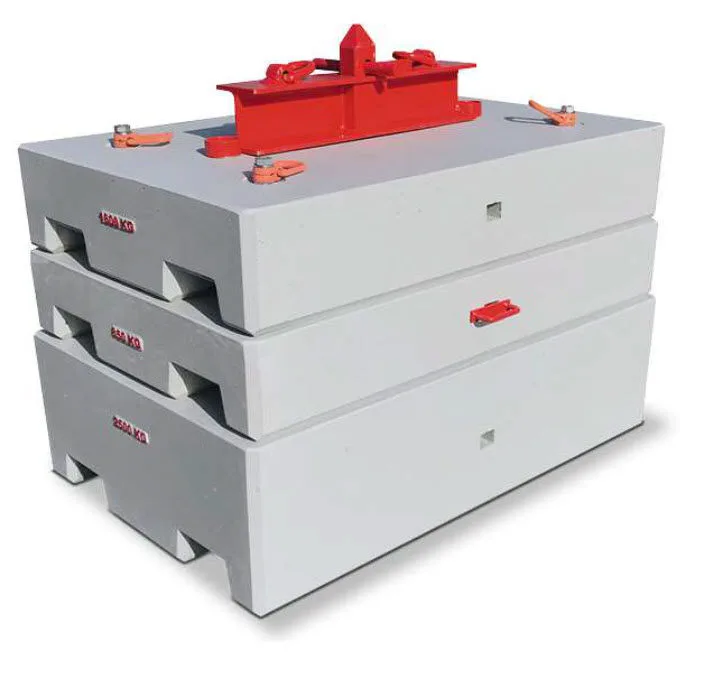
LOAD TESTING a crane is an extremely delicate operational puzzle where the ballast itself is often the greatest logistical challenge. The focus almost always seems to naturally fall on the crane’s mechanical integrity, but the physical management of the crane test weights also requires a meticulous independent handling plan for the sake of ensuring safety and efficiency.
In the United Kingdom, legal frameworks like the Lifting Operations and Lifting Equipment Regulations 1998 (LOLER) enforce thorough examinations and, while LOLER doesn’t demand a full load test for every single annual inspection, testing is still essential after major repairs, structural alterations or initial installations. When these tests take place, managing the sheer weight of the ballast can become a separate project within the project.
The logistical lifecycle of the load test
A standard crane load test should follow a strict chronological sequence because failures within the logistics chain at any stage can potentially stall the operation, increasing the plant hire costs and racking up project downtime.
Special attention must be paid to the following logistical aspects:
1) Delivery, because transporting massive ballast calls for careful route-planning and axle-load compliance. Flatbed trailers must be scheduled to arrive in a sequence that aligns with the site’s offloading capacity.
2) Unloading as, before the test crane lifts anything, an auxiliary crane or heavy-duty forklift needs to unload the ballast. This necessitates a dedicated, load-bearing drop zone that’s completely devoid of any site traffic.
3) Staging means that weights must be laid out systematically. Staging areas require ground-bearing capacity assessments in order to prevent the ballast from sinking into soft ground or damaging subsurface utilities.
4) Assembly, because modern testing depends quite heavily on modular crane test weights to build precise tonnages safely. Teams can stack and lock these modules together to reach the target proof load.
5) Removal once the test concludes and the assembly process reverses. Weights need to be dismantled, reloaded and cleared from the site in order for normal operations to resume.
This process is not simple and attention must be paid to every component to ensure the safety of workers and continuation of operations.
Access and ground conditions
You can’t move a ballast if there’s no solid ground beneath you, and that’s why a comprehensive handling plan should start with evaluating the access routes for delivery vehicles. A testing schedule can instantly be compromised by factors including:
1) Tight turning radii
2) Low overhead clearances
3) Strict weight restrictions on approach roads
The ground-bearing capacity of the staging and assembly zones is vital once on the site because a stack of steel or concrete weights exerts immense concentrated force on a small area. As such, engineers must ascertain that the tarmac, concrete apron or compacted soil can support both the static weight of the staged weights as well as the dynamic forces of the handling equipment.
Selecting handling equipment lifting points
In order to move the weights safely, you need to have the right tool for the job. Depending on how the testing site is configured and the individual weight blocks, operators tend to rely on:
1) Heavy-duty forklifts for horizontal transport and low-level staging
2) Auxiliary mobile cranes for high-stacking and deep-reach positioning
3) Telehandlers for versatile movement on uneven terrain
Every individual weight block needs to have certified, clearly marked lifting points. Whether you’re using integrated forklift pockets, cast-in lifting eyes or heavy-duty trunnions, the handling plan must specify the correct rigging tackle.
Stacking, storage and modular safety
The design of the ballast system can significantly contribute to safety during the assembly phase. Specialised manufacturers design ballast systems and crane test weights that have interlocking mechanisms to ensure stability when building large modular stacks.
Catastrophic tip-overs can be prevented through the implementation of proper storage and stacking guidelines. High-density materials like steel or treated concrete blocks must be stacked on level ground and adhere strictly to the manufacturer’s maximum stacking heights.
Important considerations for building a handling plan
A strong handling plan should be well documented long before the ballast arrives on site. It needs to be a practical guide that the rigging crew and transport drivers can follow. At the end of the day, treating the crane test weights as a secondary consideration is a recipe for disaster and can potentially lead to operational delays or workplace injuries.
A solid crane test handling plan should involve auditing the route and access, assessing the integrity of the ground, selecting rigging and tackle and implementing the right stacking and stability controls.
Giving the ballast its own dedicated logistical blueprint is one of the most effective ways for industrial operators to protect their workforce, secure their equipment and ensure that the crane’s verification process goes exactly according to plan.