

The role of shipping containers in modern logistics
Learn the role of shipping containers in modern logistics, from container types to efficient transport and handling.
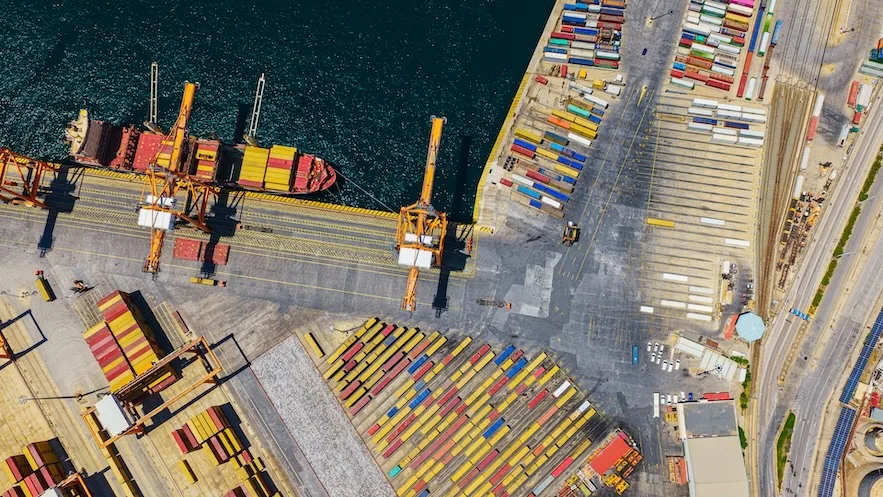
Shipping containers play a central role in modern logistics, providing a standardised way to move goods efficiently between ports, warehouses, road networks and rail terminals. Their durable, stackable design makes them suitable for transporting everything from raw materials and machinery to finished products across domestic and international supply chains.
In this guide, we’ll look more closely at the role of shipping containers in modern logistics, including how they support different modes of transport, improve handling efficiency and help keep goods moving through complex supply chains.
What Are Shipping Containers and Why Are They Important in Logistics?
Shipping containers are large, durable units used to transport and store goods, with standardised dimensions that allow them to move between different forms of transport. The same container can travel by ship, rail and road without the goods inside needing to be unloaded and repacked at each stage.
This makes containers particularly useful in logistics, where goods may pass through several locations and transport networks before reaching their destination. They provide a consistent way to handle, stack and move cargo throughout the supply chain while also protecting the contents during transit.
How Shipping Containers Support Supply Chain Management
Shipping containers help goods move efficiently through different stages of the supply chain by reducing the need for repeated unpacking and repacking. Standardised sizes also make loading, unloading and transfers between ships, trains and lorries more straightforward.
Keeping cargo enclosed during transit can improve security and simplify handling, while smoother transfers help businesses plan transport more effectively. This can support better control over logistics costs and delivery times.
Shipping Container Types and Their Uses
10ft Containers
10ft containers are a compact option for smaller loads or situations where storage space is limited. Their shorter footprint can make them easier to position on constrained sites while still providing secure, enclosed storage for goods and equipment.
The trade-off is capacity. They offer less internal space than 20ft or 40ft containers, so they are better suited to smaller volumes rather than larger-scale transport or storage requirements.
20ft Containers
20ft containers are a common choice for general cargo, offering a practical balance between storage capacity and ease of handling. They can be used for a wide range of goods, including boxed products, equipment, materials and palletised loads across sectors such as retail, manufacturing, construction and logistics.
Their size makes them versatile enough for many transport and storage requirements without taking up the space of a larger 40ft unit. This can make them a cost-effective option where businesses need useful capacity but still want straightforward handling and site placement.
40ft Containers
40ft containers offer greater capacity for larger shipments, bulky equipment and higher volumes of goods. They can suit businesses moving or storing substantial quantities of stock, machinery or palletised cargo.
The extra space can reduce the number of units needed and make it easier to consolidate larger loads. Site access, available space and weight limits still need to be considered when deciding if a 40ft container is suitable.
High Cube Containers
High cube containers are similar to standard containers but provide around one extra foot of height, giving them more internal volume without increasing the overall footprint.
The additional headroom is useful for tall or bulky cargo, stacked goods and machinery that may not fit comfortably in a standard container. They can also suit businesses that want to maximise capacity while using the same amount of ground space.
Open Top Containers
Open top containers have an open roof, typically covered with a removable tarpaulin during transport. This design makes them useful for oversized or awkward cargo that cannot easily be loaded through standard container doors.
Goods can be lowered into the container from above using cranes or other lifting equipment. This makes open top containers a practical choice for machinery, bulky materials and other large items that require overhead loading.
Flat Rack Containers
Flat rack containers have open sides and ends, giving oversized cargo more room than an enclosed container. They are well suited to heavy machinery, vehicles and large equipment that may be difficult to load into a standard unit.
Cargo needs to be securely fastened to the flat rack before transport to prevent movement in transit. Its size, weight and loading requirements also need to be considered when planning how the container will be transported.
How Shipping Containers Improve Efficiency and Reduce Costs
Standardised shipping containers make cargo easier to handle throughout the logistics process. Their consistent dimensions also make day-to-day handling more predictable at each stage of the journey.
Some of the main benefits include:
- Smoother transfers: Containers can move between ships, trains and lorries without goods needing to be unpacked and repacked between each stage.
- Better use of space: Standard sizes make it easier to plan loads and use available capacity efficiently, which can help reduce transport and handling costs.
- Improved cargo protection: Goods remain enclosed during transit, reducing exposure to damage, loss or unauthorised access.
- Faster handling: Straightforward loading and transfers can reduce delays at different stages of the journey and help goods reach their destination sooner.
Why Shipping Containers Remain Essential to Modern Logistics
Shipping containers have transformed the way goods move around the world, and they remain a fundamental part of modern logistics. Their standardised format makes it easier to move cargo from one stage of the journey to the next, whether it is travelling domestically or internationally.
With different container types and sizes available for everything from everyday cargo to oversized machinery, there’s a practical option for a wide range of logistics requirements. Whatever you need to move, choosing the right container can make the journey simpler from start to finish.