

Unlocking more value from existing warehouse assets
Lessons from the Tomorrow’s Warehouse Event in Manchester from speaker Shakir Sufian.
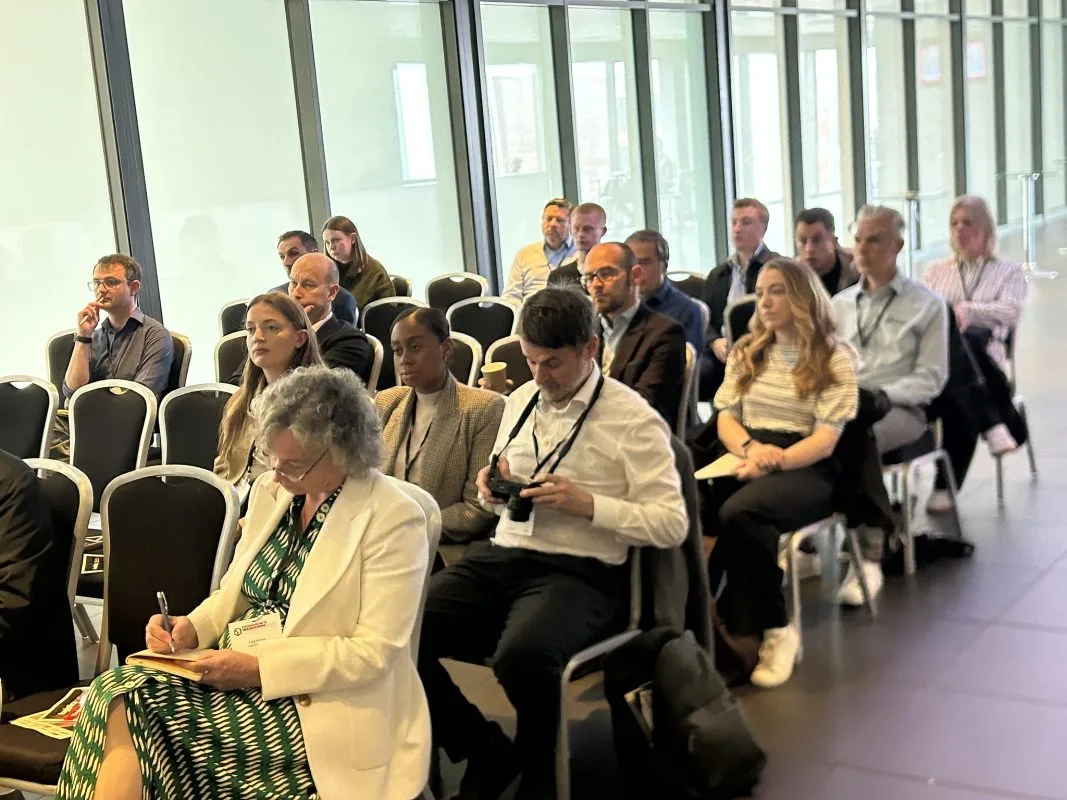
I RECENTLY had the opportunity to speak at the Tomorrow’s Warehouse event in Manchester, where I shared some thoughts on the challenges facing many warehouse owners and occupiers today.
The challenge that seemed to resonate most with the audience was ‘how can we extract more value from existing assets without automatically resorting to expensive expansion or redevelopment programmes?’
The logistics sector is constantly evolving. Operational requirements change, technology advances and businesses face increasing pressure to improve efficiency and productivity.
It’s easy to assume that the answer lies in major technology or AI investment, or significant physical change and footprint extensions.
But in my experience, some of the most effective solutions are already sitting within the asset itself. More change doesn’t automatically mean more value. Only the right changes do. An operational warehouse is a fast and continually changing environment. In some cases, we’ve seen businesses make changes at short notice without fully understanding the wider regulatory or operational implications, only to then discover later that an intervention is non-compliant and costly to rectify. This is where our code compliance auditing service adds real value. By identifying potential issues early, we help clients develop compliant, practical solutions at the right time, avoiding unnecessary costs and disruption.
Here are the three key principles I come back to time and time again with our clients:
1) Really get to know your asset
It sounds obvious, but many projects begin before there’s a full understanding of how a building is performing.
Before making any decisions, it’s important to understand what’s happening on site. How well does the building support the operation? Where are the pinch points? Which areas are underutilised? Are there compliance issues that need addressing?
At Hyphen, we typically focus on three key areas – compliance, movement and operation. In other words, does the building meet current requirements? How effectively do people, vehicles and goods move around the site? And does the facility genuinely support the way the business needs to operate today?
It’s often these assessments that uncover hidden opportunities. Something as straightforward as improving circulation routes, enlarging key access points and enhancing wayfinding can reduce bottlenecks, improve safety and make day-to-day operations more efficient. These may seem like small changes, but collectively they can have a significant impact on performance.
We’ve seen businesses consider warehouse extensions to create additional capacity, only to discover that the real issue wasn’t a lack of space at all. Inefficient layouts were restricting productivity, and by reconfiguring the existing environment, they were able to improve operational performance without increasing their footprint.
Similarly, many warehouses contain underutilised vertical space that can be repurposed for storage, training or supporting business functions, creating additional capacity without the cost and disruption of expansion.
2) Focus on what the building needs to achieve
Once you’ve established what’s there, the next question is what the asset actually needs to do.
Too often, projects start with a proposed solution rather than a clearly defined objective. A more effective approach is to begin with the operational outcome. What constraints are holding the business back? What would success look like? What needs to change to support future growth?
One recent project involved a client that needed improved workshop training facilities. The existing training space was located elsewhere in the building and had become disconnected from day-to-day operations, while a significant volume of space elsewhere within the facility was underutilised.
At first glance, it appeared to be a challenge that would require substantial redevelopment. However, a closer assessment revealed an opportunity to repurpose existing space and bring training activities much closer to the workshop environment.
The result was a larger, more practical and connected training facility. One that increased capacity, sped up training cycles for staff, and created a space capable of supporting multiple sites, all without the scale of intervention initially anticipated.
It’s a useful reminder that the best solution isn’t always the biggest or most expensive one. Sometimes the greatest value comes from making better use of assets that already exist.
3) Make the important decisions early
If there’s one piece of advice I’d give to warehouse owners and occupiers, it is to invest time upfront.
Early investigation creates options. It helps identify risks, uncover opportunities and avoids expensive surprises later down the line.
For example, compliance reviews can often reveal relatively straightforward improvements that enhance safety, simplify operations and future-proof a facility. These interventions may not require significant capital investment, but they can deliver substantial long-term value.
The earlier these opportunities are identified, the more flexibility businesses have to evaluate different approaches and make informed decisions. Waiting until a project is underway often limits options and increases costs.
To summarise, the most successful outcomes typically start with understanding the asset, defining what it needs to achieve, and making the key decisions early in the process.
When businesses take this approach, they often discover that many of the solutions to their operational challenges have been hiding in plain sight. The opportunities are already within the asset. The key is knowing where to look.
Shakir Sufian, senior architect & logistics lead UK, Hyphen