

Stop automating bad warehouse processes
Before investing in robots, conveyors or shuttles, warehouse operators should ask whether a process deserves to be automated at all, argues Chris Lawrence.
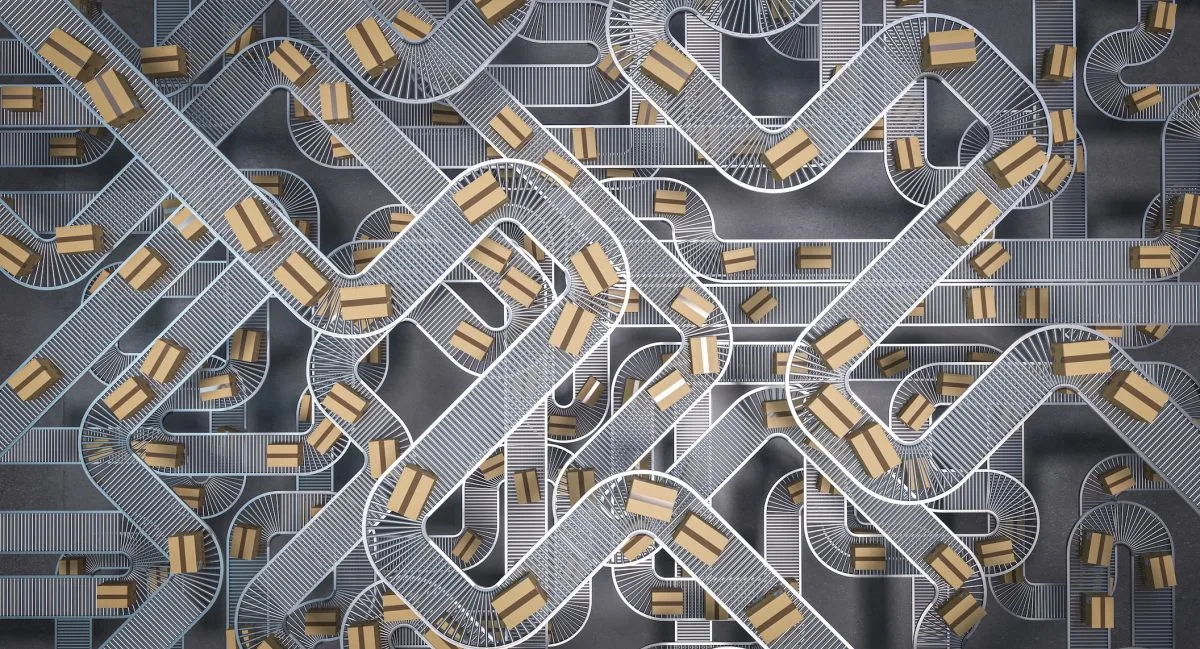
THERE IS something slightly uncomfortable happening in warehousing. We have become so excited by automation that the technology can become the starting point of the conversation rather than the answer to a clearly defined operational problem.
Go to a logistics exhibition and it is easy to see why. Robots move shelves and autonomous vehicles carry pallets, while vision systems and orchestration software work at speeds that would have seemed extraordinary a few years ago.
The right automation, applied to the right process, delivers real value. But it deserves the same challenge as any other major warehouse investment: are we automating a good process, or simply making a bad process happen faster?
Automation is not the problem. Unchallenged process is.
Why 10,000 movements?
Imagine an operation generating 10,000 internal product movements. The automation conversation might immediately become: how do we automate those 10,000 movements? Conveyors, AMRs, shuttles, or some combination?
There is a more valuable question to ask first: why are we making 10,000 movements?
Could better slotting remove some? Could a different replenishment strategy remove others? Could stock sit nearer its point of consumption, or flow directly between processes rather than returning to storage? Is travel being caused by insufficient technology, or by poor inventory placement and warehouse design?
If process redesign cuts the requirement from 10,000 movements to 6,000, automation has not lost value. It can now be focused on the movements that genuinely remain, within a process that is simpler and easier to scale.
Movement is not productivity
Warehouses are full of visible activity. Forklifts travel, operators walk, and product is staged, replenished, picked, repacked and moved again. Everything is busy, so it looks productive.
But if a pallet travels 200 metres when good design could cut that journey to 50, fitting an autonomous vehicle does not remove the unnecessary distance. It simply performs it automatically.
That is why the sequence matters. Rather than beginning with “Can we automate it?”, begin with “Should this activity exist in its current form?”
Simplify → Optimise → Standardise → Automate
Yesterday’s process, set in steel
Most established warehouses were not designed in one clean moment. They evolved. Temporary staging areas became permanent. Extra scans were added after stock problems. Workarounds emerged when systems could not communicate, and customer exceptions slowly became standard practice.
Experienced teams become very good at navigating this complexity, which can hide how much friction the operation has accumulated. When an automation programme maps and measures current flows without challenging them, an organisation can invest heavily in reproducing its historical compromises with modern technology.
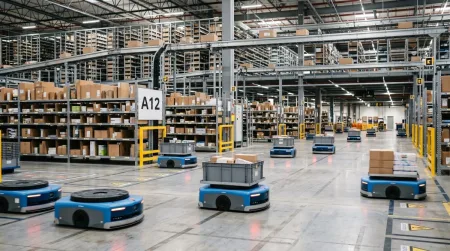
That matters more with physical automation than with software. Conveyors, cranes, racking and automated storage are engineered around particular flows and operating assumptions. Once those assumptions are built into infrastructure, changing the process becomes harder and more expensive. The objective should be to lock in a good process, not to make a legacy one harder to escape.
The most useful design question is often the simplest: if we designed this process today, with no obligation to preserve what exists, would we design it this way? If not, fix it before you automate it.
Optimum, not maximum
Another mistake is to treat autonomy as the only acceptable destination. In reality, warehouse operations sit on a spectrum.
Manual → Digitally assisted → Mechanised → Automated → Autonomous
A stable, high-volume, repetitive activity may be an excellent candidate for full automation. A highly variable process dominated by unusual products and frequent exceptions may benefit more from better information, improved workstations or smarter system guidance. Sometimes the best investment is not removing the operator but removing the unnecessary work around the operator.
Exceptions such as damaged stock, inventory discrepancies, urgent orders and odd dimensions do not disappear when automation arrives. Designing machinery and control logic to cover every edge case can create disproportionate complexity. Maximum automation and optimum automation are not the same thing.
Challenge the decision, not just the movement
For organisations using SAP Extended Warehouse Management (EWM), the discussion goes beyond physical equipment. A modern automated operation may contain ERP, EWM, MFS or WCS, PLC and equipment layers. What matters is not simply that these layers communicate, but that each has a clear responsibility.
Before a pallet physically moves, decisions have already been made: what needs to move, from where, to where and when, whether replenishment must happen first, and which resource should carry out the task. The robot, conveyor or crane executes the visible movement, but the warehouse design and system landscape determine whether that movement should happen at all.
Technology should execute warehouse strategy. It should not accidentally become warehouse strategy.
Five questions before the next automation decision
Before committing to another piece of equipment or another automated flow, ask:
1) Should this process exist? If an activity adds little value, elimination may be more powerful than automation.
2) Have we corrected the process first? Poor slotting, unnecessary replenishment and excessive travel should not become permanent just because machines can perform them.
3) Is the process stable enough to automate? A constantly changing process can turn routine operational change into engineering change.
4) What exactly are we trying to improve? Throughput, labour dependency, space, accuracy, service and scalability are different problems and can demand different answers.
5) What would happen if we did not automate it? Process redesign, better EWM configuration or improved slotting may address part of the problem before automation is considered.
The movement you never make
Good automation should survive challenge. If a process has been simplified, optimised and stabilised and automation still produces the strongest outcome, the case for it becomes clearer, not weaker.
The industry should stop treating the amount of automation as a measure of sophistication. A warehouse filled with robots compensating for poor flows is not necessarily more advanced than one that has engineered those flows away.
Before automating the forklift journey, ask why the forklift is travelling. Before making pallets cross the building faster, ask whether they need to cross it at all. The best automated movement may be the one you never make.
Chris Lawrence is an SAP EWM consultant and solution architect at Westernacher