
Automating the loading area to improve peak season performance
Preparations across retail, e-commerce and fulfilment for the Black Friday and Christmas peaks are in full swing, but is one important area of the supply chain being overlooked?
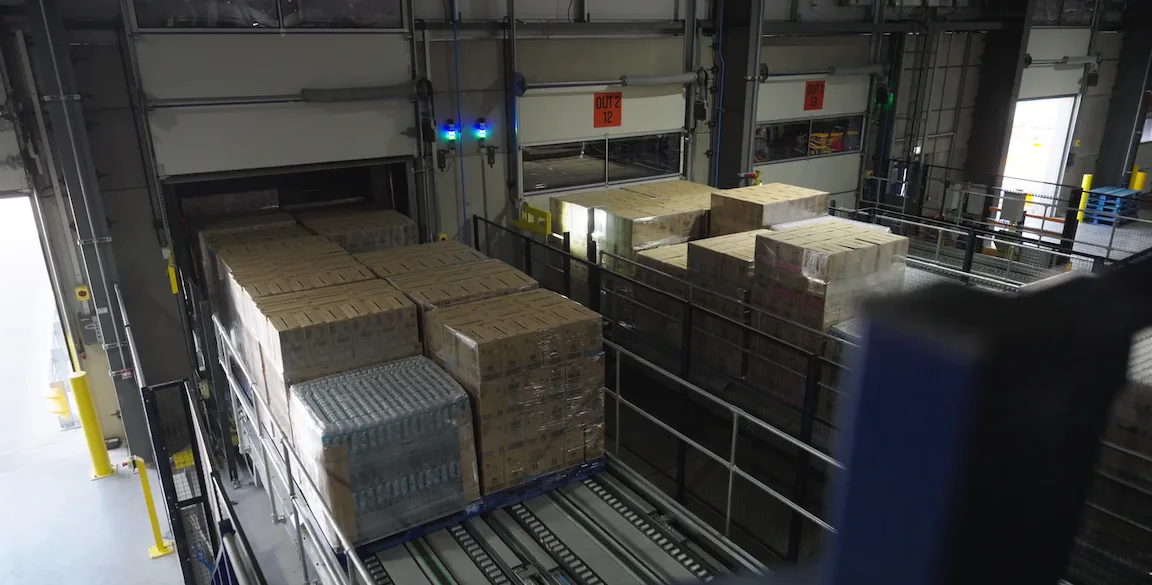
WOUTER SATJIN, Chief Revenue Officer, Joloda Hydraroll says that while many warehouse and production operations have now achieved high levels of automation, a reliance on forklift trucks within the loading bay could be undermining performance on three important fronts: visibility, throughput and safety.
Removing the blind spot
Data insight is essential to the agility and responsiveness needed during festive peaks. Yet, continued reliance on forklifts to move goods on and off trucks makes the loading bay a notable blind spot.
Automated Trailer Loading Systems (ATLS) can be integrated via technologies like IoT and RFID to capture loading bay activity in real time. This can be used to inform predictive management, agile responsiveness and certainty that products will get to the right place at the right time. It can support far more effective responses to supply chain glitches – from short term traffic problems to longer term transport challenges.
Relieving bottlenecks
Leveraging automation not only provides visibility of the loading bay; it transforms the speed of loading/ unloading into something operations leaders will be happy to see.
While the process typically takes 30-45 minutes per truck when relying solely on forklifts, the time is cut to as little as two minutes when using an Automated Trailer Loading System, improving vehicle turnaround, loading bay availability and throughput.
These systems can also enable trailers to be loaded by just one operator, reducing labour requirements and allowing employees to be redeployed elsewhere.
For retailers managing high-volume distribution and seasonal demand fluctuations, faster, more predictable loading helps maximise existing capacity without expanding facilities.
Improving safety
Loading bays bring people, vehicles and heavy loads together into relatively confined spaces, which can be intensified during seasonal peaks. Forklift accidents remain one of the biggest risks associated with warehouse operations, while skilled forklift drivers are also increasingly hard to recruit, especially for seasonal roles.
ATLS removes the need for forklifts to enter trailers, reducing collision risks and vehicle-pedestrian interactions. Fewer personnel are required around the loading bay, while safety features, including traffic lights and trailer locking mechanisms, help prevent unsafe vehicle movements and premature departures.
Controlled, consistent loading also minimises manual handling, helping eliminate associated product damage and protecting goods throughout distribution.
Conclusion
Over 80% of warehouse operations decisionmakers and influencers report facing material transport reliability issues during periods of peak demand, with two of the most severe challenges being congestion and material transport bottlenecks. Only 16% say their outbound and loading workflows are fully automated in their facilities, making them a major vulnerability during peak periods like the festive season.
Automated loading and unloading provides an essential opportunity to transform operational performance, improve productivity and safety, and gain the data capture required to improve peak readiness.