

AI use in the warehouse is more niche than expected, says survey
Developments over the past year confirm growing interest in AI in warehouses, but the pace of implementation is slower than many anticipated, says PSI Software SE.
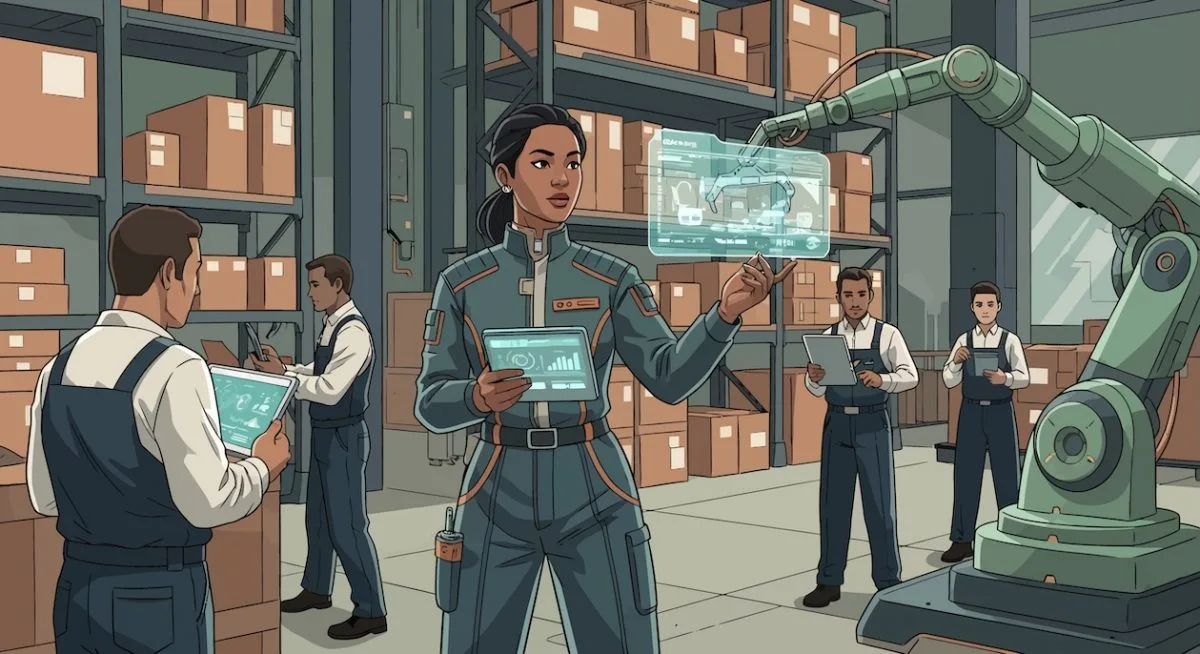
ARTIFICIAL INTELLIGENCE is increasingly being used by logistics companies, though primarily for administrative tasks. Those AI solutions that do make it into productive use tend to provide support in specific, clearly defined application areas, such as order picking or inventory analysis, rather than serving as a comprehensive warehouse management system.
About a year ago, PSI Software SE, in collaboration with the market research firm Civey, surveyed 300 logistics professionals and executives about their views on artificial intelligence in intralogistics. The results at the time painted a clear picture: a great deal of interest, a high willingness to invest, but very little use in day-to-day operations.
Twelve months later, it’s worth taking a look at how things have actually turned out. The study found that, at the time of the survey in July of last year, 15% of companies were using AI in production in their warehouses. Another 41% announced plans to invest in such solutions by 2028. The most important areas of application cited were warehouse optimisation (44%) and inventory management (33%), followed by putaway, goods receipt, and returns management. The biggest hurdles, almost tied, were implementation costs, employee acceptance, and technical integration, each cited by around 40% of respondents.
As well as AI being used to target specific processes, many initiatives remain at the demonstration stage without making the transition to regular operation. Solutions become productive when they integrate seamlessly into existing processes and quickly deliver concrete, measurable benefits. In this context, a decision-support approach is gaining traction: AI provides the basis for decisions, but the user continues to make the final choice. Pure “black box” approaches find little acceptance in business-critical warehouse processes.
Strategy
The key is the ability to evolve AI from an innovation into a product that is affordable and immediately available to every customer and that delivers immediately tangible added value. This is precisely an integral part of PSI’s strategy. For example, Batch AI has become the first AI module to be integrated into the PSIwms standard. In practical use, this solution has helped customers reduce picking routes by about 30% and increase picking efficiency by over 20%. In the coming months, additional AI modules will be added that, following the example of Batch AI, will provide tangible optimisations for clearly defined tasks in day-to-day warehouse operations. The focus will be on quickly answering user questions, providing context-sensitive support for system operation, and accelerating the setup of logistics processes.
Conclusion: pragmatism beats vision
At first glance, the interim assessment may seem more sobering than hoped for. Upon closer inspection, however, it becomes clear that the use of AI in logistics is gradually taking shape. It’s also becoming evident that AI is not a silver bullet. Too much of a good thing can be overwhelming. Rather than radical system overhauls, it is the easily integrable pieces of the puzzle that offer operational benefits.