
Automation with a purpose: why sustainability must be at the heart of the modern warehouse
The warehouse has undergone a remarkable transformation over the last decade, says Yusen Logistics UK.
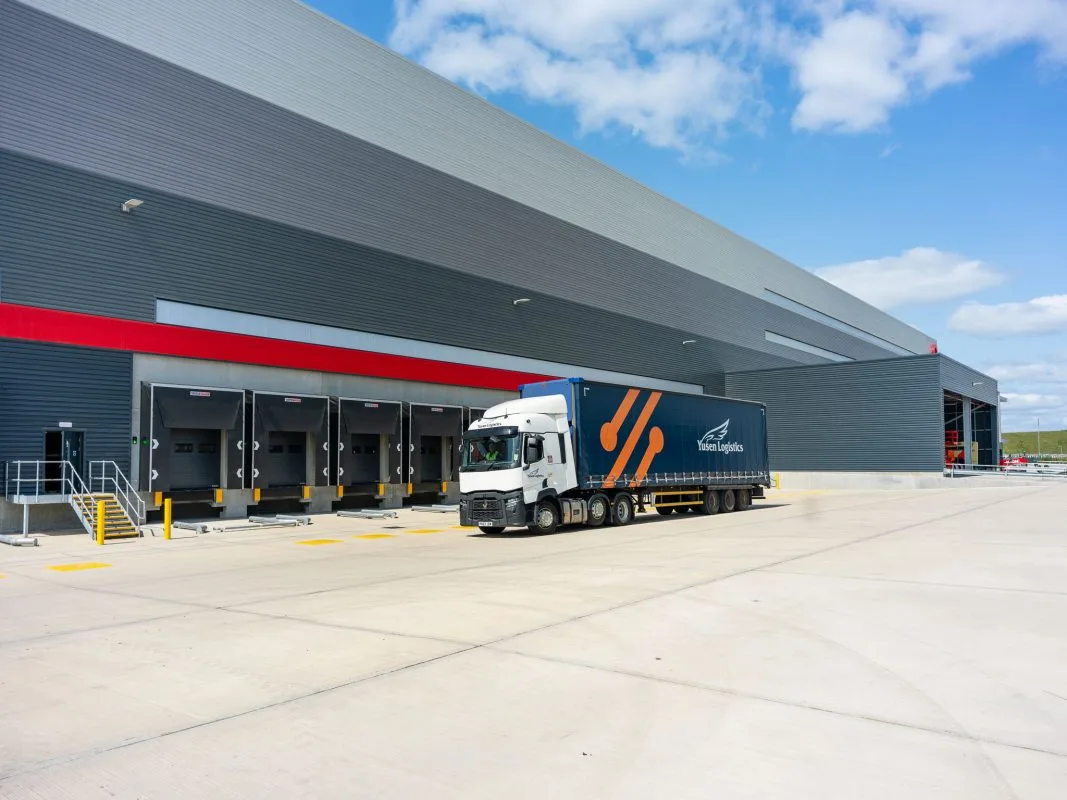
ONCE VIEWED primarily as a storage location within the supply chain, today’s warehouse has become a critical hub for operational excellence, customer experience, business resilience and sustainability. As supply chains become increasingly complex, organisations are under growing pressure to deliver greater speed, accuracy and flexibility while reducing environmental impact and controlling costs.
For many businesses, warehouse automation has become a key part of the solution. However, automation alone is no longer enough.
The real opportunity lies in combining automation, digitalisation and sustainability to create facilities that are not only operationally efficient but capable of supporting long-term business and environmental goals. Yusen Logistics, believe these objectives should be integrated into every decision made across warehouse design, technology investment and operational execution.
The New Reality of Warehousing
Today’s warehouse operators face challenges that would have been difficult to imagine just a few years ago.
Customers expect complete inventory visibility, rapid fulfilment, high service reliability and the flexibility to respond to changing demand patterns. At the same time, labour shortages, rising operating costs and increasing sustainability requirements are forcing businesses to rethink traditional warehouse models.
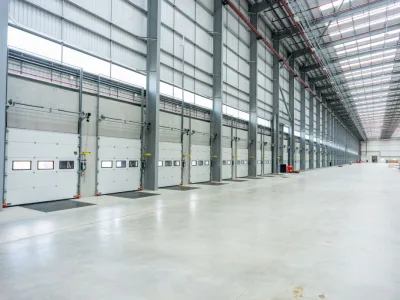
Historically, warehouses relied heavily on manual processes and fixed infrastructure. While effective in a more predictable marketplace, these models can struggle to meet the demands of modern supply chains.
Businesses need facilities that can scale efficiently, process increasing order volumes and maintain consistently high levels of performance without compromising sustainability. This is where automation delivers significant value.
Looking Beyond the Robot
When people think of warehouse automation, they often picture robots moving around a fulfilment centre. Successful automation is much broader than a single piece of equipment.
Automated storage and retrieval systems, intelligent conveyor networks, robotics, advanced warehouse management systems and real-time inventory visibility all contribute to creating more responsive and efficient operations.
The greatest benefits are realised when these technologies are fully integrated. By connecting physical automation with digital systems, operators gain real-time visibility across every stage of the warehouse process. Inventory movements can be tracked more precisely, workflows can be optimised continuously and potential bottlenecks can be identified before they impact service levels.
The result is improved productivity, enhanced accuracy and greater operational resilience.
Sustainability Cannot Be an Afterthought
While operational efficiency remains a key driver of automation investment, sustainability is becoming equally important.
The most effective warehouse operations are those where sustainability has been embedded into the design process from the very beginning. Everything from building design and energy management to material flows and equipment selection influences environmental performance.

Reducing wasted movement, improving storage density and optimising resource utilisation not only lowers emissions but also enhances productivity and reduces operating costs. In many cases, the most sustainable solution is also the most commercially efficient.
Introducing Yusen Logistics’ Sustainable Distribution Centre
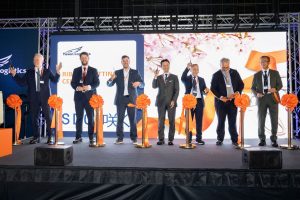
This philosophy has guided the development of Yusen Logistics’ new Sustainable Distribution Centre (SDC) in Northampton, which officially opens in September.
Designed as a next-generation logistics warehouse, the facility demonstrates how automation, digital integration and sustainability can be combined to create a future-ready warehouse model capable of supporting evolving customer requirements.
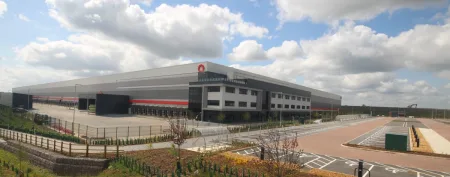
Spanning more than one million square feet, the SDC has been designed as a highly flexible, multi-user environment supporting a diverse range of customer operations. Advanced warehouse management systems provide real-time inventory visibility, while automation-led solutions optimise material flows, improve throughput and reduce manual handling requirements.
A key element of the project has been collaboration with automation specialist Logistex, helping ensure the automation architecture is fully aligned with operational workflows and capable of scaling with customer demand over time.
Rather than implementing automation as a standalone technology investment, the project has focused on creating an integrated operational environment where systems, processes and people work together to deliver consistent performance.
Delivering Measurable Benefits
At the Sustainable Distribution Centre, automation and process optimisation have delivered productivity improvements of between 20% and 30% compared with more traditional warehouse operations. Inventory accuracy exceeds 99.8%, while on-time, in-full performance consistently achieves more than 99.5%.
These improvements create value across multiple areas of the business. Higher accuracy reduces operational risk, improved productivity increases capacity and enhanced visibility enables better decision-making. Most importantly, customers benefit from improved service reliability, greater flexibility and the confidence that comes from operating within a high-performance environment.
The scale of the facility also allows customers to consolidate multiple operations into a single location, creating opportunities to simplify networks, improve efficiency and support future growth.
Embedding Sustainability into Everyday Operations
Sustainability has been a core consideration throughout the development of the SDC.
The facility has been designed in line with BREEAM Excellent principles and incorporates energy-efficient lighting, optimised building insulation and intelligent energy monitoring systems to minimise environmental impact and support long-term efficiency improvements.
However, sustainability does not end with the building itself. Yusen Logistics, environmental considerations are integrated throughout the wider supply chain. Whether evaluating warehouse operations, transport networks, packaging solutions or automation technologies, sustainability is embedded into decision-making processes to ensure environmental performance is considered alongside service and commercial objectives.
The Future Warehouse
The future of warehousing will not be defined solely by automation, nor solely by sustainability.
The most successful operations will be those that combine the two.
Automation enables businesses to improve speed, accuracy and scalability. Sustainability ensures those improvements can be delivered responsibly and efficiently. Together, they create stronger, more resilient supply chains capable of meeting the demands of a rapidly changing marketplace.