
Baumann adds impact detection to connected sideloaders
The new capability offers greater visibility of how long-load handling equipment is used in practice.
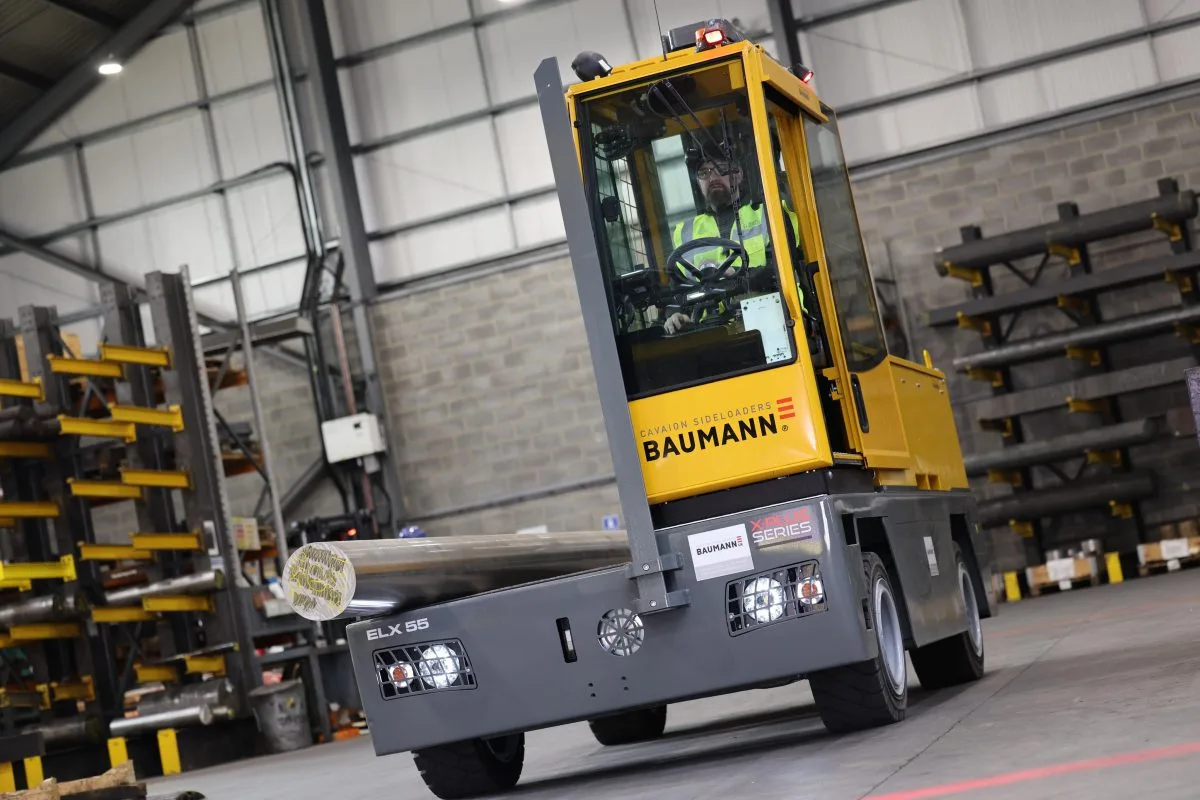
Baumann has added impact detection to its Baumann Online remote monitoring system, giving customers greater visibility of incidents involving their sideloaders.
Impact events can be recorded and reviewed alongside information on machine utilisation, location, condition, energy consumption and operating behaviour. This can help businesses identify recurring incidents, investigate where damage may be occurring and act before isolated events become an accepted part of the operation.
The development reflects a wider change in materials handling. Choosing equipment is no longer simply about capacity, lift height and purchase price. Businesses increasingly need to understand what happens after the machine enters service, particularly important when handling timber, steel, aluminium and other long materials.
The load should come first
According to Riccardo Bove, managing and technical director at Baumann, long-load handling should begin with the characteristics of the material rather than the specification of the truck.
Said Bove: “Length, flexibility, shape and weight distribution all influence how a load behaves when it is lifted, accelerated or brought to a stop. A machine may have sufficient rated capacity, but that does not automatically mean the complete handling process is stable or efficient.”
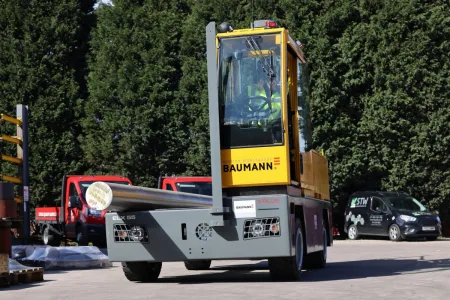
“Many companies continue to move long products using processes developed around conventional counterbalance forklifts. Extra turning space, restricted routes, repeated repositioning and occasional impacts may gradually become accepted as unavoidable.”
Having the data to hand makes those compromises more difficult to overlook. Impact detection can show whether incidents are isolated or concentrated around a particular doorway, aisle, loading area or shift.
Utilisation data may reveal unnecessary travel or uneven use across a fleet. The purpose is not simply to record operator mistakes, but to understand whether the site, process and equipment are working together effectively.
Rethinking the existing operation
Businesses considering a sideloader sometimes focus on how easily it can be inserted into their current operations. A more useful question may be whether the current process has been shaped around the limitations of the wrong type of machine.
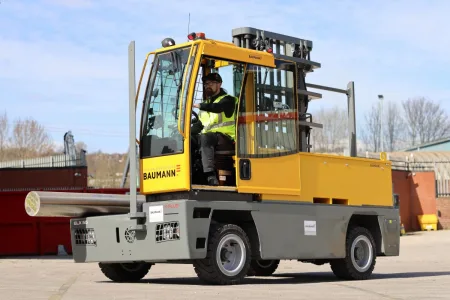
Baumann UK’s Mark Bann adds: “A sideloader carries long materials along its chassis, with the load supported on the deck during travel. This reduces the lateral footprint of the load and can improve visibility, manoeuvrability and access through constrained areas.”
“The potential benefit is therefore wider than replacing one truck. It may allow a business to reconsider aisle widths, storage density, internal routes and the number of movements required between storage, production and dispatch.”
Compact long-load handling
Baumann’s new five-tonne EXL electric sideloader has been designed for operations where specialist long-load capability must fit within limited space.
With an overall length of approximately 4,200mm, a platform height of 750mm and a choice of 1,200mm or 1,400mm decks, the EXL demonstrates that adopting a sideloader does not necessarily mean introducing a cumbersome machine.
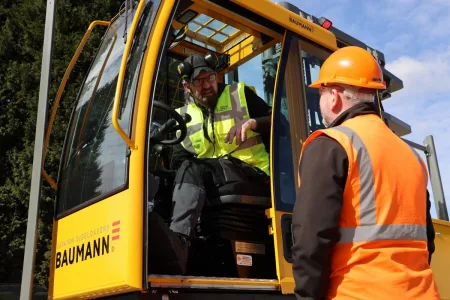
Its 120-volt electrical system supports demanding duty cycles, while lithium or swappable battery options can provide additional flexibility for extended working. X-Plus adds 150mm of additional outreach, helping operators position loads while maintaining greater clearance from lorry beds and surrounding structures.
SafeLoad Assistance can monitor factors including load weight, mast height, outreach and centre of gravity. Baumann Online then adds visibility of how the truck is being used over time.
Together, these systems move the discussion beyond whether a machine can lift a load.
They help answer the more important question: is the whole operation handling it as safely and efficiently as it could?