
Cracking the million-pound nut
The International Powered Access Federation (IPAF) argues why logistics must go back to basics on MEWP safety.
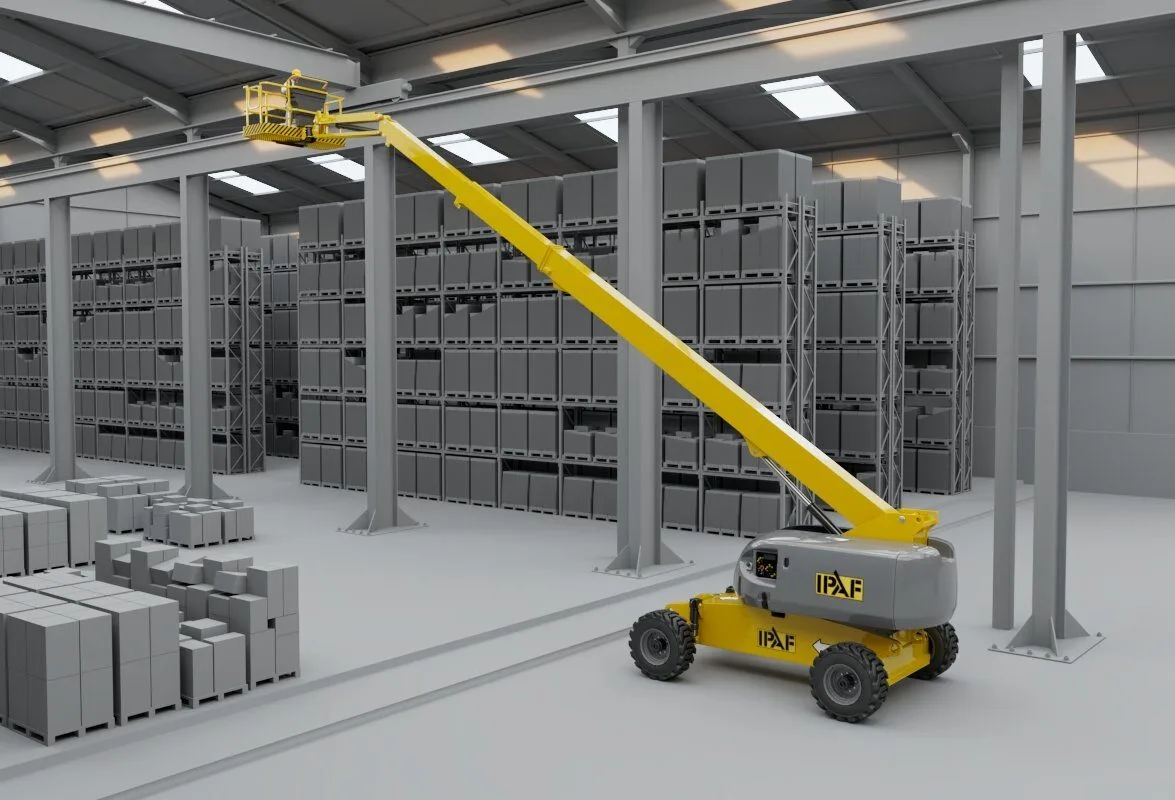
AS MODERN logistics facilities scale up in complexity – driven by automation, tight delivery windows, and high-volume throughput – they’re facing a growing challenge: preventable powered access incidents that cost time, money, and sometimes lives.
Entrapments, falls, overturns and dropped objects continue to plague maintenance and loading operations, often due to poor planning or oversight. These are the kinds of accidents that represent what IPAF calls “The Million-Pound Nut” – small mistakes in safety that can snowball into devastating outcomes.
Preventable incidents involving Mobile Elevating Work Platforms (MEWPs) continue to occur, often during the most routine tasks: a maintenance call, a pre-opening contractor visit, or a late-night unloading operation.
In response, IPAF is urging the sector to go back to basics.
This isn’t a call for regression, but a strategic return to the core principles of safe use of MEWPs and other powered access equipment. As warehouse footprints grow and 24/7 operations become the norm, there’s never been a more crucial time to plan for safety from the ground up, literally.
Entrapment, falls & overturns
Warehouse environments today are more congested than ever:
- Autonomous vehicles operating on their own schedules.
- Loading and unloading across multiple docks simultaneously.
- Contractors on-site during shutdowns for maintenance, often unfamiliar with the site.
- High volumes of people and materials moving through shared spaces.
Brian Parker, Head of Safety & Technical at IPAF, said: “These environments present a unique problem, whereby small failures in safety planning can lead to catastrophic, costly incidents involving serious injury, asset damage or total operational shutdown.
“Entrapment in confined spaces, falls during unscheduled access, and overturns during loading/unloading or on uneven surfaces, remain among the leading causes of fatalities and serious injuries. Each of these incidents is not only preventable, but they’re also often the result of a lack of proper planning, training or risk assessment.
“We encourage embedding early-stage planning into every MEWP operation, from routine maintenance in a quiet corner of a warehouse to high-risk work during busy logistics shutdowns.”
The Stages of Safety Planning for Logistics
Here are five principles of safe logistics operations with MEWPs:
1. Site survey & suitability check
- Survey the surface conditions (ramps, dock plates, thresholds) to assess machine stability and risk of overturn.
- Consider ceiling height, racking clearance, door heights, and turning radius.
- Check for potential overhead obstructions or live electrical hazards.
2. Pre-work assessment & preparation
- Conduct a site-specific risk assessment, especially in areas shared with automated systems or multiple contractors.
- Isolate work zones during shutdowns or maintenance. Clearly mark off exclusion zones around MEWPs.
- Plan for human-machine interaction where autonomous systems are in use.
3. Select the right machine
- Choose the right MEWP for the task.
- Consider low emission/electric options for indoor work.
- Use material handling attachments where required to prevent dropped objects.
- Use well-maintained equipment from IPAF Rental+ accredited providers.
4. Train and supervise
- Deploy MEWPs for Managers trained personnel to oversee planning and supervise onsite.
- Ensure operators hold valid PAL Cards and are familiar with recovery and rescue procedures.
- Emphasise pre-use inspections and condition checks – IPAF’s ePAL app is a great digital tool for this.
5. Plan for recovery & rescue
- Don’t just react to entrapment or machine failure – plan for it before work begins using a documented and practised recovery and rescue plan.
- Appoint personnel responsible for overseeing emergency response who are familiar with the lower ground/auxiliary controls.
- Build rescue timelines into your maintenance schedule – don’t assume one will never be needed. Review IPAF’s resources on safe, timely rescue practices.
Recovery and rescue is an area too often overlooked until it’s too late. IPAF’s latest guidance focuses on just this – The Principles of MEWP Recovery and Rescue.
By embedding these steps, logistics operators can drastically reduce the likelihood of major incidents and create a proactive culture of safety that keeps operations moving, not stopping, due to preventable mistakes.
Why it matters more than ever
Modern logistics is a sector under pressure: fulfilment deadlines are tight, workforce turnover is high, and sites are becoming larger and more automated.
With more moving parts – and more people working at height – the risks multiply. Loading docks, shutter doors, and narrow aisle spaces create real hazards when not properly planned for.
And with increased use of low-level lifts for maintenance and cleaning, it’s easy to overlook the fact that falls from even modest heights can be serious or fatal.
IPAF’s message is that safety isn’t just about the operator, it’s about how the job is planned, who is supervising, and what systems are in place when things go wrong.
IPAF’s work is informed by years of international data and insight. Previous safety campaigns including Don’t Fall For It, High Voltage!, Street Smart, Safety Starts With You, Crushing Can Kill and Stop Overturns! have helped reduce risk in challenging environments.
What’s coming in 2026 – IPAF’s key campaigns & initiatives
2026 Global Safety Campaign
This new safety campaign will be officially launched at the IPAF Summit & International Awards for Powered Access (IAPAs), held in Istanbul, Turkey.
Toolbox Talks
These short, practical safety briefings are designed for use directly on site. Delivered before a shift or task, Toolbox Talks take just 5–10 minutes but address critical risks. For fast-moving logistics operations, IPAF’s Toolbox Talks provide a simple, high-impact way to reinforce safety culture without disrupting workflow.
Share Your Story
IPAF’s #ShareYourStory campaign aims to encourage a culture of openness within the powered access industry. Have you experienced an incident or near-miss with powered access machines? Share your story and make a difference.
Accident Reporting
Play your part in improving safety. Reporting accidents and near-misses, no matter how minor, helps IPAF identify trends, develop targeted guidance, and prevent future incidents. Use IPAF’s accident reporting portal to contribute to a safer powered access industry. Report an incident.