


Does your racking installer need a CSCS card?
Are you having some racking installed? Have you checked whether your racking installers need a CSCS card?
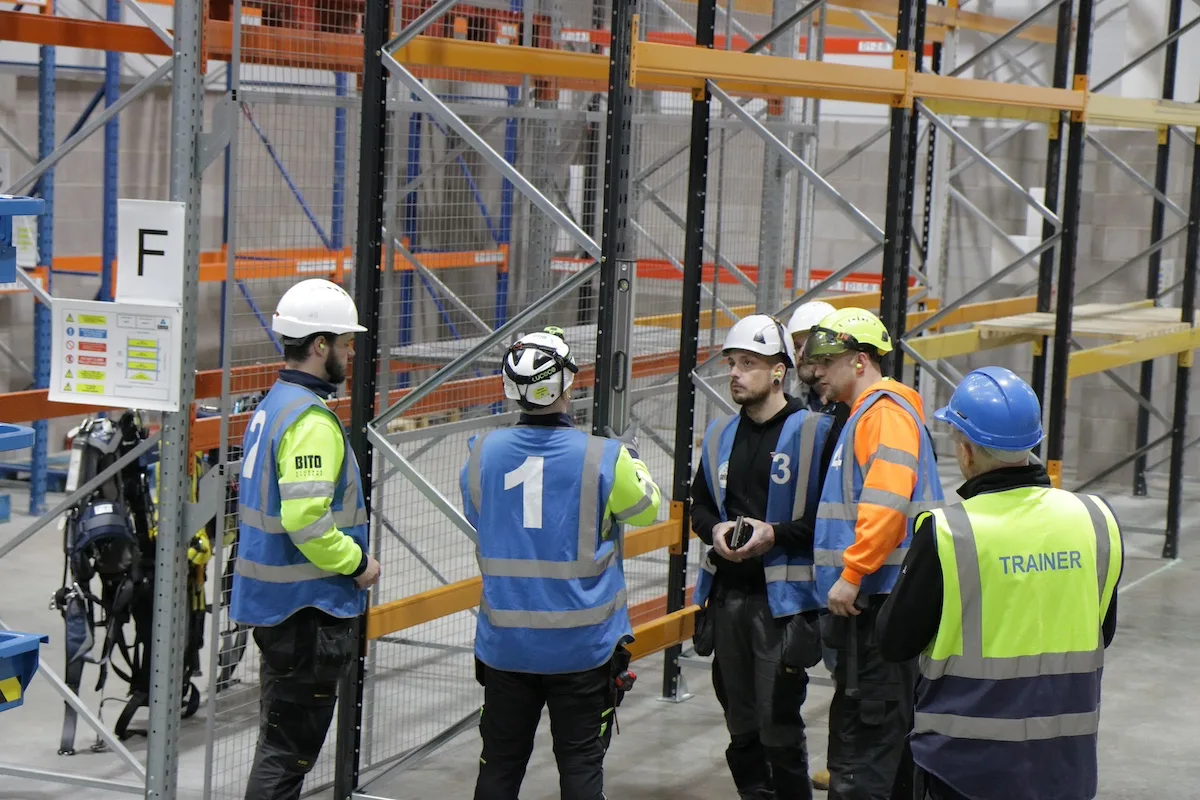
IF YOUR racking project is being installed on an active construction site, it may fall under the safety and legislative requirements of that site. That means, as the client ordering the racking, it is your responsibility to check the quality and safety standards of any racking installers working on your site. Within the construction industry, one well-known way to achieve this goal is by asking to see their CSCS card.
We take a look at how regulations have changed within the industry, the development of CSCS cards and why they should matter when ordering new racking. We’ll also explore the importance of training for racking installers and what type of card your racking installer should carry.
Racking regulations
In this industry, it is fair to say that many installers ‘learn on the job’ with no formal qualification. In most cases, the quality of their work will only be as good as the skills of their fellow team members and supervisor. In other words, it can come with risks.
Warehouse owners and managers should be aware that, to meet your health and safety obligations, you are responsible for checking the credentials of your installers. HSG76 Warehousing and Storage: A Guide to Health and Safety, produced by the HSE, expects you to check that you are using ‘competent’ people for any work in your warehouse.
Although there is some element of grey surrounding the topic, racking installations can fall under the category of a construction project and as such, you must abide by the Construction Design & Management Regulations 2015 (CDM 2015). These expect you to check the health and safety standards of any installers working on your site. Within the construction industry, one of the easiest ways to check is by asking to see your contractor’s CSCS card.
What is a CSCS card?
The Construction Skills Certification Scheme, also known as CSCS, is the leading training and qualification verification scheme for the construction industry. Launched in 1995, CSCS works to ensure that all construction workers in the UK receive appropriate training and qualifications that are suitable for their role. By doing so, it will help to improve standards and safety within UK construction.
Holding a CSCS card is not a legal requirement, and it is up to the Main/Principal contractor or client to decide if their site workers need one. However, a CSCS card does offer a very quick and easy way for Site managers to check the qualifications of the contractors on their site. If their team have the correct training, it goes a long way to ensuring the project and site are meeting their Health and Safety requirements.
As a result, most Main/Principal contractors do require workers on their sites to hold a valid CSCS card.
Do you need a CSCS card for racking installations?
When the card scheme was first launched, there were several different cards available which covered traditional and specialised roles, plus any construction-related professions which did not fall into any other CSCS card category. This included the Construction Related Occupation (CRO) card, which racking installers could get on employee recommendation alone with no other training.
To improve safety levels, CSCS made steps to remove these cards and, in its place, launched the Partner Card Scheme which implemented relevant training for skilled roles. There are currently 38 organisations signed up to the alliance and to show the CSCS logo on their card, they must meet appropriate qualifications and set a minimum standard for each occupation. Racking installations are considered a skilled trade and, since the removal of CRO cards, the only way to get the correct CSCS card for this work is through the SEIRS training scheme run by SEMA. As one of CSCS’s 38 Partner Card Scheme, our SEIRS card fully meets the conditions set out by CLC.
As a point of reference, not all SEIRS installer cards show the CSCS logo. For the SEIRS Foundation, Diploma, Supervisor or Manager cards to show the logo, they must complete separate health and safety elements and have passed the appropriate CITB Health, Safety and Environment test. To check your installer has met CSCS requirements, you can verify their card using the CSCS SmartCheck App.
What is SEIRS?
SEIRS aims to raise standards within the industry by training installers on correct installation methods to SEMA standards. Installers can opt for a standard SEIRS card, or they can specifically apply for the SEIRS CSCS qualification as long as they have passed the appropriate CITB Health, Safety and Environment test.
Training forms a central part of SEIRS. To achieve a full SEIRS card, installers must attend two courses:
- SEIRS Foundation – Part 1 – is an introduction that instructs installers on generic and industry-specific health and safety issues that are likely to affect pallet racking installations. At the end of the course, the installer receives a SEIRS Trainee card, which is valid for six months. This period enables the trainee to develop and enhance their skill sets on sites while under supervision.
- SEIRS Diploma – Part 2 – is a two-day course which completes the installer’s training. On successfully passing a thorough assessment process, they are awarded a full SEIRS card, which is valid for five years. The course includes a mixture of classroom-based theory and, in a first for the industry, a very significant practical element. This course has been designed to be stringent and challenging, with an emphasis on the practical component of racking installations.
Can you work on construction sites and racking projects without a CSCS card?
As we mentioned earlier, there is no legal requirement to hold a CSCS card. However, as with all construction projects, the installation of your racking is covered by Health and Safety guidance and regulations that require the use of trained labour. These include the Building Safety Act 2022, Construction Design & Management Regulations (CDM 2015) and HSG76 Warehousing and Storage: A Guide to Health and Safety.
So, the next time you’re getting new racking installed in your warehouse, check whether the work must meet the requirements of a construction site. To avoid the risk, ask to see your racking installers’ SEIRS CSCS card.
Check out SEMA’s Warehouse Racking Safety Guide here.