


Fighting for the Cold Chain
The past year has marked a significant step forward for the Cold Chain Federation and for the wider temperature-controlled logistics sector. Our collective voice is now being heard where it matters the most.
IN MAY, we welcomed a record number of members and parliamentarians to our annual Parliamentary Reception at the House of Commons. With 186 industry representatives and 17 MPs in attendance, the event provided a powerful platform to showcase how the cold chain underpins the UK economy. Members shared first-hand experiences with their local representatives, sparking vital discussions about food security, sustainability, and the importance of keeping supply chains moving. Our bold Cold Chain is Critical branding made a clear statement: without the cold chain, Britain stops.
This annual event is a highlight of our calendar, but it represents more than a single moment of visibility. It is part of a coordinated, year-round effort to raise awareness, shape thinking, and deliver meaningful influence within government. The progress we are now seeing is the result of years of sustained work to make sure that the cold chain is not just understood but respected and supported as Critical National Infrastructure.
Building recognition for a vital industry
When the Cold Chain Federation was formed in 2019, one of our first challenges was to define what “the cold chain” meant to government and policymakers. At that time, the phrase was not widely recognised in political or media circles. Yet our sector plays a fundamental role in the daily lives of millions of people, keeping food fresh, medicines safe, and retailers supplied.
Through consistent advocacy, research, and communication, we have changed that. The term “cold chain” is now widely used across industry and government, and its importance is increasingly reflected in discussions around energy, trade, and food policy. The crises of recent years, from Brexit to the Covid pandemic and rising energy costs, have reinforced how vital a resilient temperature-controlled supply chain is to national resilience.
If the first five years of the Federation were about establishing understanding, the last 18 months have been about turning that recognition into action. We are now seeing the first tangible signs of government departments considering cold chain needs in policy design, from energy efficiency schemes to workforce development and decarbonisation planning.
Government departments are listening
One of the most positive developments of the past year has been the shift from awareness to engagement. Where once we had to knock on doors to make our case, we are now seeing policymakers and departments approach us directly to ask how they can support the cold chain.
Defra, responsible for food resilience, have begun to engage with us on how to ensure cold chain resilience is better reflected in their annual reporting on the health of the UK food system. We are also in active discussions on progressive policy development with teams across departments responsible for trade, transport, and energy, all of whom recognise the cold chain’s contribution to the UK’s security, sustainability, and economic growth. These are important milestones that show how far the sector’s influence has grown.
This recognition has not happened by accident. It is the result of persistent effort from the Federation, supported by our members across the country. Together we have built a unified voice that represents the sector’s real-world experience and communicates its importance to the wider economy.
Cold Chain is Critical
Our Cold Chain is Critical campaign, has provided a clear and consistent message for policymakers and industry stakeholders. The campaign explains how the cold chain underpins the UK’s economic stability and food resilience. It also highlights the essential role our sector plays in supporting industries as diverse as pharmaceuticals, retail, hospitality, and export logistics.
Since its launch, the campaign has gained strong traction. We promoted it at the Labour Party Conference in September, where Tom Southall, Deputy Chief Executive of the Cold Chain Federation, sat on a panel discussion on food security. The discussion covered:
- How cold chain businesses safeguard UK food supplies and deliver in times of crisis
- The challenges of global disruption, cybercrime, energy transition, trade policy and climate change
- The need for stronger cross-departmental policy on food resilience planning
It was an insightful session with parliamentarians, academics and industry leaders, and a vital opportunity to put the cold chain at the heart of national resilience planning.
Members making the difference
While the Federation provides the strategic direction, our members give the cold chain its voice and credibility. By hosting MPs and officials at their sites, attending our events, and contributing data and insights to our research, members help policymakers see what the cold chain means in practice. These interactions demonstrate how logistics businesses operate on the ground, where pressures and opportunities emerge, and how policy can best support them.
Investing in people and skills
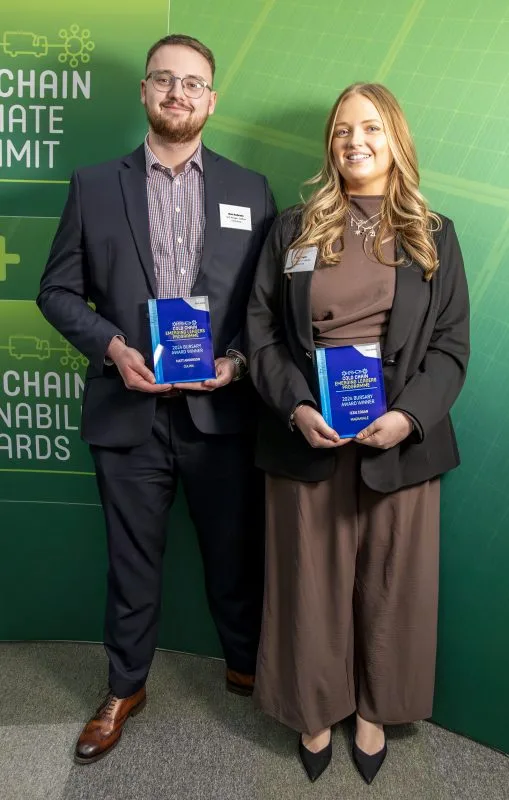
The Federation’s work does not stop at advocacy. Supporting the people who make this industry run is equally important. In 2025, we celebrated the first cohort of our Emerging Leaders programme completing their professional development courses. This initiative is helping to build the next generation of cold chain leaders, equipping them with the knowledge, confidence, and networks to succeed in a rapidly evolving sector.
Our latest Cold Chain Report 2026, launched at Cold Chain Live! in October, introduced a new section on people and skills. This research explores industry demographics, recruitment trends, and workforce challenges, providing vital insight into the future of our sector. It will inform our next phase of policy work and member support in 2026.
Looking ahead to 2026
As we move into 2026, the Cold Chain Federation will continue to push for greater recognition and practical support for the cold chain industry. Our focus will remain on three key areas:
- Strengthening the cold chain’s role in food resilience and national infrastructure
- Supporting members to transition toward sustainable operations
- Investing in people to secure the future of our workforce
With government departments now showing genuine interest in how they can enable cold chain businesses to thrive, we are entering a new phase of influence and opportunity. The sector has always been critical to the nation’s wellbeing. Now, it is finally being recognised as such at the highest levels of government.
Together, with our members and partners, the Cold Chain Federation will continue to ensure that this essential industry has a strong, united, and respected voice.
What’s coming up
- 19 March 2026 | Cold Chain Climate & Energy Summit & Sustainability Awards | The Slate, Warwick University
- 12 May 2026 | Parliamentary Reception | House of Commons
- 9 July 2026 | Summer Party | Celtic Manor
- 13-14 October 2026 | Cold Chain Live! | Telford International Centre
Related posts