

More flexibility in the warehouse: From automation toward autonomy
How can warehouse and fulfilment solutions be planned to suit requirements, operated more flexibly and maintained more effectively? With new and AI-assisted capabilities, AutoStore presents practical approaches and solutions to better evaluate investment scenarios and business cases, and to automate more processes.

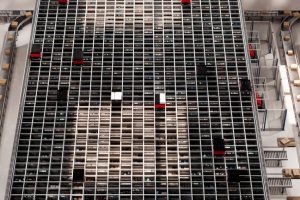
AutoStore’s Fall 2026 announcement introduces new and enhanced capabilities supporting the move from automation toward autonomy. System illustration.
WAREHOUSE OPERATIONS are becoming more complex: product ranges change, orders become more varied and labour remains scarce. Growing product and variant diversity, with different item dimensions, meets dynamic demand and changing requirements for picking and dispatch.
Automating individual process steps often makes them faster. But when manual handovers are still needed, additional steps are created. What matters, then, is not only what is automated, but also how smoothly the processes work together.
With its autumn 2026 product announcement, AutoStore sets out practical next steps under the theme “From automation toward autonomy” to bring further processes and use cases onto the AutoStore platform and to reduce manual effort even further. The new solutions also include AI-assisted capabilities that support decisions across the entire system lifecycle: from the right design of capacity and performance, through flexible workflows, to reliable, optimised operation. The new and enhanced capabilities address these three stages, reducing manual dependencies and enabling greater autonomy step by step.
Design: Plan for the right fit, rather than oversizing
How much capacity does a warehouse really need, and which automation design fits its order profile and processes? AI-assisted planning helps AutoStore teams and authorised partners compare different scenarios based on comparable projects and operational benchmarks. This gives customers a better-informed basis for validating different business cases and designing the system to match their needs. This reduces the risk of building oversized capacity or over investing.
Operate: Manage variety in one system
As item profiles change, warehouse technology needs to adapt without creating separate processes for each Bin height. FlexBinsPort therefore handles different standard Bin heights at a single workstation, bringing greater flexibility to the same Grid. AutoStore also enables integrated workflows for case flow: AutoCase already combines case picking and individual item picking in the Grid. The announced update will enable a single task group to run in parallel across multiple AutoCase stations. This supports a continuous flow into downstream processes such as packing and palletising.
Optimise: Identify maintenance needs earlier
After commissioning, automated processes still need to keep running reliably. Identifying maintenance needs early makes it easier to plan service teams’ work. The planned CubeFleet will compare usage data with defined maintenance thresholds and provide proactive alerts about upcoming service needs. This allows maintenance teams to take more targeted action, rather than relying solely on fixed intervals.
Which approaches suit your requirements? Explore the website for an overview of all the new capabilities and how they can be used.