

From data to delivery: The future of trade facilitation
At a time when global trade is marked by uncertainty, shifting regulations, and geopolitical tensions, the need for stability and predictability has never been greater., says Mark Ruddock, vice president of Global Trade Services – Europe at FedEx.

BUSINESSES ACROSS Europe are navigating a landscape shaped by new customs requirements, sustainability rules, and evolving consumer expectations, all while supply chains grow more complex. As vice president of Global Trade Services – Europe at FedEx, one of the largest express transport operators in the region, I see daily how critical our role is in helping companies maintain growth and remain competitive.
We operate a globally integrated air and road network, handling an average of 18 million packages a day and shipping approximately $2 trillion worth of goods every year. Our network is not only a physical backbone of trade but also a platform that integrates data, digital tools, and compliance expertise to support cross-border commerce. There are several ways we are addressing today’s challenges and preparing for the future of global trade.
Main barriers to efficient regional and global trade
Over the past year, we’ve seen some significant hurdles emerge. Geopolitical instability, tightening delivery windows, and rising expectations for visibility all contribute to pressure on logistics networks. Regulators are introducing a growing number of trade-related measures that businesses must monitor and comply with. These forces require much sharper planning, better data, and tighter network control.
While many of these challenges feel new, the underlying complexity has been building for more than a decade. Brexit was among the most visible shifts, but it is far from the only one. Europe now must navigate the combined effects of multiple new regulatory requirements. The Carbon Border Adjustment Mechanism (CBAM), which fundamentally reshapes how carbon-intensive imports are treated, the resurgence of global tariff disputes, and the imposition of economic sanctions – all introduce new friction points into an already intricate cross-border ecosystem.
Regulations often exist for a good reason. The EU Deforestation Regulation (EUDR) is a clear example. By requiring companies to trace commodities such as coffee, cocoa, rubber, or cattle back to exact plots of land, the EU is driving responsible sourcing and greater environmental transparency. However, the administrative burden associated with it is significant. Achieving compliance requires a highly coordinated interplay of IT systems, documentation, and supply chain data, introducing a level of complexity that defeats the original purpose.
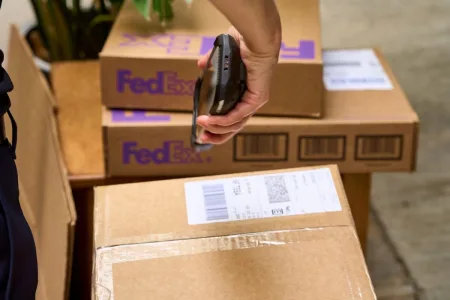
The information requirements alone have expanded dramatically. It’s nearly 50 years since our founder, Fred Smith, said that the information about the package is just as important as the package itself. Today it’s arguably even more important for customers to get that information right. For example, a FedEx customer that ships neon signs valued at less than $800 to the U.S. did not have to include customs classification codes on its shipments prior to May 2025. These neon signs are created using more than 200 different combinations of materials, including steel, glass, wood, etc. Under the new rules, this customer now needs more than 200 different classification codes for its shipments. To support this customer, FedEx has integrated this company’s product catalog into our system, and with automation and generative AI, we’re able to help this customer select the correct classifications for its commodities.
Solutions to facilitate trade
For FedEx, the path forward involves both advocacy and action. We will continue to use our voice, alongside our customers, to push for regulatory simplification and stability. At the same time, we are investing heavily in our own systems to maximize efficiency.
Data integration and simplified internal procedures are areas where logistics providers have meaningful influence and where we have already made substantial progress. We fully support the EU’s long-term goal of a single data hub, reducing the need for logistics firms to interface with dozens of separate national systems.
Internally, we have invested in a unified data platform and advanced routing capabilities. This has enabled us to reduce the number of touchpoints required for shipments. Achieving this has required aligning IT systems across multiple countries, ensuring compatibility with customs infrastructure and collaborating closely with our customers to help them adapt. That same focus on helping customers adapt also sits behind the recent introduction of Global Trade Navigator, a suite of digital tools and capabilities designed to help businesses navigate the growing complexity of international shipping with greater confidence.
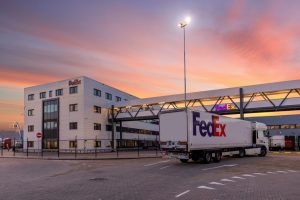
These digital investments are complemented by strategic physical investments. In the last year, we opened a major new freight hub at Paris Charles de Gaulle Airport and a $130 million global air transit hub at iGA Istanbul Airport. These facilities enhance capacity, network resilience, and our ability to process complex shipments at scale.
We’re now seeing the benefits. Streamlining internal processes creates opportunities for faster, cleaner data exchanges with customers, partners, and regulators. Our goal is to help customers provide the right data upfront, ensuring seamless transit, predictable costs, and minimised delays.
The future of trade facilitation
Looking ahead, I see greater compatibility of data standards and deeper digital integration across supply chains. Our Future of Logistics Intelligence Report[1] shows that today 59% of organisations use digital data to predict or prevent delays, an encouraging figure, that also indicates substantial room for growth.
Shifts in customs policy will significantly change import behaviour. The EU’s decision to remove the de minimis exemption will affect markets such as Asia, which have long benefited from simplified direct-to-consumer shipping. But instead of reducing demand, I expect this development to drive more companies to warehouse goods inside the EU, boosting regional inventory and increasing the role of intra-European freight and express networks.
Handling fees for low-value goods may give European manufacturers a stronger competitive position at home, but I believe they should remain ambitious internationally. Rather than fearing these changes, European businesses can use digital data to reduce friction and unlock new markets.
Despite global uncertainties, I remain optimistic. Forecasts predict steady growth in European logistics. Whatever geopolitical and macroeconomic challenges arise, technology and the determination of our teams will continue to break down barriers to trade.
[1] FedEx Delivers First-Ever Future of Logistics Intelligence Report