

Headwinds and tailwinds
Rueben Scriven takes a look at the global warehouse automation market spotting trends in a turbulent year.
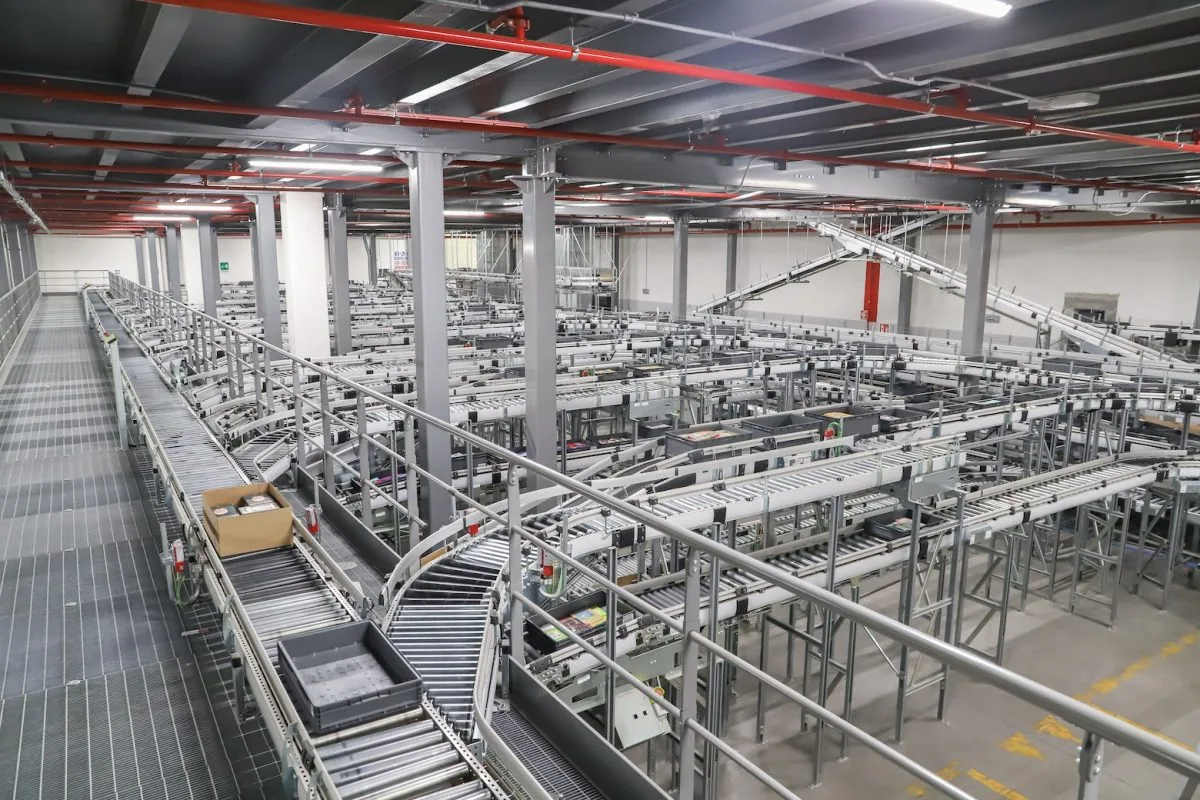
2025 HAS been a turbulent year for the warehouse automation market. The year began with optimism, but as President Trump’s trade policies became clearer, market sentiment shifted toward a more pessimistic outlook.

Despite this, data indicates that order intake for fixed automation in 2024 (last year) exceeded our expectations. This stronger-than-expected backlog from 2024 partially offset the negative impact of tariffs on revenues in the first half of 2025. At the same time, we have made a significant downward revision to our mobile robot forecast.
Taking all factors into account – including macroeconomic conditions, the robust 2024 order intake, and the revised mobile automation outlook – we made a slight downward adjustment to our overall market forecast. Notably, our forecast for fixed automation has been revised upward due to the improved 2024 figures. This article explores these dynamics in detail, providing a comprehensive analysis of the current state of the market.
Uncertainty
At the start of 2025, the macroeconomic outlook appeared relatively positive. For instance, having bottomed out in July 2024, the year-over-year growth rate of US warehouse construction was showing steady improvement through February 2025. However, the economic uncertainty following the announcement of Trump’s new tariffs has tempered our optimism. As a result, warehouse construction is now expected to contract slightly in 2025 compared with 2024.
The impact of these tariffs is reflected in the Economic Policy Uncertainty (EPU) Index, which indicates that current economic uncertainty is even greater than during the pandemic. This heightened uncertainty is likely to delay major capital investments, including those in warehouse construction.
Consequently, our latest projections for net new warehouse capacity (in million sq ft) have been revised slightly downward, with a rebound now anticipated from 2027 onward. This expected recovery is driven by two key underlying factors.
Utilisation
Warehouse utilisation is starting to improve. During the pandemic, utilisation peaked and vacancy rates fell to historic lows. Post-pandemic, however, utilisation declined, while vacancy rates surged and exceeded even pre-pandemic levels.
In the US, vacancy rates dropped to 2.8% during the pandemic (from ~5%) but have since risen to 7%.
In the UK, rates fell to 3.1% during the pandemic and have since climbed to 6.5%.
In Beijing and Shanghai, vacancy rates jumped from 1% and 3% during the pandemic to 14.8% and 19.2% in 2024, respectively.
However, recent data suggests utilisation rates are increasing again. As vacancy rates decline, rent prices tend to rise, improving ROI for developers and encouraging new warehouse construction. In the US, the year-over-year growth in vacancy rates is slowing, and we expect rates to begin declining later this year or early 2026.
E-commerce: Quiet growth with big impact
While e-commerce cooled after the pandemic, its gradual and steady growth has seen the e-commerce’s share of total retail sales return to pandemic-era highs. This silent resurgence is reducing vacancy rates and increasing warehouse utilisation, especially since e-commerce fulfillment requires more space due to split-case operations. This is unlike traditional brick-and-mortar distribution, which is largely case- or pallet-based.
Warehouse automation: A tale of two halves
Our latest warehouse automation forecast reveals a mixed picture. The fixed automation segment has been revised slightly upward compared with our November 2024 release, while the mobile robot segment has been significantly downgraded. As a result, our projected total market size for 2030 is slightly lower than previously forecasted.
Fixed Automation
To understand the upward revision in our fixed automation forecast, we break it down into three segments:
Historical: Revised slightly upward due to stronger-than-expected revenue performance in 2024, resulting in a larger market base.
Short-term (2025–2026): Revised downward due to ongoing economic uncertainty and the impact of new tariffs.
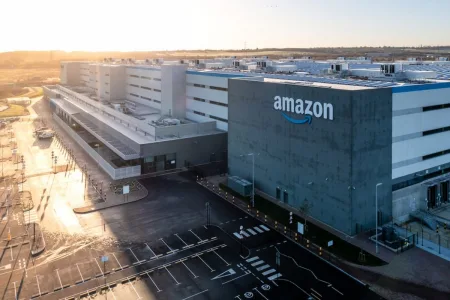
Long-term (2027 onward): Revised slightly upward, driven by stronger growth expectations in US general merchandise and parcel sectors since our November 2024 update. Amazon’s $15 billion investments, coupled with several large parcel initiatives have led us to revise these segments.
Mobile Automation
Our mobile robot forecast has been revised downward due to a combination of both internal and external factors.
Internal factors: A more detailed analysis of the total addressable market led us to narrow our focus to low- and mid-throughput sites, reducing what had previously been an overestimated market size. With eight years of historical data now available, we also adjusted our long-term growth assumptions to better reflect actual adoption patterns amid volatile market cycles. Additionally, vendor data—particularly from some Chinese manufacturers and long-tail vendors—was revised after identifying inflated sales and shipment figures.
External factors: Trade tensions and tariffs – particularly those involving the US, China, and Europe – have created substantial uncertainty. These measures have increased the cost of mobile robot components and disrupted global supply chains, dampening both short- and long-term growth prospects.
Together, these factors contribute to a more conservative and realistic outlook for mobile automation.
The big picture: Headwinds and tailwinds
In the short to mid-term, brownfield projects (retrofitting existing facilities) will dominate automation deployments, favouring smaller, more targeted systems. A rebound in greenfield projects is expected from 2027 onward, although it is likely to be at a more moderate scale than during the pandemic-driven boom.
Despite the current headwinds, the message remains clear: labour shortages and rising e-commerce demands are fueling sustained investment in automation. While tariff-related uncertainty may temporarily limit large greenfield investments, the long-term fundamentals supporting warehouse automation remain strong.
Rueben Scriven, research manager, Interact Analysis
For more information, visit www.interactanalysis.com