


Heavy onus on HVO
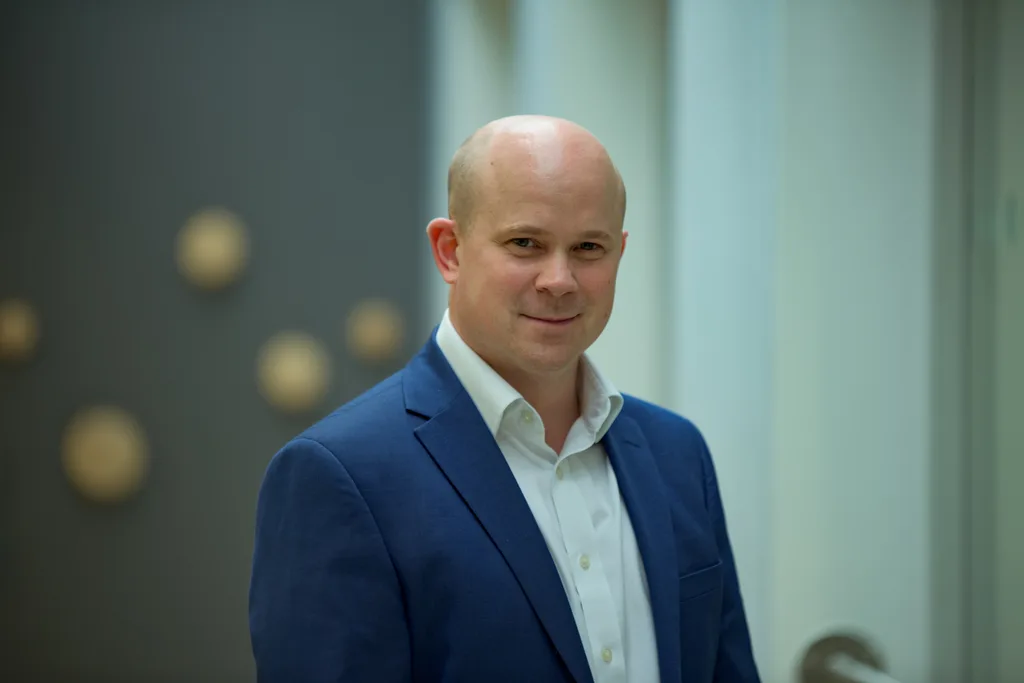
Howard Tenens is an extraordinary third party logistics business, with longstanding green credentials, a robust position as a property asset owner and ambitions in solar generation. Logistics Matters editor Simon Duddy spoke with chief executive officer Jamie Hartles to hear more.
THE LOGISTICS company has made a firm bet in HVO (hydrogenated vegetable oil) as a green fuel of choice for the UK transport industry. This stems from the firm’s long-established interest in environmental innovation – back in 2008 it established Tenens Environmental pioneering dual fuel trucks running on diesel and CNG and today it runs a small fleet of dedicated gas trucks running on biomethane.
So why is HVO now the preferred option? Howard Tenens chief executive officer Jamie Hartles explains: “It’s really about the carbon saving, up to 90% versus diesel, plus customers can changeover to the new fuel immediately, without any adjustment required to vehicles, while OEMs still honour the R&M agreements. Biofuels, like HVO and biomethane, really are the best options for decarbonising the logistics sector right now.”
“The challenge is the price. When we adopted HVO two years ago, it was 10p per litre more expensive than diesel. We had a number of customers who locked in a price with us and we bought 1 million litres. The price of diesel then shot up, and they saw real benefits. However, the price of HVO has increased significantly over the past year and at times has reached a 40p per litre delta, so it does become a very big investment.”
Why is this? Is it because the supply of HVO is more limited than diesel? Jamie continues: “My understanding is it’s not to do with supply, it’s more to do with production input costs. There is supply being added to the market all the time. Prices for the two fuels used to rise and fall in a similar way but now they are completely separate reflecting the very different production inputs.”
Jamie sees plenty of opportunity for HVO to scale.
“It’s popping up everywhere. There is significant infrastructure and my understanding is that it is scalable. The volumes aren’t unlimited but there is a long way to go before it runs out. New sources of feedstocks are being developed all the time and new production facilities are being constructed, both of which will boost supply volumes. In terms of bang for buck in carbon saving terms it’s one of the best out there for HGV fuel. It should the weapon of choice for those that can afford it, but I recognise that it is expensive compared to diesel and what we really need is the Government to reduce the duty so it can be open to more hauliers.”
Is electric an option?
While biofuel is low risk and available now, the prospects for electric HGVs, especially for higher capacities, are still up in the air.
“It depends on the class of vehicle,” Jamie explains. “Electric vans are here, but as you move up through the classes – 18-26 tonnes are just starting to come to market and we have trialled vehicles from Volta on the pallet network operations which were successful.
“The 44 tonne tractor unit is much more challenging as there is such limited space on the chassis. In order to be commercially viable you need to use those assets as much as possible, and there are a number of constraints such as long charging time. The weight is also a consideration, as the very heavy battery pack reduces payload. Finally, the capital investment is enormous, three or four times the standard tractor unit, which is expensive in itself.”
{EMBED(1275634)}
Using hydrogen as a fuel tackles at least two of these challenges, as trucks can be refuelled quickly without much additional weight burden, but the problem is the absence of fuelling infrastructure.
“Hydrogen solves some of the challenges presented by the battery, but it’s not as energy efficient and the infrastructure investment required from a national perspective is enormous,” says Jamie. “The Government has announced funding for trials of both battery electric and hydrogen trucks, so we expect to see the technology developing rapidly once these projects get off the ground and I’m sure a lot of these barriers will be overcome.”
Solar success
While using electric on the road has its issues, it is firmly established in the building and, indeed, on the building. Howard Tenens owns roughly 4 million sq ft of warehousing across the UK on a freehold basis, which means it has a lot of rooftop estate. The 3PL has maximised this as an enthusiastic early adopter of solar photovoltaic technology.
Jamie says: “The power business, which is another division of Howard Tenens led by my colleague Simon Emms, is a further investment. We see power as an important issue, particularly as the sector moves towards electric and battery operations. Indeed, we have just signed an agreement with Linde Material Handling UK to move to its lithium-ion forklifts across the estate, fed where possible by power generated by solar. Therefore, if you run out of power on-site, it represents a huge problem.”
{EMBED(1275635)}
“Our number one priority is to use the power we generate ourselves,” adds Jamie. “But when we have a surplus, we export that to the grid. The problem is in some localities there is not the capacity to be able to feed power into the grid, without significant investment in that grid.
“We are pleased to see the UKWA championing the issue. Landlords are willing to invest in solar, but are often blocked by Distribution Network Operators or faced with huge charges to upgrade the infrastructure.”
Limitations in the grid puts focus on energy storage on site. But there are problems in this sphere also. Howard Tenens is investigating batteries at the moment, but because of the size of batteries required, prices are prohibitive.
Jamie adds: “The cost of batteries is coming down and we expect this to become more viable over the next 12 months.”
The company wants to take its solar strategy further with a commercial offering, and it is in discussions with a major brewer to install and manage photovoltaics on its rooftops.
“We are looking for situations where people own the freehold. We make the up front investment and effectively rent people’s rooftop from them and sell them power back at a lower rate than the market is charging.”
Property holdings
The investment in solar power is very much tied in with the company’s strategy on warehouse property.
Jamie says: “Our desire is to be here long term. We believe in owning assets. Our Property Team are always seeking strategically interesting sites at the right cost and clearly over recent times property prices have been very high, however, we recently made an investment in Bridgwater, as it was the right place at the right price.”
This division is also under Simon’s remit and tends not to focus on huge, brand new sheds but instead prefers to refurbish existing properties which is a much more sustainable option.
“We look at property investment over a 20-40 year horizon. Investment in property increases our resilience, we have a very strong balance sheet and we don’t have to rely heavily on borrowings,” Jamie adds. “If the site is right, to a degree, the building on it doesn’t matter, as we have expertise in upgrading and investing in buildings. For example, we purchased a 160,000 sq ft site in Andover, which was a relatively old, very low warehouse space. We raised the roof by 5 metres, re-using as much as possible and creating, in effect, a modern midbox warehouse. We have also just spent £13.5m refurbishing a site in Chepstow, and next in line is the Bridgwater facility.
“Equally not every customer needs their goods stored in a brand new shed. Smaller sites are more attractive cost-wise and we can be very flexible on lease terms also.”
Fulfilling orders
Back inside the warehouse, Tenens is matching its roofside innovation by exploring the use of automation and robotics to help with managing orders for some of its clients. One such example is a contract with a premium pet food provider with an omnichannel offering, focused on each picking of very mixed SKUs.
“The work at our Ashby-de-la-Zouch site is very promotion-led and as the contract grew we found our day 1 for day 2 offering was stretching out due to labour constraints and pick complexity. We wouldn’t always hit SLAs,” says Jamie.
“After a tender process, we engaged with 6 River Systems and its Chuck cobot. It is effectively an automated carrying solution which directs the picker to each pick face. Importantly, it allows pickers to can pick multiple orders at a time, into different trays. It also eliminates paperwork. Laden Chucks move to the packing benches, and new Chucks arrive automatically in the pick area, so the pickers can continually pick. This has increased pick productivity and accuracy, driving down cost-per-pick dramatically.”
Howard Tenens carried out significant planning and analysis prior to the project and was rewarded with a smooth implementation. As training is very simple on the Chucks, the firm had gone beyond its expectations within three days of implementation. The bots allowed the site to increase its core staff and reduce dependence on agency workers.
Jamie sees the project as a significant milestone for the firm and offered his thoughts on possible automated deployments in the future.
“There was no need for a high building with very good floors, which is the case with ASRS style automated systems. so that was positive. We are always looking at further investments in tech as ways to help staff do their jobs better.
“For example, we are investigating drones for stock checking, and also looking at smaller automated putaway solutions. The cost of the heavier automated high bay solutions seems to be coming down, which is a positive thing, otherwise they are not practical in certain situations.
“We are also interested in the future of automated forklifts. Part of the engagement with Linde touched on this. Some of the stuff they are doing with automated counterbalances and reach trucks is really impressive.”
The breadth of the Howard Tenens offering is striking, across green transport, through a powerful position on solar panels, all the way to significant investments in lithium power forklifts as well as robotics, and much else. It was great to get an insight into this forward-thinking group.
For more information, visit www.tenens.com
Related posts