

In Depth Focus on Midbox – Investor interest grows
Investors are all over the midbox warehouse sector but is that good news for occupiers? Liza Helps investigates.
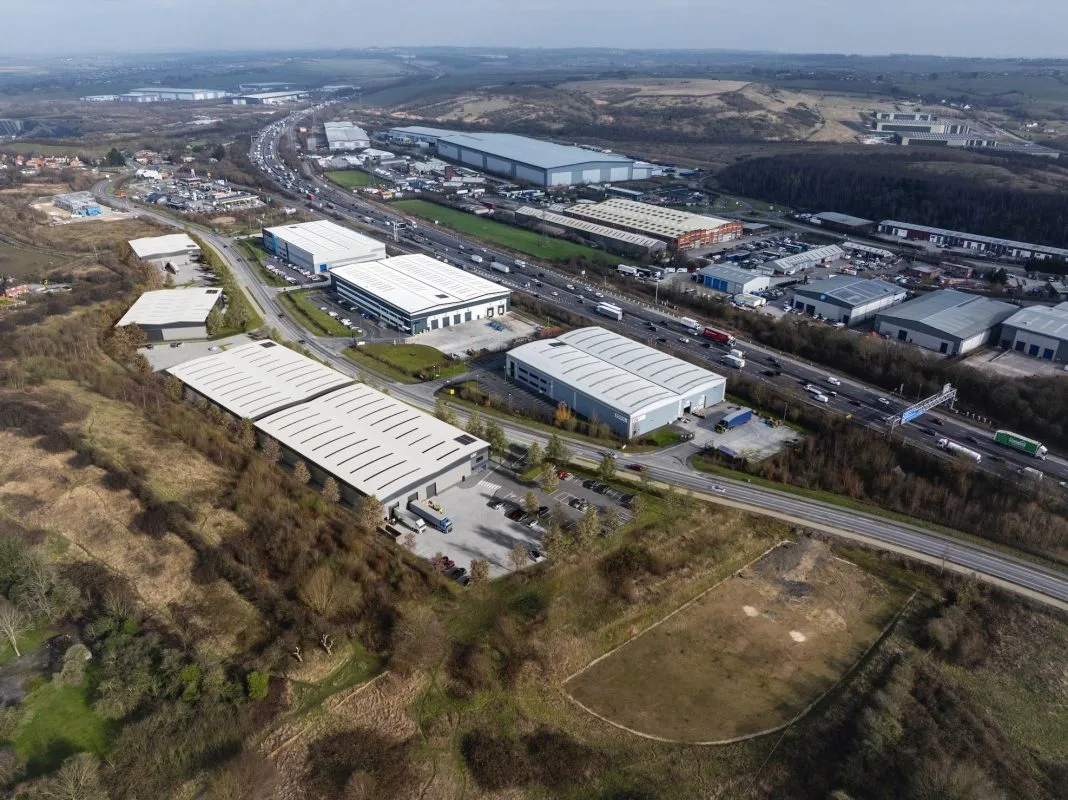
THE NUMBER of investors, both from home and abroad, which have jumped into investing specifically into the midbox and multi let warehouse sector in the UK is noteworthy. Indeed according to property consultancy Newmark’s Multi-let report there was an ‘exceptional £8.1 billion of [multi-let and midbox] industrial assets transacted in 2024’ – the third highest volume on record – and it has not slowed much through 2025.
Indeed, according to property agency B8RE’s latest Northwest industrial report the multi let industrial sector was the ‘main focus of demand [for investors] throughout the first half of 2025’.
Recent transactions have seen Investec Bank agreeing an £18 million senior loan to fund the development of a three building/15 unit 93,000 ft2 multi-let logistics development in Croydon – the first multi-let development in the town for 10 years.
The scheme, called the Works, is being built by a joint venture between CBRE IM and Chancerygate and will be built to achieve BREEAM Excellent and EPC A+ rating.
Around 95% of the industrial and logistics property market operates out of small to mid-box warehousing units sub 100,000 ft2, employing some 2.1 million people delivering £124 million GVA into the economy each year – 7% of the total economy in terms of GVA.
And according to small to mid box investor and developer Potter Space’s latest Big things in Small boxes report there is a massive undersupply of quality space which is supressing take-up. Potter Space calculates that this is in the region of 38% UK wide and requires some 63 million ft2 of sub 100,000 ft2 space to unlock it.
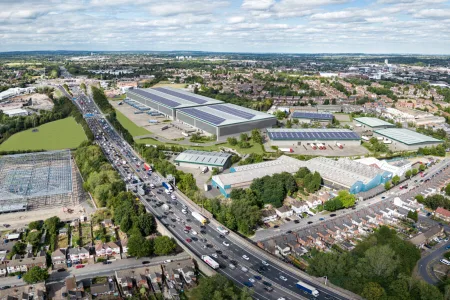
If that were not enough the report also notes that 85% of the current stock is at risk of becoming unlettable by 2030 due to new energy efficiency standards known as Minimum Energy Efficiency Standards (MEES).
These government introduced regulations look to reduce the carbon footprint of the nation’s building stock by forcing landlord’s to upgrade. It makes it an offence to continue to let commercial space with an Energy Performance Certificate (EPC) worse than a C, even in the middle of a lease term by 2027 and by 2030 this needs to be a B or above.
This has created a perfect storm – at least for investors – what good quality space there is attracts ever higher rents – it’s basic supply and demand.
Argo Real Estate’s investment manager James Brown says that these elements are what has made investing in multi-let and midbox scheme in the UK so attractive.
Argo Real Estate has teamed up this year with River Island boss Clive Lewis’ property development company Blue Coast Capital to launch a new urban logistics platform specialising in repositioning urban logistics investment assets ripe for refurbishment into best-in-class sustainable properties. It is looking to build a £500 million portfolio.
It has already secured the Tuscam Trading Estate in Camberley, Surrey for around £40 million. The 183,000 ft2 scheme in Camberley is described as an under-rented industrial estate. It is undergoing a comprehensive refurbishment to modern sustainable standards while tenant businesses remain in operation, unlocking substantial rental reversion and capital uplift.
Brown says: “The UK [midbox and multi-let] logistics sector continues to grapple with an acute undersupply of high-quality urban space, driven by sustained long term occupier demand and powerful structural tailwinds, including e-commerce growth and urbanisation alongside a persistent shortage in supply.
“We target existing stock, typically second or third generation industrial stock built back in the 1980s and 1990s built with lower site densities but with good physical characteristics held by institutional investors who have for whatever reason not been able to spend much capital keeping it up to scratch.”
According to Brown just the refurbishment of these buildings to an EPC A rating provides more than enough reversion to make the capital expenditure worthwhile. Targeting the highest EPC rating attracts the best tenants and helps reduce voids as well as future proofing the investment value of the portfolio.
“While the cost of upgrading smaller units is not necessarily cheaper it does feel more defensive because of the diversified nature of tenant mix. With a bigger unit and single lets it is more binary in nature – lose one tenant on a 100,000 ft2 single let building and there is no income, lose a tenant on a 5,000 ft2 unit on a 100,000 ft2 scheme and you still have tenants paying the rent.”
Newmark partner in Industrial & Logistics Analytics Will Laing agrees: “This diversification provides an appealing defensiveness and resilience for the sector, particularly at this time of increased geopolitical volatility.”
He notes that in terms of investor interest a multi let asset was favoured over a single asset due to shorter income lengths and stronger reversionary potential indeed, 60% of those assets transacted in 2024 were multi let transactions.
But is all this investor action good for occupiers? Will it provide them with the space needed and the quality of space required?
It seems so, on the surface – particularly when it comes to the upgrading of old stock and while investors did take a hit when Trump announced his Liberation Day tariff measures, transactions have recovered – but that does not consider the increasing demand for space – especially new speculative space.
Potter Space managing director Jason Rockett says: “The lack of supply in the sub 100,000 ft2 market results in businesses not being able to find the space they need to grow. Instead, they have to make do with the space they occupy.”
Property industry research suggests that an 8% availability rate represents the equilibrium point for the industrial and logistics sector. When availability dips below this threshold, the market enters a supply constrained state, presenting significant challenges for potential occupiers seeking suitable space. The scarcity not only limits business growth but also fosters an environment of intense competition for available units. The small to midbox market currently sits around a 4.9% vacancy rate.
In addition to this it also fosters forever increasing rent levels. In the past decade says the Potter Space report ‘rental rates have skyrocketed by 87% vastly outpacing the 29% increase in inflation’.
One would think with rental increases of this magnitude that developers would be on the bandwagon too and developing out brand new speculative space but that has not been the case. When the market started to recover from the Global Financial Crisis of 2008, and developers felt they could speculatively build after a moratorium of some five to seven years there was a marked preference for big box units. These larger units offered compelling advantages: lower build and management costs, coupled with occupiers boasting stronger financial covenants.
In the pandemic years this was compounded by high land costs and equally high build costs making multi-let and midbox development almost unviable.
Land prices dropped significantly and in some areas midbox development progressed, but subsequent economic and geopolitical shocks have caused considerable setbacks.
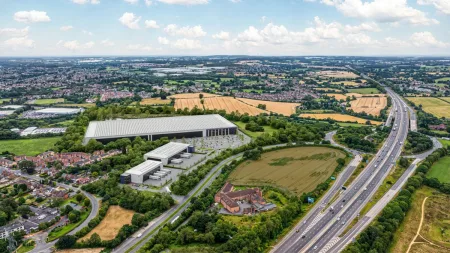
Avison Young recently reported that a shortage of development land is hindering the delivery of new midbox supply especially in areas such as West Yorkshire.
Principal of industrial Rob Oliver said: “Demand for midbox space across West Yorkshire remains strong, but the challenge continues to be the availability of development ready land for the next phase of supply.”
Nearly every region in the UK is the same Savills notes that despite strong demand in the West Midlands available supply in the sub-100,000 ft2 segment has declined by 41% since 2009. In its latest half year report of the region, it says there is just 5.89 million ft2 of available space within the 20,000-50,000 ft2 range and 5.78 million ft2 in the 50,000-100,000 ft2 range. Given that take up in the bracket is 3.3 million last year, the challenge remains to maintain a steady pipeline of new high quality developments.
There is a glimmer of hope, as financial/economic pressures lessen, and interest rates drop it may become easier to fund new development and investors looking to spread their bets may find that the midbox and multi let market is just the ticket.
There has certainly been the plethora of planning applications. Developer HBD, part of Henry Boot, submitted a planning application for the second phase of ARK, a £27 million GDV small to midbox scheme at its flagship M1 industrial and logistics development, Markham Vale which will be delivered by Origin its joint venture with Feldberg Capital.
Work began earlier this year on the first phase of the new development, which consists of four units from 17,000 ft2 to 36,000 ft2 and now plans have been proposed for a single unit of 53,000 ft2 as the second phase of the scheme
Work on the second phase unit will start on site in Q4 this year with the facility targeting BREEAM Excellent and an EPC A rating.
Feldberg Capital Managing Director Jamie Acheson, says: “This 53,000 ft2 unit will address the clear market demand we’re seeing in this prime logistics location.”
Origin was launched to own and develop next-generation, ESG-compliant industrial and logistics assets in the UK’s mid-box market and aims to deliver £1 billion of high-quality I&L schemes over the next seven years. ARK is one of three Origin developments to start on site in 2025, with work progressing apace at SPARK, a £100m scheme in Walsall, and INTER, a £28m project in Welwyn Garden City. The agents for ARK are JLL and CPP.
As well as several sites in the South coast area Panattoni has an increasing number of sites nationwide with planning for small to midbox units. While its has planning for a 500,000 ft2 plus mega shed at its 55-acre Panattoni Park Coventry scheme in the Midlands there are also proposals for two smaller warehouses of 20,000 ft2 and 40,000 ft2 on the site.
also plans for two much smaller buildings on the same site of 20,000 ft2 nd 40,000 ft2. The facilities will all target BREEAM “Outstanding” and EPC A+ credentials.
The developer has also secured a site in Haydock in the Northwest for a 66,000 ft2 buildings as well as a site in Milton Keynes for a building of 100,000 ft2.
Its 11.8-acre Panattoni Park Bognor Regis site purchased from Hanbury Developments, will form part of Panattoni’s expanding mid-box development programme, designed to target undersupplied markets with sustainable and versatile logistics solutions.
The scheme will host three industrial units measuring 30,534 ft2, 58,328 ft2, and 111,137 ft2 targeting a BREEAM Excellent and an EPC ‘A’ rating.
Panattoni is not the only big box developer building out midbox schemes and units. SEGRO, Prologis, GLP and even Tritax Big Box are also progressing midbox development wholly or as part of a larger multi unit schemes
Whether this will fill the void is a matter of time and economics…