
In full consideration of the facts
What factors should you consider when choosing a lift truck? Rob O’Donoghue outlines the thought process for finding the best truck for you.
IN ORDER to maximise the value of lift truck investments, it is imperative that businesses pinpoint and carefully consider the factors that will help them select the best equipment to suit their needs. Operations can use these factors to improve their ability to meet business goals involving profit, employee safety, customer satisfaction, and more.
Purchase price and specific performance or productivity features
Warehouses need their equipment to do more to help them meet expectations, but prioritising high-quality lift trucks can’t be at odds with their budgets. Custom typically implies expensive, but that doesn’t have to be the case. If an operation carefully considers the essential features and functions it demands from its lift trucks and can avoid unnecessary extras, the company may be able to achieve a better return on its investment. It’s important to look for manufacturers whose equipment gives customers the flexibility to opt up, or not, based on what their business requires.
Quality of lift trucks and parts availability
Lower-quality lift truck equipment can prevent an operation from reaching its full potential. For instance, slow lift and lower speeds can undermine productivity and throughput. Likewise, equipment with poor manoeuvrability can make it more challenging for operators to navigate tight spaces efficiently and without causing damage. Consider the relationship between the quality of lift trucks and parts, and the total cost of ownership. Equipment that is not high quality may be more likely to require replacement parts or frequent repairs, which can quickly become costly. Operations must further account for lost productivity stemming from associated downtime.
Also keep in mind the cost and availability of replacement parts. Understand how well the dealer keeps replacement parts from the original equipment manufacturer (OEM) readily available and reasonably priced.
Safety
Lift truck safety begins with comprehensive operator training. However, businesses can also prioritise their commitment to safety through equipment with technology solutions that help reinforce operating best practices and better enable them to audit operator performance.
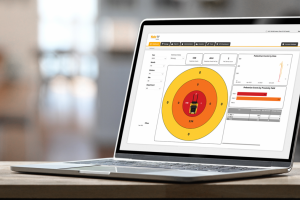
For instance, an advanced operator assist system like Yale Reliant can help support lift truck operator awareness of proximity to obstacles, people and other mobile equipment, for example, depending on the system configuration.
Another kind of solution, lift truck stability systems, use sensors to continually monitor truck operating conditions, such as lift height, travel speed, and load. When this type of system detects the truck exceeding certain designated stability thresholds, it automatically intervenes with performance reductions to help support stable operation.
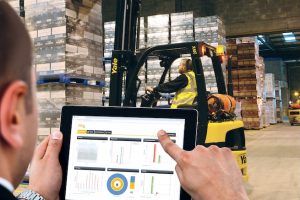
Telemetry, can help companies manage operator behaviour by providing supervisors with impact detection and other data associated with operator performance.
Service response time
In addition to providing replacement parts, the dealers are often the ones to provide local service support, in a relationship that extends far beyond the initial transaction when the purchase or lease is finalised. It’s important to be able to draw upon comprehensive local technician support from an extensive network of entrepreneurial dealers who are independent, responsive and effective. This should be accompanied by access to the engineers and industry experts at the OEM, for cases that require additional reinforcement.
Whether it’s the addition or replacement of a single truck, or a whole fleet for a new facility, lift truck acquisitions deserve careful consideration. They have a major impact on warehouse operations that goes well beyond simply moving loads. Many factors influence the buying decision, and they will vary for each operation. A trusted expert can help buyers navigate the process.
Rob O’Donoghue, global director counterbalance trucks 1-3.5T, Yale Lift Truck Technologies