

In with the in-crowd
What a year for Women in Logistics, and what a year to look forward to in 2026, says Kirsten Tisdale on behalf of Women in Logistics UK CIC.
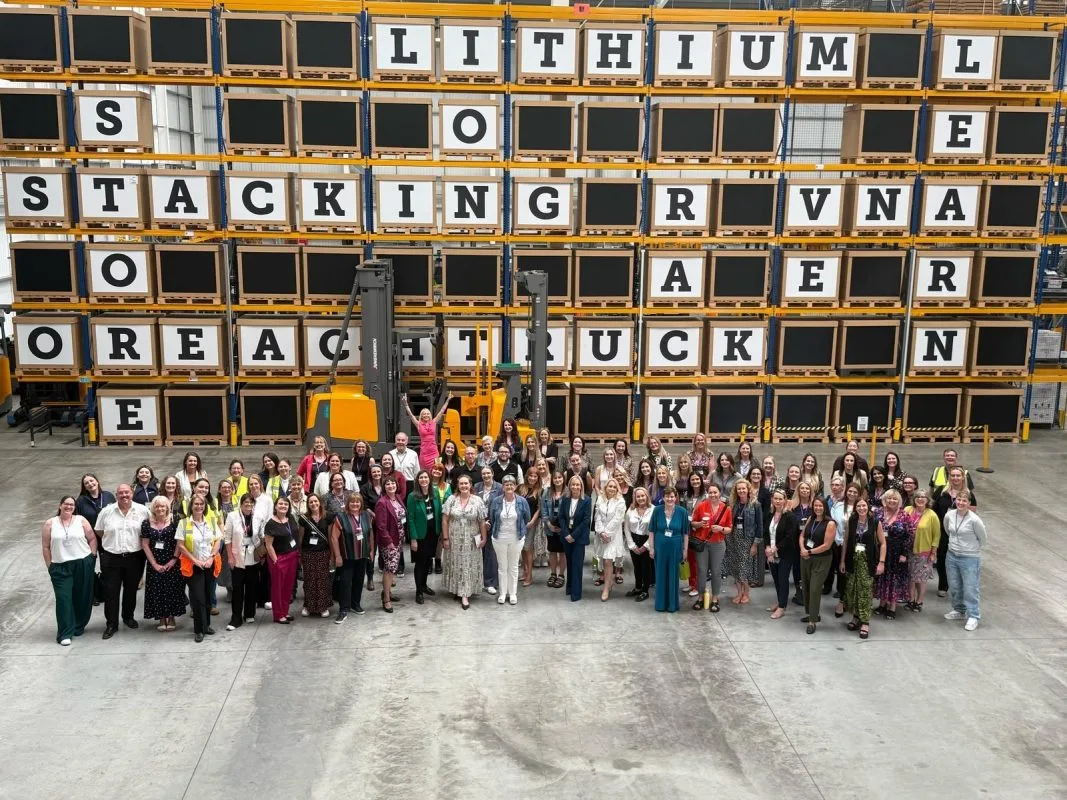
BY THE time you read this, we’ll have completed our first full year as a CIC, a Community Interest Company. There’s no point in me giving you the stats, as I write this for a September deadline, but our membership spans household names, well-known logistics companies, niche service suppliers and individuals.
We’ve had a really positive response from supporting sponsors (thank you!) and had a variety of events including a really vibrant and professional conference – thank you to Jungheinrich for hosting!
And thank you to Logistics Matters for hosting our first stand at an exhibition at Tomorrow’s Warehouse in Coventry. As an organisation Women in Logistics has always welcomed men as well as women, but it was at Tomorrow’s Warehouse where we discovered just how beneficial it is talking to men about Women in Logistics – men who recognise the genuine value of diversity and often have younger women in their teams, to whom they wish to provide expanded opportunity to develop themselves.
Women in Logistics: pay & percentages
We’ve also released our first report which, as the title might suggest, looks at the proportion of women working in different occupations and businesses in logistics, and how the pay gap in the industry has progressed over the past few years, using a combination of official and company-submitted data.
The findings fall under three headings: not surprising, probably explainable and shocking!
Not surprising
Only 16-17% of people in logistics occupations are female. The logistics industry has a very different gender mix to society as a whole where, even allowing for women being more likely to work part-time, because of the predominant balance of family responsibilities, women tend to be involved pretty much 50:50 whether you’re looking at the proportion of the population who have driving licences or the percentage working across the different occupations in the UK.
The proportion of women working in logistics varies enormously across the different companies: as little as 1.6% through to 58.6% in companies large enough to have to submit gender pay gap figures (ignoring one entry believed to be erroneous). A crude unweighted average across these larger companies comes to 22.5% – very different to the UK’s average, which is more than double that figure.
Probably explainable
The median pay gap for the larger logistics companies as a whole is worse now than in 2017-18 at the start of monitoring.
So eight years of monitoring has not seen any benefit? That’s not entirely true. The proportion of women in the Top Quartile (ie the top quarter of the highest paid roles) of companies that have to submit data has risen – both in the UK as a whole and in logistics, but logistics is still quite a way behind.
Although this can’t be deduced from the company gender pay gap submissions, the Office for National Statistics has stated: “The gender pay gap is larger among high earners than among lower-paid employees.”. This makes sense as wages for warehouse workers or drivers are set, whereas there is more leeway in salary ranges for managerial roles.
But, I believe that a sudden worsening of the median pay gap for logistics a couple of years ago is probably down to the HGV driver shortage, a very male-oriented role, resulting in increasingly better pay in comparison with the more female-oriented volume roles in logistics.
Shocking
A DfT report on the future of freight in 2022 stated that “75% of women surveyed believed it was easier for men to progress in their career compared to women”.
Further investigation reveals that although this statistic was included in a report on freight (Future of Freight: a long-term plan), it originated from a publication by Women in Transport in 2021 (Gender perceptions & experiences working in transport) which reported on the results of a survey. 43% of the women surveyed worked in the public sector, 22% worked in transport planning/urban planning, 10% were members of the Chartered Institution of Highways and Transportation (CIHT) and the main workplace of nearly half the women in this sample was in London.
That survey answer is shocking in the 2020s. It’s not a logistics-oriented sample, but given the difficulties that logistics always seems to have recruiting staff, the sector needs to work hard to provide counter-evidence in order to attract the most-talented individuals.
Late submissions
A problem every year reporting on the gender pay gap has been that some companies, including in logistics, haven’t submitted their data on time. Meaning that the stats that come out on the key deadline day, when the press are ready to report on the topic, are invariably wrong.
While Women in Logistics has taken a general view that it’s not going to name and shame, but give a pat on the back to those companies who have great stats and/or are improving, looking forward we will be reporting on the companies that might have been expected to make a submission but have missed the deadline, despite compliance being a core competence for logistics companies!
Report
You can buy this report in the Women in Logistics shop via our website …or it’s FREE to Supporting Sponsors – so if you have people in your company (men or women) who would like to be members of our vibrant network, your best bet may well be that route.
The report sheds light on:
– The proportion of key logistics roles held by women.
– Pay gaps between women and men in these roles.
– The pay gaps and gender mix for 185 logistics companies.
– Year-on-year trends, including impacts of events like the driver shortage.
Kirsten Tisdale is the author of the report Women in Logistics: pay & percentages. She is one of the three directors of Women in Logistics UK CIC as well as being a director of Aricia, a logistics consulting company.