

Lifting attraction
Ross Moloney, CEO of the Lifting Equipment Engineers Association (LEEA), explains how the Association is playing a central role in providing solutions to the Lifting Industry’s key issues of recruitment, training and promoting itself.
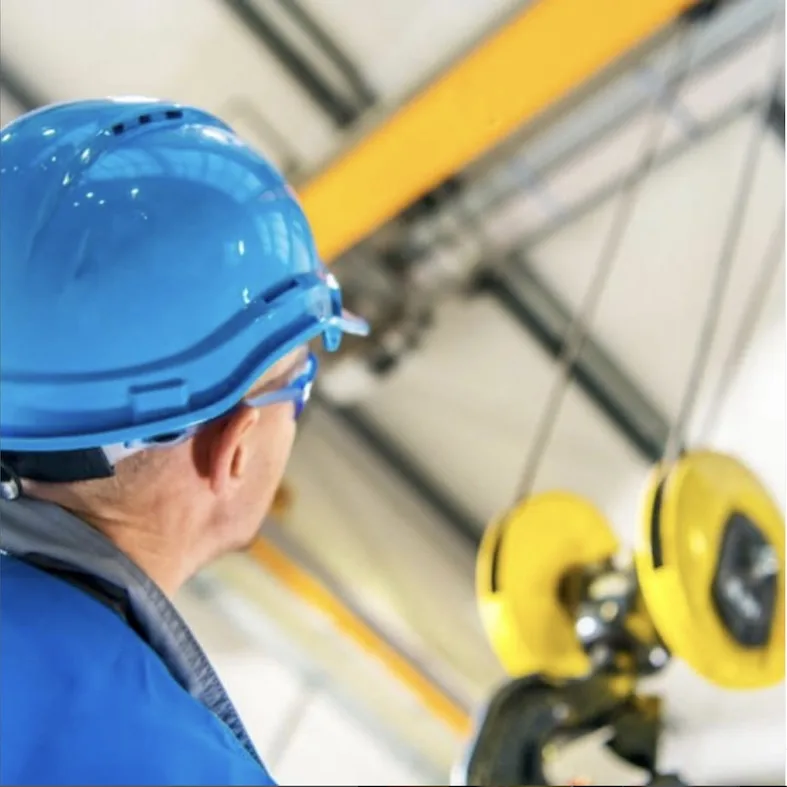
LIFTING, LIKE any industry, comprises constituents that naturally have their own focuses, but one concern the entire industry is agreed upon is where will the next generation of workforce come from? Engineers, however, don’t wait for others to fix their problems and the industry has come together to address this issue. Indeed this was the original motivation behind the annual Global Lifting Awareness Day and the reason why GLAD 2025 was themed: ‘Building careers, lifting futures’.
On that day LEEA issued ‘The State of the Lifting Industry Report’, which can be downloaded at www.leealiftingfutures.com. Based on a major survey, the report highlights the recruitment issues faced by our sector and I would urge members of our industry to read it as it reveals many interesting points.
It makes clear that we need to think about how we, as an industry, are going to compete with others in attracting high quality, high calibre young people. We must package our industry as a ‘best career choice’, otherwise they will go to other sectors perceived to be more glamorous and we need this perception to be nurtured from an early age, which means going to school.
Our industry is characterised by extreme intelligence and real life commerciality. It is full of empowered articulate people, who are respectful, insightful and entrepreneurial. And the industry is not just about engineering as there are numerous other important functions such as marketing and sales. We need to be better at promoting all of these aspects and have an obligation to talk about what we do in glowing terms so that the opportunities this industry affords are better understood.
Passionate about training
Training plays a vital role in maximising those opportunities. LEEA is passionate about training, which it provides directly, both face-to-face and through e-learning via the Internet. It also supports members when they train their customers – the end users. Training makes people more employable but our industry does not just have jobs, it has careers, and when they are employed, we want people to have the training that leads to a successful career, so LEEA training is designed to support our members’ professional growth.
The LEEA Training Academy empowers individuals and organisations by providing the knowledge and tools to deliver safer, smarter lifting operations across industries. A full suite of training is offered, from basic rigging to advanced equipment inspection. It supports continuous development through CPD for member employees. With tailored programmes and globally recognised qualifications, our training helps teams perform with greater confidence and consistency. Members can train their teams their way: in-person, on-site, or online. They can build a qualified workforce with LEEA diplomas and TEAM cards – proof of industry-recognised competence (including on UK construction sites).
It is easy to think of training as simply attending a classroom and achieving a formal qualification, but there should be a culture of competence associated to it. While LEEA training involves a knowledge test to show the trainee knows key elements of a topic, it is designed primarily to ensure somebody is competent, rather than simply being able to recollect knowledge.
You must be skilled to work in this industry. When we talk about skills gap (as opposed to skills shortage, which involves government and industry action) we are referring to what a member of staff would look like if they were outstanding versus where they are currently. But because people tend to see skills gaps in others but not in themselves, this effectively requires some kind of an audit.
LEEA is seeking a commitment to ongoing technical competence in the industry. It doesn’t matter if you knew a standard 20 years ago – do you know what you are doing today and what you will be doing tomorrow?
Our best guess is there is there is a direct correlation between training and amended, ie, safer behaviour – which is LEEA’s prime focus. Safety in lifting operations ultimately comes down to people, their knowledge and their skills.
LEEA looking forward
As lifting goes further, higher and is conducted in more inclement conditions, LEEA has to be more important, have more teeth and punch above its weight when it comes to policy makers but fundamentally the LEEA badge has to mean something.
LEEA continues to push three key messages: are your processes in place, are your people in place and do you have a commitment to ongoing excellence? Companies that have the LEEA badge must be a trusted partner so there will be no dilution in terms of quality among the membership, indeed we are looking at making it harder to be a LEEA member. For this reason, the LEEA audit is constantly evolving.
As well as changing industry, digitalisation changes how LEEA will be working as we increasing become a knowledge management organisation through bringing in expertise, disseminating it effectively and sharing it in bite size units of knowledge that will nudge safer behaviour as people become more knowledgeable.
We will be rolling out key improvement projects over the next 10 years including the creation of a ‘best in class’ training centre to showcase our industry and our members. Their trainers, students and customers can come and see the very best training and equipment.
Training-related measures being worked on include looking at reforms to LEEA’s Accredited Training Scheme, to further support our members in identifying occupational standards they will be teaching to. Another is licensing LEEA training to third parties to create more capacity to meet demand.
In addition, we are making LiftEx the best trade show in the world, raising the profile of the LEEA Awards, improving LEEA’s globally applicable best practice guide, the Code of Practice for Safe Use of Lifting Equipment (COPSULE) and adding more compliance documents that are easier to use and have more impact.
On top of all this, we are reminding policy makers that without us the economy changes and maybe stops – nothing happens unless its lifted.