
Retailer talks tomorrow’s warehouse
Warehouse automation professional at international retailer BESTSELLER Jakob Skødt Larsen answers key questions on tech.

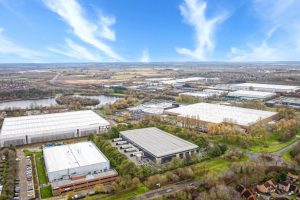
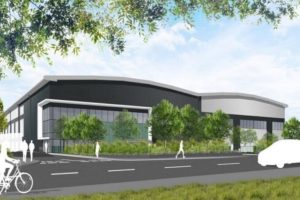
DANISH FASHION retailer BESTSELLER has made significant investments in tech-led logistics. Its latest development, unveiled last summer, is a £230m highly-automated DC in the Netherlands, which is set to be fully operational by 2026.
We caught up with Jakob Skødt Larsen, product owner – automated warehouses, at BESTSELLER to hear about the latest thinking.
Your success is built around high tech logistics centres. What technologies do you use?
Our current primary DC is located in Haderslev, Denmark. The backbone of the DC is a TGW miniload system, with an interconnected tilt-tray sorter to distribute goods around the warehouse.
All incoming supplier cartons are measured for dimensions and weight, and RFID tags and photos of the cartons are captured via integrated scan tunnels.
For piece picking, we have 2:12 GtP pick stations, where the customer cartons are automatically erected and brought to the stations, where operators use put-to-light. Source cartons are opened by a robot before arriving at the station, to ensure that the operators can focus on picking but also to improve ergonomics. All customer cartons go through a weight and RFID check after completion and are closed – ready for shipping.
{EMBED(1248104)}
For palletising, we have semi-automated solutions, where the cartons are brought to the operators via conveyors and get shipping labels applied automatically, before they are placed on pallets manually. The pallet moves down through the floor where wrapping foil and a pallet label is applied automatically.
For another piece picking warehouse, we recently integrated an Exotec Skypod GtP picking solution, integrated with Klinkhammer Intralogistics. In phase 2 of the implementation, we are in the process of installing automatic carton depalletising, carton opening and carton palletising robots. At this warehouse, we also have automatic carton erecting, height reduction and carton closing machines, as well as automatic labelling systems.
All these components are managed via advanced Warehouse Control and SCADA systems – enabling BESTSELLER to be in control of the entire operation.
How important is flexibility?
Extremely important. We do not know the future, so to have flexibility and scalability in our systems is key. We want to make sure that logistics brings value to our customers and the company, so being able to handle future requirements is a must-win battle for us.
What concepts are key in warehouse automation?
As we have a large SKU range, we need flexible GtP systems to ensure efficiency – no matter the order combination.
We must admit that we have also a complex setup, which we are continuously optimising – the aim is always more lean and efficient processes. This requires the IT department (BESTSELLER TECH) to be very close to the logistics operation, enabling fast and qualified response – when challenges occur or requirements change.
‘One touch’ is the philosophy for our upcoming DC in the Netherlands – where we limit human interaction with products. This means lean processes and the highest level of automation.
Another important thing is a skilled residential service team, ensuring the operation is working as intended 24/7. This is in partnership with service suppliers.
And finally, but not least – keep focus on the main flow. Not all processes or flows in a manual warehouse are suitable for a high degree of automation. Don’t add complexity without also adding value.
What trends are you seeing?
- AMR solutions, that are capable of working in ever-changing environments.
- Cloud-based WMS. BESTSELLER uses the cloud-based Manhattan Active Supply Chain.
- Robot picking – COBOTS and industrial robots.
- Big data and analytics – insights to data collected from the equipment and systems.
- Predictive and intelligent maintenance of equipment.