
Sortation for the future: robust solutions in a rapidly evolving supply chain
The rate of change in warehouse and distribution (W&D) logistics in the last five years has been amazing. Previously the sector primarily catered to B2B retail operations with predictable, large-volume shipments. Now, W&D and fulfillment centres find themselves operating in an omnichannel environment characterised by increased complexity in the number of orders, channels and their sizes.
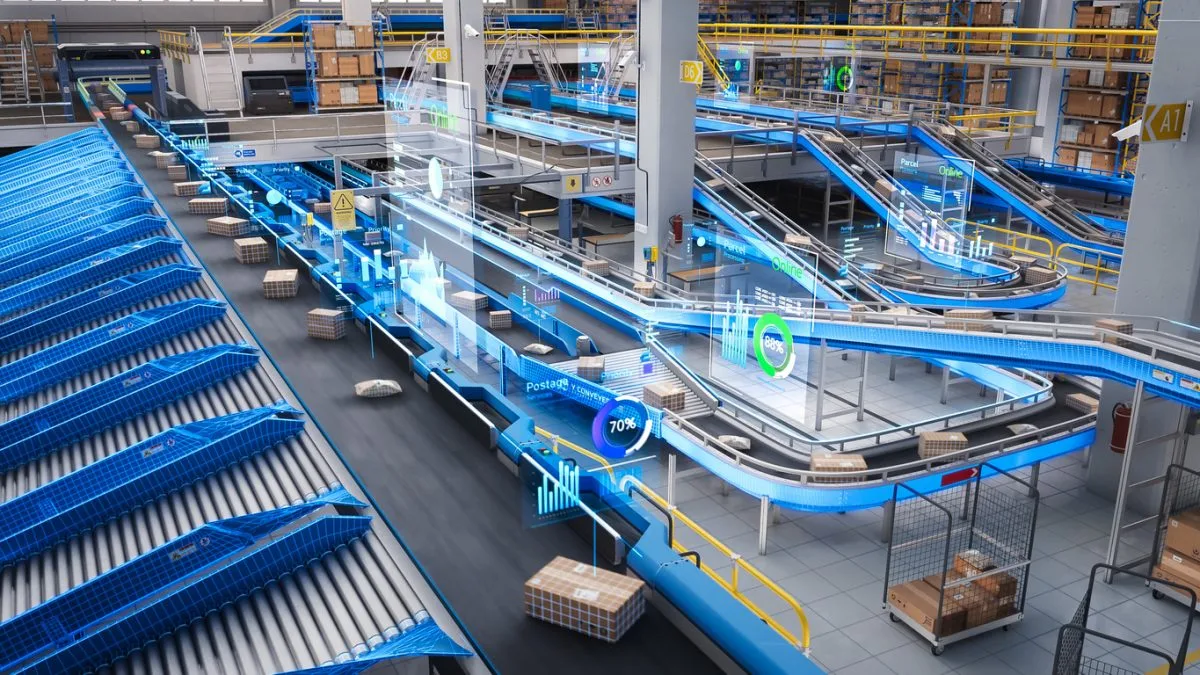
NEW TECHNOLOGIES in the form of robotics automation and advanced software are emerging to support this new W&D business model and enable warehouses to cope with smaller, more varied, and less predictable orders. Developments outside the industry, such as the Internet of Things (IoT) and Artificial Intelligence (AI), offer the opportunity to make warehouse and distribution processes a whole lot smarter, delivering next-generation sortation through digitisation. With so many different technology options available, arguably the biggest challenge facing W&D operations today is how to select the right sortation solution to match their specific needs, now and into the future.
Right first time system selection
To maximise return on investment (ROI), W&D businesses need to map out and analyse their processes and identify bottlenecks before making any decisions. This exercise should highlight key challenges relating to speed, staffing, costs, storage, or handling returns and help you understand how these issues impact overall efficiency.
The results will determine which operational aspects would benefit most from automation and enable you to develop a tailored, long-term approach to upgrading and investment that best suits your needs.
This plan is effectively a roadmap for your digitization journey. Effectively, it seeks to move your W&D operation from manual operations through to total automation and ‘lights out’ operation. The ultimate goal is to create fully automated, end-to-end material handling systems that leverage historical and real-time data, machine learning, and AI to optimise every aspect of warehouse operations, but remain responsive to manual intervention.
Realistically, the best strategy may be to combine manual, mechanised, and automated operations, using different levels of digitisation depending on need and ROI. It is advisable to seek guidance from an expert in intralogistics, such as BEUMER Group, to guide the assessment and decision process to ensure that your chosen automation solutions are both viable and future-proof.
Optimising existing technologies
Not every sortation challenge requires a brand new automation solution. The use of simple conveyor belts means W&D operations have been semi-automated for years.
Existing materials handling equipment is already adapting to meet changing demands through the addition of new features.
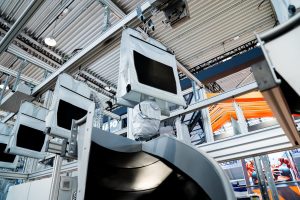
Cross-belt sortation systems are one example. The latest versions combine a proven track record with improved performance. Beumer’s latest Cross-Belt Sorters offer a multitude of innovative features designed to elevate operational efficiency, throughput, and flexibility. These include a modular and scalable design, a contactless energy supply system, and real-time wireless communications for optimal sortation accuracy and reliability, lowering the labor burden on operators.
Newer sorter technologies can support tracking and correcting discharge errors, mitigating incorrect operator inductions, and helping load balance distribution to most effectively use labour.
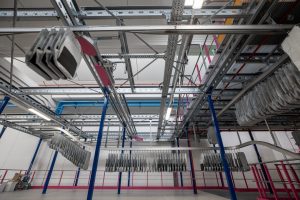
Pouch technology has also been around for decades, but it is now taking centre stage in modern W&D and fulfillment operations. Pouch systems comprise an overhead sortation system that stores and conveys products using pockets, pouches, or bags. These systems are uniquely capable of transporting, sorting, sequencing, and buffering outbound and returned items, making them essential for managing the diverse demands of e-commerce. Pouch sorters are particularly effective in reverse logistics, because they can largely eliminate the complexity and cost associated with relabeling, sequencing and repacking of returned items that are outbound-ready without going into storage.
The role of robots
In other areas of operation, deployment of new technologies is necessary. Various types of robotic technologies are being employed to enhance efficiency and safety. A prime example is the stepless tilt and rotational robotic arm, which is instrumental in bulk unloading, singulation, and induction of parcels. This technology allows for the tipping of cages or pallets of freight onto production lines, expediting deliveries to meet the surge in online shopping demands. Their implementation reduces manual interventions, aiding workforce productivity and reducing physical strain.
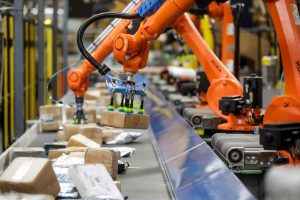
Robotic pickers represent another facet of logistic robotics, capable of identifying and handling parcels on a conveyor. These robots utilise sensors to determine the shape, size, and position of parcels, executing accurate pick-to-place movements.
They can even handle irregular parcels and can react intelligently to dropped items.
Through machine learning, these robots continuously improve their parcel identification and handling capabilities.
As technology advances, autonomous mobile robots (AMRs) are set to play a crucial role in addressing staffing challenges and further streamlining W&D operations.
Used in combination with automated sequencing software, AMRs can even be used to load trucks in the order in which items are to be delivered, saving valuable time and speeding up fulfillment.
Software and digitalisation
The importance of integrating physical equipment with software and analytics in modern W&D operations cannot be overstated. Software solutions provide end-to-end visibility and accurate forecasting, enable more effective decision-making, and give greater control over increasingly complex logistics processes. A principal reason for these investments is to reduce the latency between fulfillment planning and real-life events.
Beyond individual software packages, a Warehouse Management System (WMS) is critical in achieving full digital transformation. It streamlines the flow of goods and the use of resources, serving as a hub for integrating physical systems such as pouch sorters and AMRs with other technologies like auto-ID voice and vision solutions that replace manual systems and make workers more productive. A WMS deploys IoT sensors to track assets, detect low stock, and find lost items. It can also incorporate AI, machine learning, and advanced analytics to optimize W&D operations, providing the capability to monitor and predict problems before they can cause unplanned downtime, as well as enabling proactive decision-making.
Clearly, integration of equipment and software within a WMS has the potential to transform the W&D industry and deliver the full digitisation that will lead to substantial improvements in efficiency and overall performance.
Conclusion
The warehouse, fulfillment and distribution industry has entered a new era, where the demands of e-commerce and the need for greater efficiency are driving significant technological advancements. Next-generation material handling systems, coupled with powerful software and analytics, are at the forefront of this transformation. W&D operations need to embrace the benefits of digitalisation if they want to remain competitive.
As the W&D industry continues to innovate, the adoption of more advanced robotics and data-driven solutions combined with traditional high performance fixed automation will be key to creating the warehouse of the future—a facility not only more efficient but also capable of adapting to the ever-changing demands of the market.