

SSE cultivates a safety mindset
The utility firm is creating a safety culture rooted in neuroscience and positive behaviour change. Safety, health and environment director Mark Patterson shares his insights.
DESPITE PROGRESS, the UK’s logistics and transport sector still faces a stubborn safety challenge. The latest HSE figures show 124 workers lost their lives in work-related incidents in 2024/25, with 15 fatalities in Transportation and Storage. In fact, this sector has twice the average rate across all industries. Being struck by a moving vehicle remains the leading cause of death at 27% for transportation and storage, while slips, trips and falls dominate injury reports.

Safety professionals know these incidents rarely stem from a lack of rules, but from how people think, decide and behave under pressure. When deadlines loom, employees can feel internal pressure to choose speed or service to customers over safety – something traditional compliance training often fails to address.
Rethinking safety
Understanding how the brain manages risk offers leaders a way forward. Neuroscience shows that most safety decisions occur in ‘System 1’ mode, which is fast, automatic, and shaped by emotion, rather than ‘System 2’, which is slower and more reflective. Under pressure, workers fall back on the instinct and routine of ‘System 1’.
So, how can we ensure that workers are developing the right habits and reactions? Effective safety leadership training can help all employees recognise these impulses and develop strategies to pause, reflect and choose safer actions.
Immersive, scenario-driven learning methods use this insight in practice. When participants experience emotionally charged, realistic situations, their brains encode the lessons more deeply – a process called emotional encoding. Group participation also draws on social learning theory: people adopt new behaviours by observing others modelling them. Crucially, rehearsal and real-time feedback in safe, simulated conditions make them more likely to act appropriately in real ones.
Making culture everyone’s job
For logistics leaders, building a culture where “safety is everyone’s responsibility” demands consistency from boardroom to loading bay. Proven steps include:
Define shared ownership. Replace “health and safety’s job” with a collective mindset. Everyone contributes to a safe shift.
Train for dialogue. Teach staff to challenge unsafe acts constructively and accept challenge without defensiveness.
Design safe systems for high-risk interfaces. Use behavioural cues in traffic management and yard layouts, not just signage.
Reinforce, don’t repeat. Blend immersive events with short refreshers and toolbox talks using the same behavioural models.
Include contractors. Extend the same language, training and resources across partner and temporary staff to ensure positive adoption across the whole supply chain
Embedding these elements creates psychological safety i.e., the permission to speak up, which research consistently links to stronger performance and lower incident rates.
SSE: A case in point
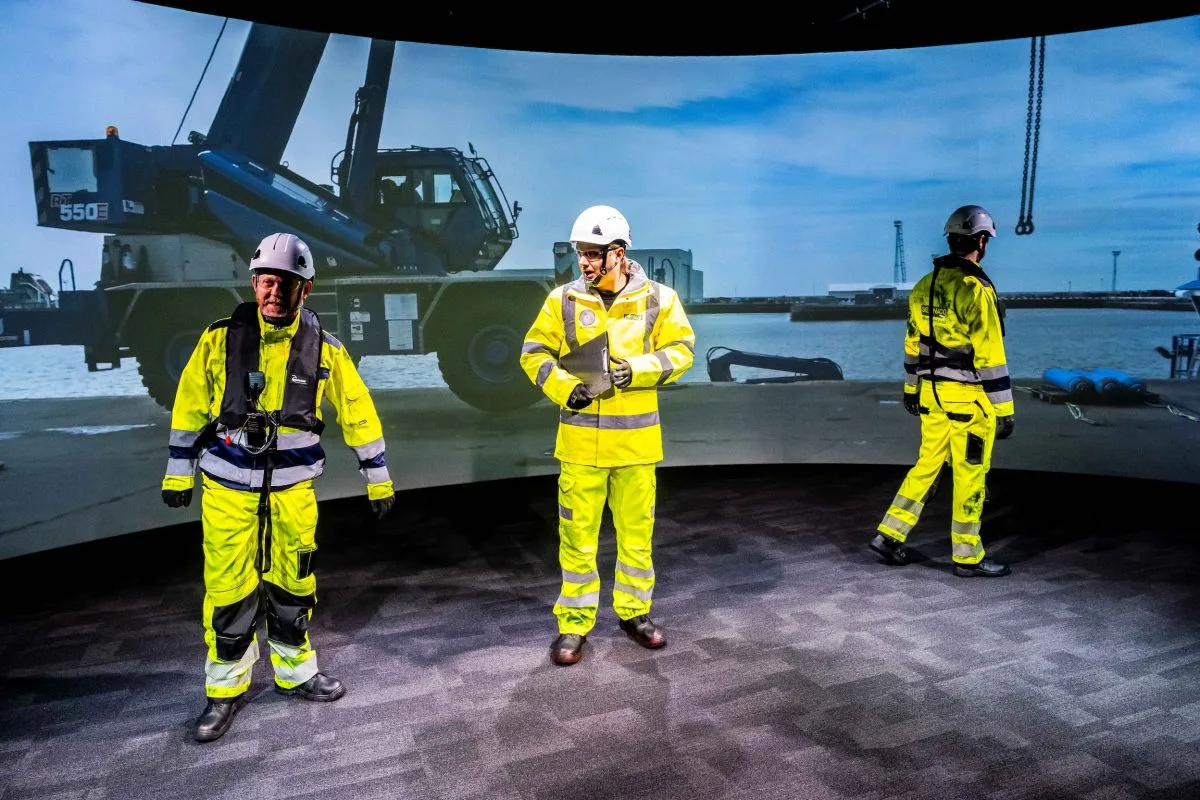
Energy company SSE has applied this thinking in its own operations, developing an immersive, neuroscience-based safety leadership programme at its Faskally Safety Leadership Centre. Delivered by Active Training Team, the day long experience places mixed groups of employees and contractors in a realistic storyline where everyday decisions lead to a serious workplace incident.
Since it launched in 2024, nearly 10,000 employees and 2,000 contractors have taken part, with confidence to challenge unsafe behaviour rising from 43% to 68%. The concept that “everyone is a safety leader” now anchors SSE’s wider ‘Safety Family’ culture.
The similarities between SSE’s operations and the logistics sector – complex workflows, time pressure and distributed responsibility – highlight the potential to mirror this type of immersive training within logistics operations. The key lesson: redesign training to shift mindsets, not just deliver messages.
Lessons for logistics and transport
Map risk to learning. Focus immersive scenarios on real hazards such as vehicle pedestrian interactions and loading operations.
Train mixed groups. Bring drivers, warehouse teams and supervisors together to build shared understanding.
Measure beyond injury stats. Track confidence to speak up, near-miss reporting and quality of interventions.
Keep the message alive. Use storytelling and real incidents to reinforce reflection and dialogue.
Ultimately, the next leap in logistics safety will come not from another rulebook but from how people think and behave. As neuroscience reminds us, memory and emotion drive action; combine those with leadership accountability and a culture of shared ownership, and “getting everyone home safe” becomes more than a slogan, it becomes a habit.
Mark Patterson, safety, health and environment director, SSE