
The hidden half of compliance
CFTS explains why PUWER matters as much as LOLER.
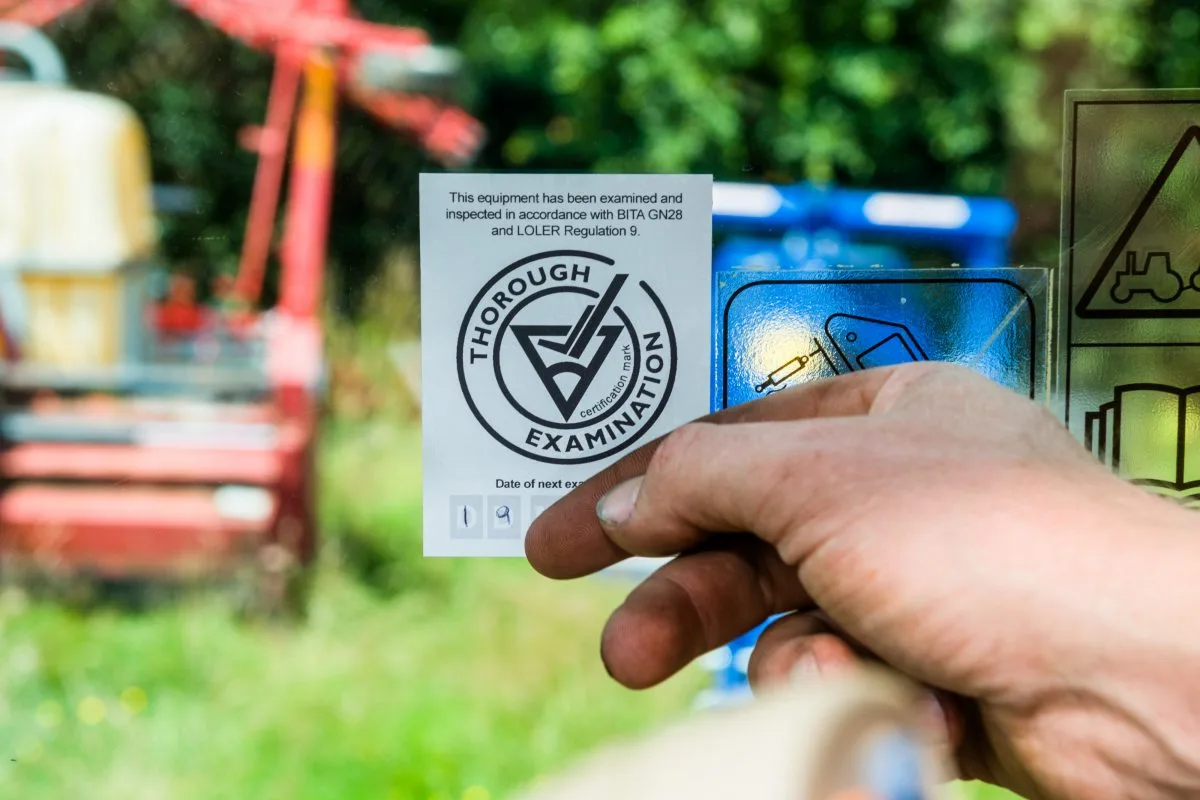
IN MATERIALS handling, “LOLER compliant” has become a familiar phrase, suggesting equipment is safe and legal. In reality, it tells only half the story. LOLER (Lifting Operations and Lifting Equipment Regulations 1998) covers the lifting mechanism, not whether the truck itself is safe to drive — that falls under PUWER.
Every day across warehouses, farms, and construction sites, trucks are used with weak brakes, bald tyres, broken seatbelts, or silent horns. None of those faults would fail a LOLER-only check, yet any of them could trigger a serious incident. If you stop at LOLER, you are only half protected.
The law does not give businesses that choice. LOLER and PUWER sit together as the foundation for safe use of work equipment. Treating one as optional leaves a gap that shows up at the worst possible time: when something goes wrong.
Two duties, often confused
In the UK, the law makes two distinct demands: under LOLER, lifting equipment must undergo a Thorough Examination; under PUWER, a safety inspection is required to ensure the truck as a whole is safe to operate.
CFTS uses the term Thorough Examination to cover both in one consistent process. But not every provider does. Some inspections sold as a “Thorough Examination” are in fact LOLER-only checks that stop short of PUWER. That is where confusion sets in — and where many fleets unknowingly fall short of compliance. From the name, you would naturally expect a Thorough Examination to be… thorough.
What PUWER actually requires
PUWER (Provision and Use of Work Equipment Regulations 1998) focuses on whether equipment is safe to operate. Regulation 5(1) puts it plainly: “Every employer shall ensure that work equipment is maintained in an efficient state, in efficient working order and in good repair.”
In practice, that means a forklift must not only be able to lift a load but also stop when it should, steer accurately, and protect the driver. Brakes, steering, tyres and safety devices all fall within PUWER’s scope.
A forklift could pass a LOLER inspection yet still be unsafe to drive. A missing mirror would not fail LOLER — nor would slack steering, or weak brakes. All are PUWER defects.
Employers must comply with both sets of regulations. This is not best practice or “going the extra mile”. It is the law.
The size of the gap
Many businesses arrange what they call a “LOLER inspection” and believe that box is ticked. Often, the service covers only the lifting mechanism. The rest of the truck goes unchecked or gets cursory attention.
We frequently encounter trucks that have “passed” a LOLER inspection yet show obvious PUWER defects.
That false sense of security is the hardest kind of risk to tackle.
It also distorts the market. Providers who offer a narrow LOLER-only check can undercut those who carry out the full, legally required scope. The end user pays less in the short term but carries more liability in the long run.
Why the gap persists
Several factors keep this problem alive:
- Language. “LOLER” has become shorthand for any inspection, masking the real difference in scope.
- Cost pressure. A partial check costs less and is easier to sell. But the saving comes at the expense of compliance.
- Human factors. The issues PUWER is designed to catch — a seatbelt that doesn’t latch, a brake that nearly holds — can look minor until the moment they matter most.
Consequences of overlooking PUWER
The dangers are not theoretical. A steering fault can veer a truck into a busy aisle. Worn tyres can fail to grip on a wet yard. A missing seatbelt can turn a near miss into a fatality in the event of a tip-over.
PUWER is explicit that inspections must be ongoing. Regulation 6(2) states: “Every employer shall ensure that work equipment exposed to conditions causing deterioration which is liable to result in dangerous situations is inspected… at suitable intervals, and each time that exceptional circumstances… are liable to jeopardise the safety of the work equipment.”
Compliance is not a one-off sign-off.
If an incident occurs and only LOLER checks were carried out, the duty holder remains liable. Regulators and insurers will ask whether both LOLER and PUWER obligations were met. If they were not, the consequences can include prosecution, civil claims, higher insurance costs and reputational damage.
Operationally, ignoring PUWER drives breakdowns, downtime, and repair bills. What looks like a saving on inspections soon reappears as disruption, replacement costs, and lost productivity.
Skipping PUWER never saves money. It simply defers the cost… and multiplies the risk.
The human side of compliance
Beyond legal and financial risk, PUWER is ultimately about people. Forklift operators and their colleagues rely on equipment that responds predictably every time. Brakes must stop when applied. Steering must hold true.
PUWER spells that out clearly. Regulation 18(1) requires that “all control systems are safe and are chosen making due allowance for the failures, faults and constraints to be expected in the planned circumstances of use.” In plain terms, the systems that let a driver control the truck must remain safe and reliable under the conditions they face every day.
Regulation 24(1) goes further: “Every employer shall ensure that work equipment incorporates any warning devices which are necessary for reasons of health and safety.” That means functional horns, lights, reversing alarms, and other alerts that protect both the operator and those nearby.
When employers treat PUWER as optional, they risk sending operators out in trucks that fail these most basic safeguards. That undermines confidence. Operators notice when safety is treated as a tick-box exercise. Conversely, insisting on full inspections signals that safety is non-negotiable. It builds trust, improves morale, and helps retain skilled staff in a sector already under pressure.
The CFTS position
There is no such thing as a “partial” safety check. Either a truck is safe and compliant, or it isn’t.
CFTS was created to remove doubt by setting a clear, industry-wide standard. A CFTS Thorough Examination always covers both LOLER and PUWER. Accredited examiners are trained to a defined procedure, audited for consistency, and supported with ongoing technical guidance.
For employers, that means certainty. For operators, confidence. For the industry, a level playing field where standards are not eroded by corner cutting.
This is not about paperwork but about safer sites, fewer incidents, and less downtime — a clear, consistent and defensible way to do the right thing.
What to do now
Don’t wait for an incident to test your assumptions. Review your arrangements today.
Ask yourself three questions:
- Does your inspection cover both LOLER and PUWER?
- Who carries it out, and to what standard?
- Could you demonstrate compliance tomorrow if the HSE asked?
If any answer is uncertain, the fix is simple. Use a CFTS-accredited examiner. Insist on a full Thorough Examination that covers the whole truck.
Compliance should never be a gamble. Treat LOLER and PUWER as the pair they are and remove the hidden risk from your fleet
CFTS
Tel: 01344 623800
Web: www.thoroughexamination.org
Email:
[email protected] (South Wales, and the South and West of England)
[email protected] (Midlands and East of England, North Wales, and Eire)
[email protected] (North of England, Scotland, and Northern Ireland)