

London’s industrial vacancy rate rises to a 15-year high
According to property analyst CoStar the industrial vacancy rate in London has reached a 15 year high.
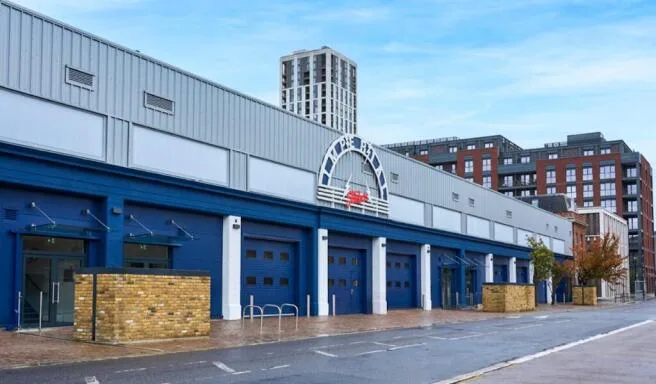
By Liza Helps, Property Editor, Logistics Matters
IT REPORTED that circa.500,000 ft2 more space was vacated than occupied in the past 12 months as occupiers continued to vacate warehouses and factories for cheaper space elsewhere in 2025.
London’s industrial vacancy rate has risen to 7%, up from about 2% when the pandemic struck and above the national average. It could rise further in the near term as the 5 million ft2 under construction across the capital is completed amid subdued demand, although much of this new supply is dedicated, data-centre space.
However, there has been a resurgence in occupier sentiment and more than 2.5 million ft2 of industrial space was leased in the second half of 2025, a 70% increase from the very quiet first half, when tariff uncertainty and trade tensions delayed decision-making.
Some parts of the capital are attracting healthier demand than others. Eastern areas, including Barking & Dagenham and Newham, have vacancy rates above 10% amid subdued demand and rising completions. Croydon and Sutton in the south also have vacancy rates well above the London average. Conversely, Heathrow’s vacancy rate sits below the market average.
Many of the largest deals in recent quarters have occurred in the west London heartlands of Heathrow and Ealing. This includes several lettings exceeding 50,000 ft2, including those by companies such as AIT Worldwide Logistics and the padel and pickleball firm Racketeer. Greenwich is also an emerging industrial hotspot. A rare letting over 100,000 ft2 took place in the south-east London borough last autumn when Polish parcel service InPost took a 120,000 ft2 warehouse. Alcatel Submarine Networks signed for a 50,000 ft2 unit nearby at around the same time.
Market participants have reported increasingly diverse demand for space on multi-let industrial estates, where service-sector companies have joined manufacturing, trade-counter and storage firms seeking small units. The vacancy rate in industrial buildings smaller than 7,000 ft2, of which there are 5,400 across London (16 million ft2) stood at just 3.8% as of March 2026. Vacancies in this segment sit below 2.5% in west London.
As a consequence of the amount of space available rent industrial rent growth in London has decelerated. Annual growth of 2.5% means average industrial rents in the capital are rising at their slowest pace since 2012. London is now underperforming the national average, contrasting the pre-pandemic trend.
As with all things it depends on for what and where you are looking. Small, last-mile units in popular areas have especially low vacancy rates and are achieving high rents. In October 2025, Ripe Avocado leased a 7,000 ft2 unit at Bloom Fulham at £47.50 per ft2, which is believed to be the UK’s highest-ever industrial rent.