

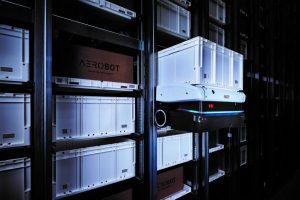
Matalan’s automation saves £28.6m in labour costs
Matalan has turned a mostly manual warehouse into an automated operation over the last five years or so. As a result, it now pays less to fulfil each order as volumes rise, John Smith told visitors to the Retail Supply Chain & Logistics Expo at ExCeL London.
SPEAKING TO a packed session, Smith, head of supply chain solutions and systems at Matalan, described a five-year transformation carried out while the brownfield operation kept running.
Smith said Matalan had a standard, labour-focused supply chain in the 2000s. It did not invest through the following two decades while competitors did, so the business fell behind. It met peaks by bringing in up to 400 extra people, but demand eventually outstripped the labour it could get into the building.
The pandemic exposed the problem. In some circumstances Matalan had to switch off next-day delivery for ecommerce. “Our challenges then affected the customer,” Smith said. With stores closed, he asked for millions of pounds of investment.
The first project was a Dürkopp Fördertechnik (DFT) pocket sorter. It was installed in late 2020 alongside live operations and went live in 2021. It replaced a manual pick grid where hundreds of staff walked many kilometres a shift. Within weeks it was fulfilling 100% of ecommerce orders, and the cost to fulfil an ecommerce item halved.
Smith’s team then looked for the next bottleneck and found it was getting products into the automation. Having already delivered a benefit, the next investment was an easier conversation. In 2021 Matalan signed contracts with KNAPP, its long-term strategic partner (and owner of DFT), to automate the supply chain end to end, from inbound to outbound. The system went live in January 2024.
“It disconnected our fulfilment costs from the labour market,” Smith said. “Previously costs went up the busier we got. Now if we scale, we get cheaper.”
He said Matalan was able to buy less stock and free up working capital, while complaints fell. By 2025, the business estimates the automation had avoided 1.8m labour hours and £28.6m in labour costs. It also saved £4m in premium carrier costs and recovered £11m in sales through fewer errors. The next-day cut-off has moved to 10pm.
When ecommerce tailed off after the pandemic, Matalan used the same platform to update how it serves stores, including the creation of store-friendly pallets.
Smith said the workforce has changed. Matalan now looks for people who understand machinery and can improve how it works. Lower headcount means it can invest more in each person.
In April 2025 Matalan signed a contract to double its automation, with a target date of summer 2027. “It’s not time to sit still,” Smith said.