
Toyota streamlines ops for distributor at brownfield site
ALF Aquatic Distributors partnered with Toyota Material Handling UK to replace drive-in racking with Radioshuttle technology, improving stock rotation, picking efficiency, and space use. This reduced disruption and created extra capacity for growth, without relocating the Bedford warehouse.
DURING THE pandemic, interest in home aquatics increased significantly. For ALF, this surge in demand created an exciting opportunity for growth. However, it also exposed limitations within the company’s existing warehouse operation.
Picking stock is labour-intensive and time-consuming, creating busy working days for employees. Valuable warehouse space was not being used as effectively as it could be. Managing stock rotation was increasingly difficult, particularly for products such as fish food and water treatments with finite shelf lives. At the same time, overheating conveyor motors were regularly triggering the fire alarm system, causing avoidable disruption.
Relocating to a larger premises wasn’t an option for ALF, due to the significant cost, operational upheaval, and scarcity of warehouse spacing in the local area.
Instead, ALF wanted to find a smarter way to increase capacity and improve efficiency within its existing footprint. They were keen to understand how their current picking processes could not only be made faster, but more accurate.
After researching a range of storage options, the ALF team identified Radioshuttle technology as a potential solution. To explore the concept further, they approached Toyota Material Handling UK.
Working closely together, the two companies assessed ALF’s operational challenges and identified opportunities to remove waste from the warehouse.
The project was guided by the principles of the Toyota Production System (TPS), particularly the concept of muda – activities that consume time, space or resources without adding value.
The solution
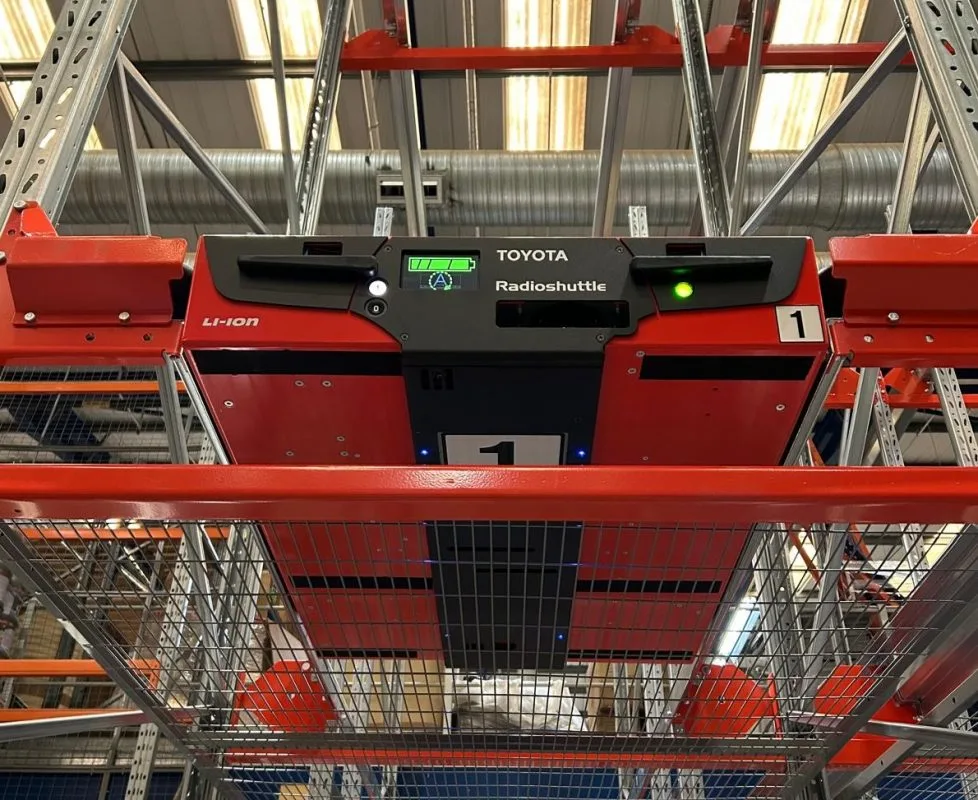
Following a detailed review of ALF’s operation, Toyota Material Handling UK recommended a pilot installation consisting of nine radioshuttle lanes.
Before the project, this section of the warehouse featured nine lanes of drive-in racking across three levels, relying on manual picking processes with limited visibility and control over stock rotation, conveyor systems prone to overheating, and time-consuming access to products stored on the second and third levels.
Toyota replaced this with:
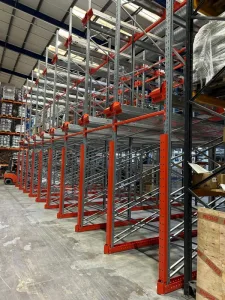
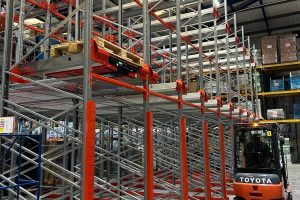
- Nine lanes of radioshuttle racking across two levels, with the ground level being accessible via hand pallet trucks.
- Automated pallet movement within the racking, allowing faster access to pallets to put away and take out.
- A First-In, Last-Out (FILO) stock management system.
While the number of pallet locations remained broadly the same, the new system transformed how stock was accessed, managed and replenished.
For ALF, effective stock rotation is essential. The new system ensures that older stock is always presented first, letting workers have better control over stock replenishment, and higher volume to be ordered by the purchasing team due to increased accessibility. This has helped ALF reduce the risk of unnecessary write-offs and protect profit margins.
Faster, easier picking
Previously, workers spent valuable time manually moving pallets to access stock, sometimes needing to move extra pallets just to move the targeted product – wasting time and effort.
With the Radioshuttle system, pallets are automatically brought to the front of the racking, making products immediately accessible. This has expedited the pick face replenishing process and reduced the amount of manual handling required.
Improved use of space
The new racking system has increased back-stock capacity and improved access to inventory, enabling ALF to make better use of its existing warehouse.
As a result, the business has been able to support continued growth without the cost and disruption of moving premises.
Reduced downtime
By removing the conveyor motors that had been overheating, ALF has eliminated a recurring source of operational disruption.
The warehouse now runs more reliably, with fewer interruptions to daily activity.
Low-risk approach
Rather than committing to a full warehouse redesign from the outset, ALF chose to begin with a pilot project.
This phased approach allowed the business to test the solution in a live environment, confirm the operational benefits and build confidence among the warehouse team, all while keeping risk to a minimum.
The pilot quickly demonstrated its value, and feedback from the ALF team has been overwhelmingly positive.
Looking ahead
Following the success of the initial installation, ALF plans to continue working with Toyota Material Handling UK to introduce additional Radioshuttle and racking systems across the warehouse.
By partnering with Toyota Material Handling UK, ALF Aquatic Distributors has transformed a key part of its warehouse operation without increasing its footprint.
Using the principles of the Toyota Production System, the business has reduced waste, improved stock control, increased operational efficiency and freed up its team to focus on delivering excellent service to customers.
The project demonstrates how the right combination of warehouse design, automation and operational expertise can help growing businesses unlock more capacity and prepare confidently for the future.
Talk to Toyota Material Handling UK in person
Kelvin Taylor, Head of Logistics Solutions, Toyota Material Handling UK will participate in a discussion panel at the Tomorrow’s Warehouse Manchester conference on Sep 30. Expect actionable insights and practical help on your warehouse optimisation journey.
Tomorrow’s Warehouse Manchester takes place at Emirates Old Trafford Cricket Ground on 30 September. Entry is free, food and parking are included, and attendees can earn CPD points while networking with peers.
Register free here: https://registration.tomorrowswarehouse.live/register